

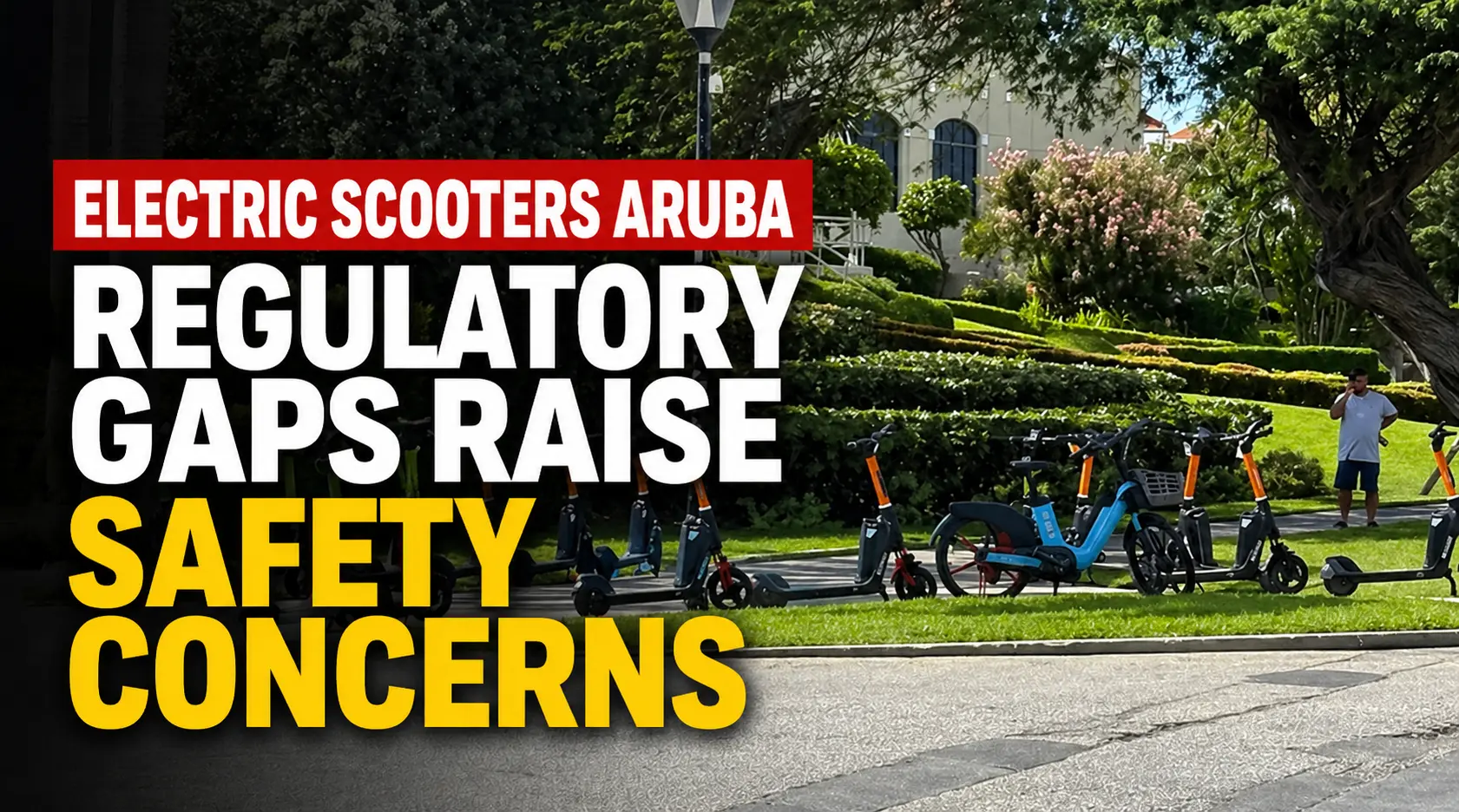
The issue of Electric Scooters Aruba Regulatory Gaps is gaining attention as concerns grow over the lack of proper laws governing their use on public roads.
While electric scooters are entering Aruba legally through Customs, their use on public roads remains largely unregulated. This has created a significant gap between import regulations and traffic laws, leading to a situation where these vehicles are technically allowed into the country but are often used illegally once in operation.
The Electric Scooters Aruba Regulatory Gaps have been a long-standing issue, with critics noting that the matter has been passed from one government to another without a clear solution. Over the years, the number of scooters on the island has increased significantly, intensifying concerns about road safety and enforcement.

According to stakeholders, the current legal framework is insufficient to address the realities of modern transportation. Existing traffic laws do not adequately define how electric scooters should be used, where they can operate, or what safety requirements should be enforced.
The growing presence of electric scooters has led to calls for urgent reform. Critics argue that the Electric Scooters Aruba Regulatory Gaps must be addressed through updates to both the Penal Code and traffic regulations. These changes would aim to create a clear legal structure that ensures safety for both riders and other road users.
Additionally, concerns have been raised about the lack of coordination between key government departments. Critics point out that neither the Tax Department nor successive Ministers of Justice over the past 26 years have prioritized the issue, allowing it to persist without resolution.
The Electric Scooters Aruba Regulatory Gaps highlight the need for collaboration among government agencies, including Customs, law enforcement, and regulatory bodies. By working together, these institutions can develop a comprehensive policy that balances innovation in transportation with public safety.
Stakeholders emphasize that a well-defined legal framework would benefit not only citizens but also businesses that rely on clear regulations for operations. Proper legislation would help prevent misuse, reduce accidents, and ensure responsible use of electric scooters across the island.
As discussions continue, the Electric Scooters Aruba Regulatory Gaps remain a critical issue in Aruba’s transportation landscape. Authorities are under increasing pressure to act quickly and implement effective solutions.
The situation serves as a reminder that evolving transportation trends require timely legal adaptation to maintain safety and order on Aruba’s roads.