

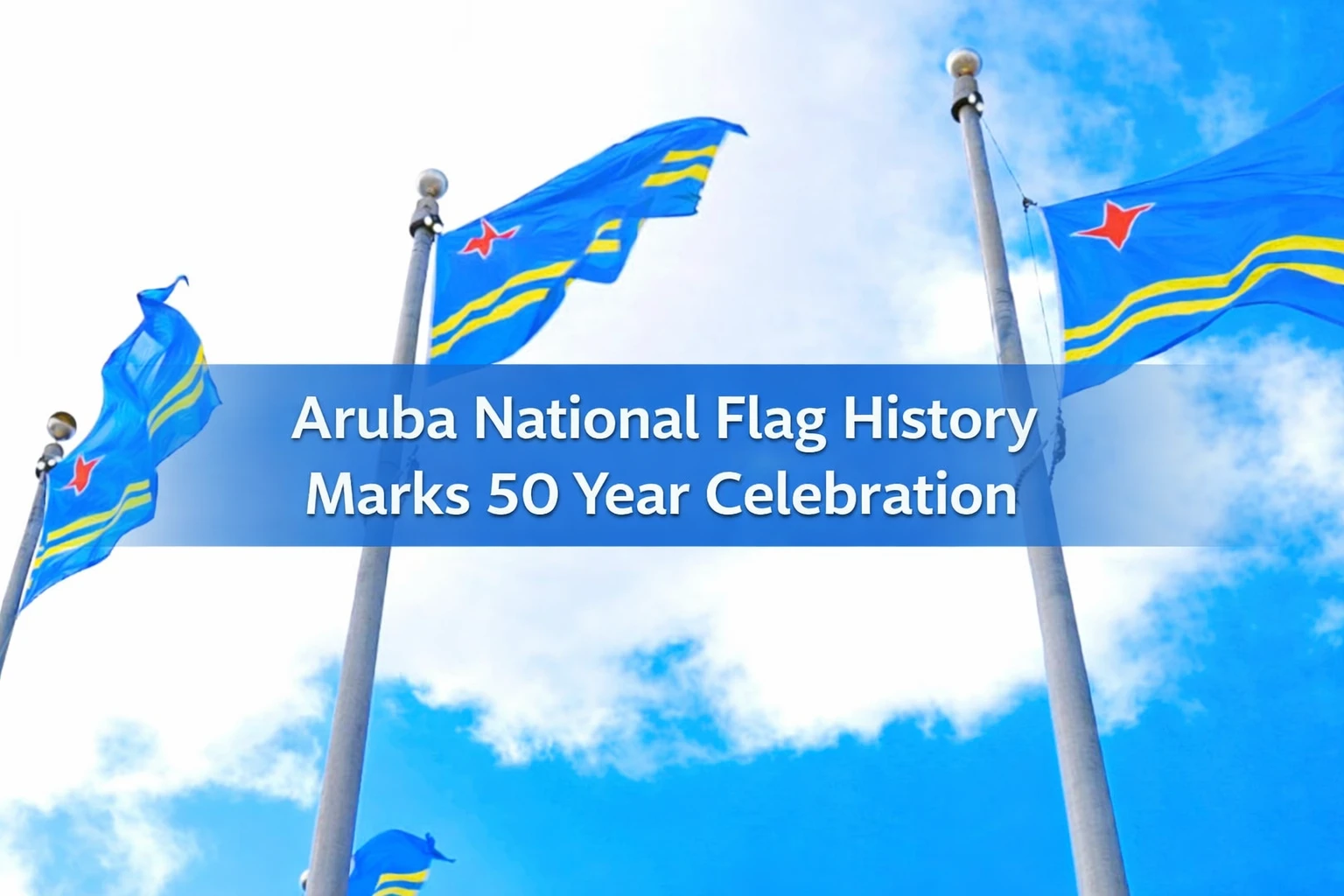
Aruba is preparing to celebrate an important national milestone as the island marks 50 years since the official adoption of its national flag and anthem. The celebration highlights the history, meaning, and cultural significance of the Aruba flag while reminding the public about proper flag protocol.
The story of the Aruba flag began on January 21, 1976, when a public design competition was organized to create a national symbol for the island. School children and members of the community were invited to submit creative designs for the new flag.
In total, 693 designs were submitted, reflecting the enthusiasm of the Aruban people to contribute to a symbol that would represent their identity and pride.

Many participants suggested including a four-pointed star in the design for various symbolic reasons. Horizontal and vertical color stripes were also common design elements. The most frequently used colors in the submissions were red, blue, and yellow.
To help select the final design, experts from the Flag Research Institute in Boston provided guidance during the evaluation process.
The official colors of the Aruba flag were chosen using the British Colour Council Dictionary of Colour Standards. The blue used in the flag is known as Larkspur (U.N. Blue), while the yellow is Bunting Yellow, the red is Union Jack Red, and the white is White No. 1.
On March 16, 1976, Aruba’s Parliament officially approved the flag design. Just two days later, on March 18, 1976, the flag was raised for the first time during a large public celebration at Wilhelmina Stadium in Dakota, now known as the Guillermo Prospero Trinidad Sports Complex. During that ceremony, the national anthem “Aruba Dushi Tera” was also performed.
Each element of the Aruba flag carries symbolic meaning. The blue background represents the sea that surrounds the island. The four-pointed red star with a white border symbolizes Aruba itself, as well as the passion and determination of its people. The white outline reflects the purity of Aruba’s beaches and the values of justice and freedom.
The four points of the star also represent the four directions of the compass, symbolizing people from different countries who come to Aruba and live together peacefully in a multicultural community.
The yellow stripes represent the island’s abundance and natural wealth, including historic industries such as gold, aloe, and guano. They also symbolize Aruba’s natural beauty, including plants and wildlife such as the kibrahacha tree and the island’s vibrant flora.
The government also reminds citizens to respect proper flag protocol, including raising the flag only from sunrise to sunset and ensuring it is properly illuminated if displayed at night.
As Aruba celebrates 50 years of its national flag and anthem and 40 years of Status Aparte, these national symbols continue to represent the island’s unity, history, and cultural pride.