


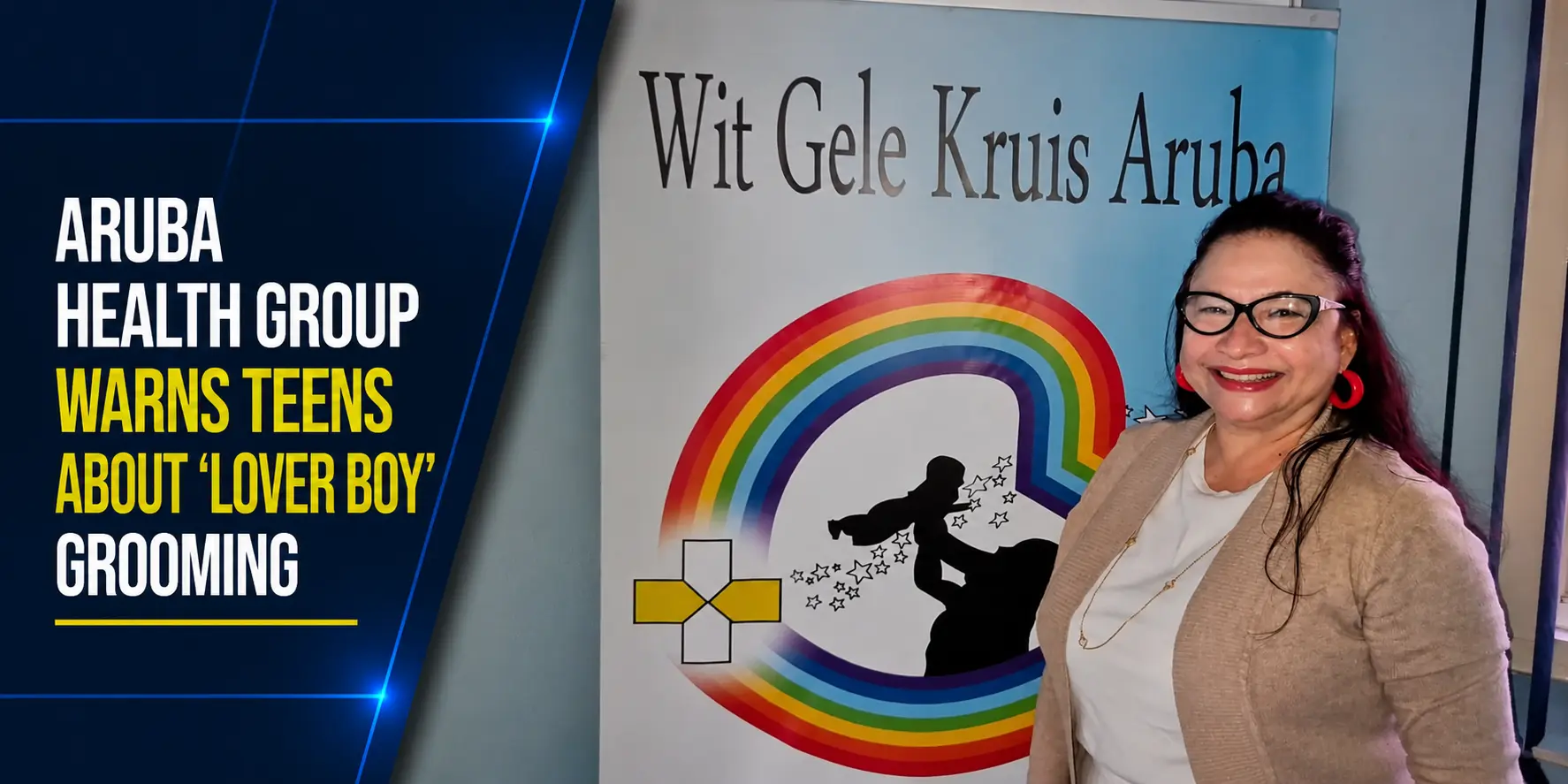
ORANJESTAD (AAN) – Aruba Health Group Warns Teens About ‘Lover Boy’ Grooming as Monique Giel-Labad of Wit Gele Kruis raised awareness about the risks young people face during the transition from primary school to secondary education.
According to Giel-Labad, the so-called “lover boy” phenomenon continues to affect teenagers, particularly those entering secondary school, where they may be more vulnerable to emotional manipulation and peer pressure.
Emotional Manipulation Can Lead to Serious Consequences
Giel-Labad explained that some young people may be approached with compliments, constant attention, and expressions of affection that appear genuine but are intended to manipulate them emotionally.

She said some teenagers may mistake this attention for love or sincere interest, making them more susceptible to pressure that can lead to unwanted or premature sexual relationships.
The Aruba Health Group Warns Teens About ‘Lover Boy’ Grooming message emphasized that these situations are not limited to girls, noting that boys can also become victims of emotional manipulation and unhealthy relationship dynamics.
Importance of Responsibility and Healthy Relationships
Drawing on years of experience at Wit Gele Kruis, Giel-Labad said the organization has worked with many young women who became pregnant after entering relationships because they feared losing someone they cared about.
She noted that many teenagers are not emotionally or financially prepared for parenthood, and in many cases the young mother ends up carrying most of the responsibility.
Giel-Labad also stressed that young fathers should accept responsibility if they contribute to a pregnancy, explaining that balancing education with parenting responsibilities can become extremely challenging and may lead to stress, conflict, or relationship breakdowns.
Parents Encouraged to Maintain Open Communication
The Aruba Health Group Warns Teens About ‘Lover Boy’ Grooming campaign encourages parents to maintain open and honest conversations with their children, particularly during the transition from primary to secondary school.
Giel-Labad advised parents to pay attention to changes in their children’s behavior, remain actively involved in their lives, and create a trusting environment where teenagers feel comfortable discussing relationships, peer pressure, sexuality, and other sensitive topics.
She emphasized that strong communication between parents and children remains one of the most effective ways to help young people make informed decisions and protect themselves from emotional manipulation and exploitation.