

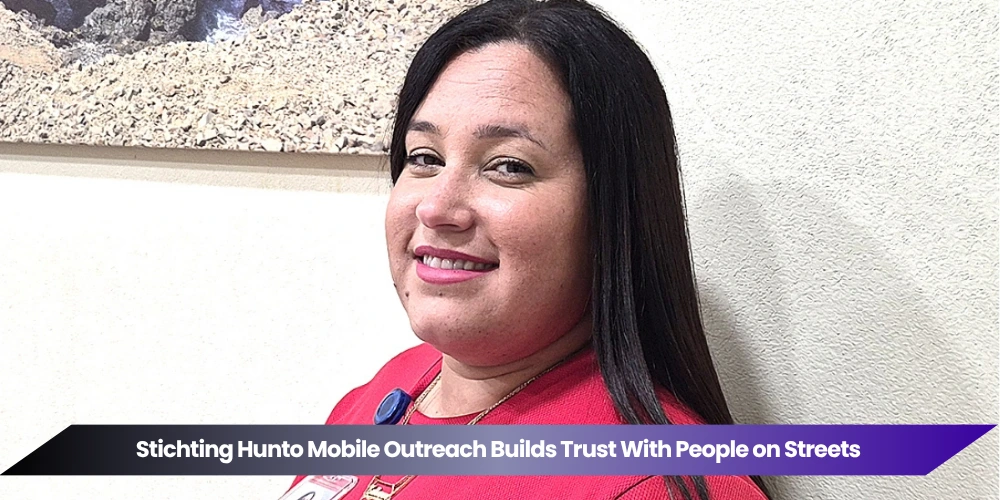
Stichting Hunto mobile outreach is gaining the trust of people living on the streets by bringing addiction support, basic mental-health care and practical assistance directly to them.
Zulianne Faro of Stichting Hunto said the organization’s Mobile Outreach Unit has been well received and that more people are beginning to understand the purpose of the service.
The mobile team goes directly into the community to speak with people struggling with addiction, provide information and offer support when they are ready to take the next step toward treatment.

According to Faro, the outreach team consists of six people who are active in the field every day.
The team helps clients with conversations, emotional support and information about available treatment options.
When someone is ready to enter the rehabilitation process, the organization can guide that person toward the appropriate program.
Basic Needs Help Build Trust
Faro said the mobile unit also gives clients access to basic necessities.
People may be able to bathe, receive clean clothing, eat something and spend time in a calm environment.
She explained that these seemingly simple services can play an important role in building trust.
Before Stichting Hunto had the trailer, the organization mainly operated with a basic bus carrying bread and juice while staff spoke with people and invited them to the walk-in center.
The arrival of the Mobile Outreach Unit changed the way some clients viewed the organization.
Faro said people began to see that the team was serious about meeting them where they were and helping them consistently.
Support Depends on What the Client Needs
Not every person wants the same type of help on the same day.
Faro said some clients may not want to shower or eat but may simply want to sit down and talk.
On another day, someone may want a check-up, information or only something small to eat and drink.
These repeated interactions can gradually create enough trust for people to begin asking questions about rehabilitation.
Clients may ask how the process works, what they need to do and whether the mobile unit can help them reach the rehabilitation center in Sero Colorado.
When they are ready, Stichting Hunto provides the information and support needed to continue the process.
Support Continues During Recovery
Faro also explained that cravings and difficult emotional moments can continue after someone begins treatment.
For that reason, staff remain available to speak with clients when they feel at risk of returning to substance use.
After detoxification, clients continue through a structured rehabilitation program where they learn tools to manage cravings, emotions and other challenges.
Faro compared the process to trying to maintain a strict diet and suddenly experiencing a strong craving for something unhealthy.
She said the important step is recognizing when someone cannot manage the situation alone and asking for help.
The Stichting Hunto mobile outreach program aims to make that support easier to access by building relationships before a person enters rehabilitation and continuing to provide tools that can help after treatment.