


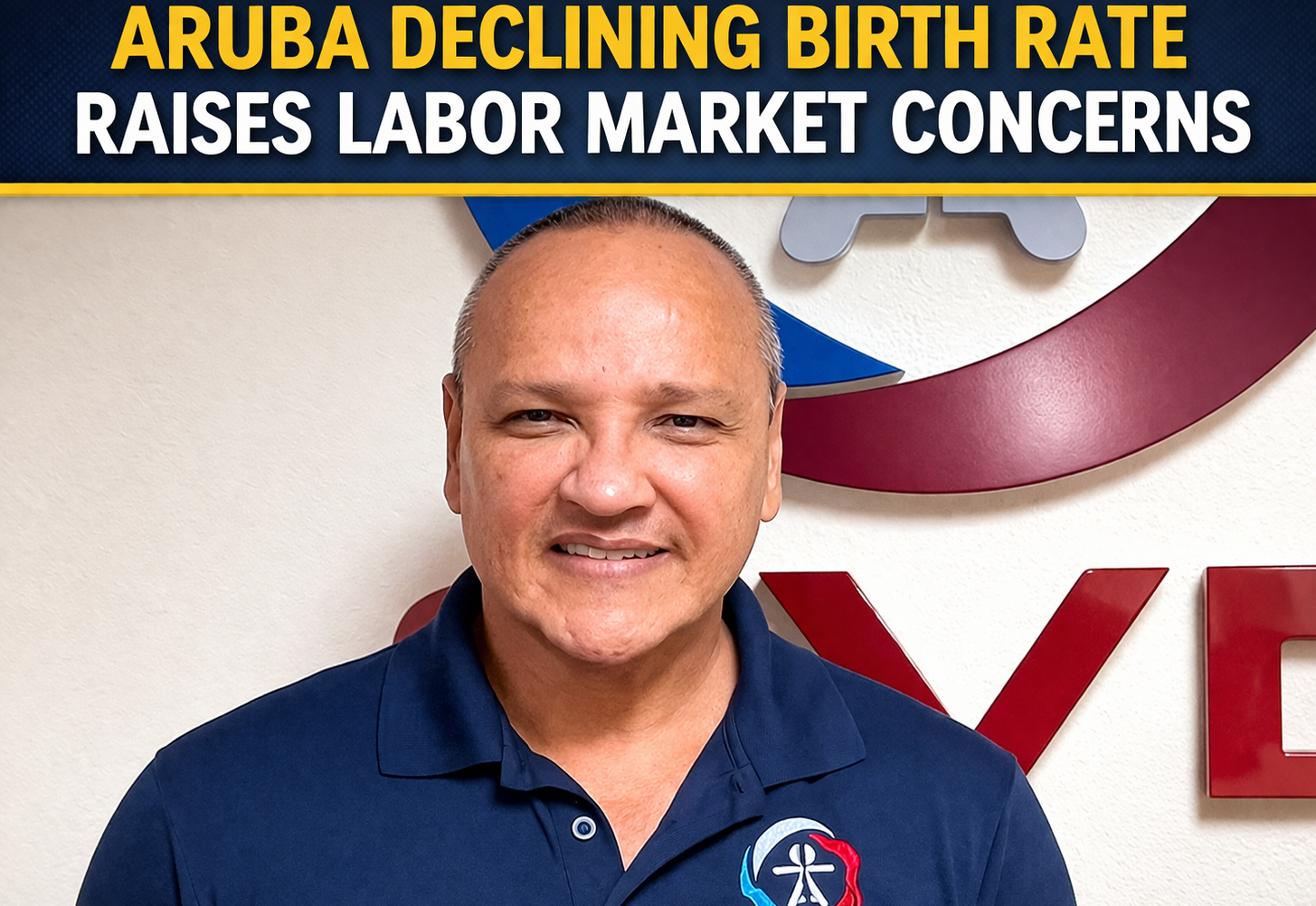
The Aruba declining birth rate labor market issue is becoming a growing concern, as new data shows a significant drop in the number of babies born each year.
According to Edwin Jacobs from SVb, birth rates in Aruba have declined sharply over the past decade. Around 10 years ago, between 1,400 and 1,500 babies were born annually. Today, that number has dropped to approximately 800 births per year, and the trend is expected to continue downward.
Jacobs explained that Aruba’s fertility rate is now about 1.3 children per woman, which is well below the 2.1 replacement rate needed to maintain population stability. He noted that this global trend is difficult to reverse, as younger generations are choosing different lifestyles compared to previous generations.

The Aruba declining birth rate labor market situation is already creating challenges. With fewer children being born, the future workforce will shrink, while the number of job opportunities continues to grow. By the end of March 2025, there were over 50,000 registered employment positions in Aruba, indicating strong labor demand.
Jacobs warned that if the number of local workers continues to decline, Aruba could face a labor shortage in the future. This may force businesses to rely more on foreign workers, adopt automation and robotics, or improve efficiency to maintain operations.
He also highlighted the long-term impact, explaining that in 18 to 20 years, only about 600 individuals may enter the workforce annually, while around 1,200 people may retire each year. This would create a significant labor deficit.
Jacobs emphasized that this trend presents a serious economic challenge for Aruba, potentially affecting productivity and putting pressure on multiple sectors that depend on economic growth.
















Discussion about this post