

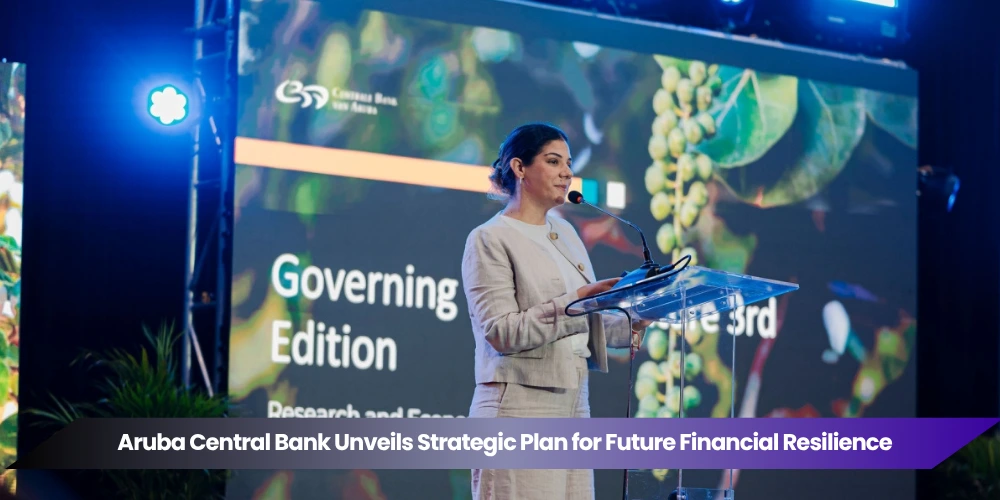
ORANJESTAD, Aruba — The Aruba Central Bank plan for 2026-2030 has been presented to key stakeholders as the institution outlines priorities including digitalization, data, stronger stakeholder engagement and preparation for future risks.
The Central Bank of Aruba, known as BCA, presented its new strategic plan along with its latest economic projections and research during Business Days 2026.
The sessions were held on August 19 and 20 as part of activities marking the Central Bank’s 40th anniversary.

This year’s Business Days carried the theme “Leading with Equity, Anchored in the Future” and brought together representatives from Aruba’s financial sector, government and public-sector organizations.
New President Addresses Stakeholders
Thomas Domhoff, who became president of the Central Bank of Aruba on July 1, 2026, delivered opening remarks during both sessions.
The event also provided Domhoff with an opportunity to formally introduce himself to important stakeholders following his appointment to lead the institution.
The presentations focused on both Aruba’s current economic position and the Central Bank’s longer-term approach to maintaining a stable and resilient financial system.
Four Priorities in Aruba Central Bank Plan
Melanie Croes, Manager Strategy & Projects, presented the institution’s strategic plan for 2026-2030, titled Anchored in the Future.
The Aruba Central Bank plan is based on the institution’s three core pillars and identifies four major priorities for the coming years.
These priorities include digitalization, improved use of data, stronger engagement with stakeholders and increased preparation for emerging challenges.
Among the risks specifically identified are cybersecurity threats and climate change.
The Central Bank said these priorities form part of its continuing efforts to maintain the resilience of Aruba’s financial landscape as technology, economic conditions and global risks continue to change.
Latest Aruba Economic Outlook Discussed
Central Bank economist Dr. Ryan Marapin also provided stakeholders with details from the institution’s upcoming Economic Outlook publication.
His presentation covered expectations for the remainder of 2026 as well as developments that could influence Aruba’s economy beyond the current year.
The full Economic Outlook is expected to be published separately.
Economic forecasting plays an important role in helping policymakers, businesses and financial institutions understand possible changes in growth, inflation and other conditions affecting Aruba.
Seven Studies Examine Future Challenges
The Central Bank’s Research & Economic Policy Department also presented the latest edition of Governing from the Future.
The publication contains seven studies examining economic and policy challenges that could affect Aruba over the next 10 to 15 years.
Economists Giantcarlo Croes, Elmelynn Croes, Daniella van den Berg and Rynall Kock presented research included in the publication.
The studies are intended to encourage longer-term consideration of issues that could influence Aruba’s economic development and government policymaking.
Central Bank Looks Toward 2030
Through its Business Days 2026 program, the Central Bank brought together financial, government and public-sector stakeholders to discuss both immediate economic developments and longer-term priorities.
The Aruba Central Bank plan places particular emphasis on preparing the institution and the wider financial sector for technological, economic and environmental changes.
Digital systems, stronger data capabilities and improved communication with stakeholders are expected to form important parts of that work through 2030.
The Central Bank’s Strategic Plan 2026-2030 and Governing from the Future, Leading with Equity have been made available to the public through the Central Bank of Aruba.