

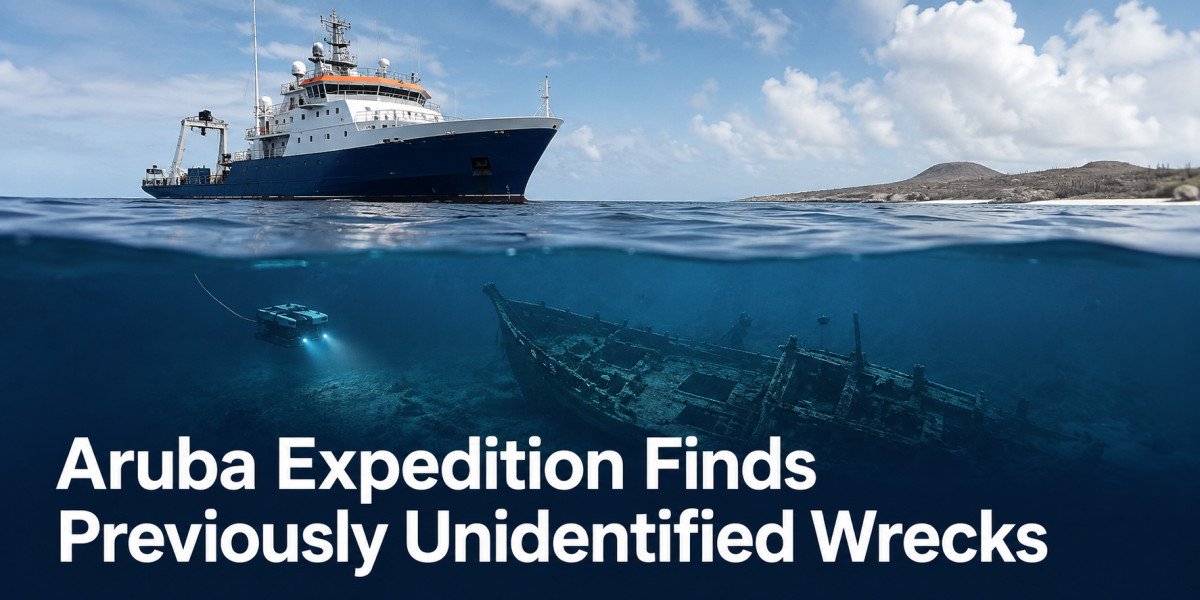
ORANJESTAD, Aruba — A scientific expedition aboard the R/V Hydra has detected wrecks at both known and previously unidentified offshore sites around Aruba during its first four days of mapping work.
The findings mark a significant early result for the ongoing effort to document Aruba underwater wrecks and other parts of the island’s submerged cultural heritage. The expedition combines advanced marine-survey technology with knowledge supplied by Aruban researchers and institutions.
Aruban Experts Join the R/V Hydra Team
The science team and crew boarded the R/V Hydra on August 27. The vessel is operated by Inkfish, a philanthropic organization that supports scientific research of the sea.

Approximately 48 scientists, technicians and specialists are working aboard the floating research platform. Expedition leader Matt Carter’s team includes expertise in marine science, geospatial research and technical diving.
Two Aruban specialists are participating directly: Harold Kelly, an archaeologist with the National Archaeological Museum Aruba (MANA), and Oriana Wouters, an ecologist with IDNOVA. Their role includes sharing local knowledge, research and information about survey sites so the international team can better interpret mapping results and plan dives.
The Aruban participants are also working alongside the vessel’s laboratory team to gain practical experience in collecting environmental DNA, known as eDNA, and preparing samples for analysis.
Mapping Reveals Previously Unidentified Sites
R/V Hydra has been mapping nearshore and offshore areas along Aruba’s western coast. In only four days, the work detected wrecks connected with known locations as well as offshore sites that had not previously been identified.
A second research boat, Skye, has meanwhile been deployed to map nearshore areas along Aruba’s southern coast.
The expedition also completed test dives at the Jane Sea and the Arashi airplane sites before surveying the SS Antilla. At the Antilla wreck, the team used underwater scooters equipped with camera mounts to collect imagery. Water samples were also gathered for eDNA analysis, which can provide information about fish and invertebrate biodiversity and the possible presence of reef-associated pathogens.
SS Antilla Model Built Overnight
Using the collected imagery, the team produced a three-dimensional virtual model of the SS Antilla overnight. Researchers could then review the model, locate gaps in the imagery and decide whether another dive was needed to complete the record.
The model can also support ecological assessments, including observations of the wreck’s condition and deterioration. This makes the work relevant not only to cultural heritage but also to understanding the marine environment surrounding one of Aruba’s best-known wreck sites.
Research Continues Around Aruba
Inkfish’s team and research vessels are expected to continue working with MANA over the next two weeks. The next phase will focus on exploring, identifying and documenting more of Aruba’s underwater cultural heritage.
The latest discoveries are a substantial development in an expedition announced earlier in August. They show that the collaboration is already expanding the island’s record of what lies beneath its territorial waters while building hands-on research experience for local specialists.
Sources: Information based on reporting from English 24ora and corroborating coverage from NoticiaCla.