

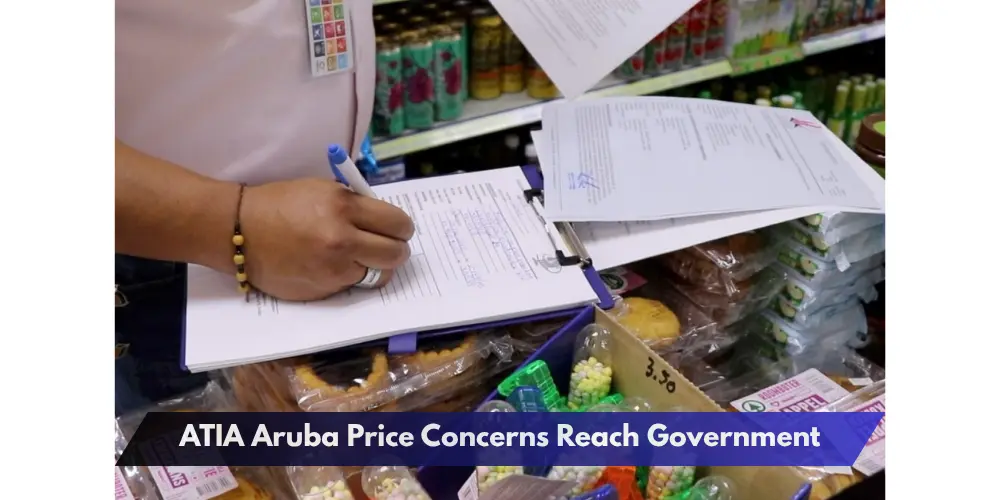
ORANJESTAD, Aruba — ATIA Aruba Price Concerns are increasing as businesses and consumers continue dealing with higher costs across the island, according to Aruba Trade and Industry Association President Danilo Werleman.
Werleman said ATIA regularly receives complaints about rising prices and is discussing the issue directly with the Government of Aruba.
While he supports appropriate price controls to prevent abuse, Werleman argued that Aruba also needs to examine the broader factors making everyday life increasingly expensive for residents and raising costs for businesses.

ATIA Aruba Price Concerns Keep Growing
Werleman said price increases are placing considerable pressure on both companies and consumers.
He acknowledged that government has a responsibility to monitor supermarket prices and intervene when necessary to prevent unfair practices.
However, he said price controls alone will not address the underlying problem.
According to Werleman, Aruba has become considerably more expensive, and businesses themselves are also dealing with higher operating and supply costs.
Global developments have contributed to increasing prices for products, transportation and other expenses, meaning local merchants are often affected before products even reach consumers.
Werleman said Aruba must therefore look at ways to reduce overall costs instead of assuming every price increase originates with individual retailers.
ATIA Raises Questions About Taxes
Taxation is another concern highlighted by the ATIA president.
Werleman referred to Aruba’s BBO system and other tax-related costs that can influence prices throughout the economy.
He said measures introduced as temporary solutions can eventually remain in place much longer than initially expected, adding another layer of costs for businesses and consumers.
For ATIA, the question is how Aruba can develop a tax structure that raises the revenue government requires without continuing to increase the financial pressure on residents.
Werleman said adjustments to tax rates and the broader tax system have been discussed before and should remain part of efforts to address the island’s cost of living.
Businesses Also Face Higher Costs
The ATIA Aruba Price Concerns discussion is not limited to household spending.
Companies importing goods into Aruba face international price changes, transportation expenses, taxes and other costs that can ultimately influence retail prices.
Werleman said prices are increasing in many parts of the world because of changing economic conditions.
As a small island that depends heavily on imported products, Aruba can be particularly exposed to those international changes.
That makes controlling the cost of living a complex issue requiring cooperation between government, businesses and other economic stakeholders.
Price Controls Still Considered Important
Despite concerns about taxation and international costs, Werleman said appropriate government supervision remains necessary.
He supports monitoring prices to ensure consumers are not subjected to unreasonable increases.
The objective, however, should be broader than simply identifying individual products that have become more expensive.
Werleman believes authorities should also examine what can be done structurally to make Aruba more affordable.
That includes considering taxes, import-related costs and other factors affecting prices before goods reach supermarket shelves or other businesses.
ATIA Discussing Issue With Government
Werleman said complaints about rising prices continue reaching ATIA regularly.
The association is discussing those concerns with government and expects the issue to remain an important subject in talks between the public and private sectors.
For consumers, increasing prices directly affect household budgets and purchasing power.
For businesses, higher expenses can make it more difficult to maintain competitive prices while continuing to cover wages, imports and operating costs.
ATIA Aruba Price Concerns therefore reflect a challenge affecting both sides of Aruba’s economy.
Werleman said the priority should be finding practical ways to reduce the financial burden while maintaining appropriate controls against price abuse.
ATIA expects continued discussions with government as Aruba searches for measures that can improve affordability for residents while maintaining a sustainable environment for local businesses.