

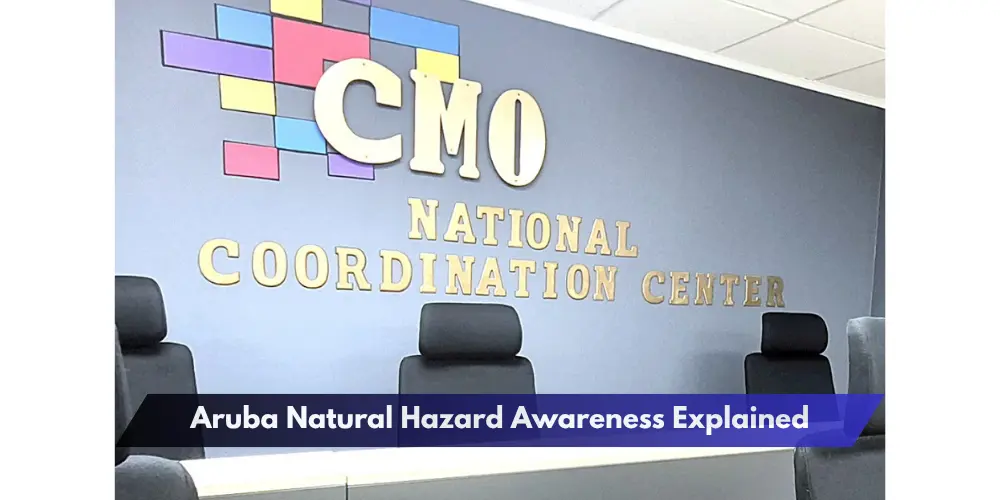
ORANJESTAD, Aruba — Aruba Natural Hazard Awareness needs to improve so residents better understand how earthquakes, tsunamis and other natural phenomena work, according to Crisis Management Office Director Rino Hermans.
Hermans said scientists currently cannot predict an earthquake by specifying the exact day, time, location and magnitude before it occurs.
He emphasized that residents should understand these scientific limitations before drawing conclusions or sharing claims about earthquakes and other natural hazards on social media.

According to Hermans, some of the criticism and commentary circulating online demonstrates that there is still considerable misunderstanding about how these events develop and how official warning systems operate.
Aruba Natural Hazard Awareness Needs Education
Hermans encouraged residents to educate themselves before criticizing emergency authorities or forwarding information that may not be accurate.
He said understanding the difference between various natural hazards is particularly important because not every event produces the same risks or allows authorities the same amount of warning time.
Earthquakes, for example, generally cannot be forecast with an exact time and location in the way residents may expect from some weather-related threats.
This means preparedness and knowing what to do during an emergency are especially important.
CMO Explains Aruba’s Tsunami Warning System
Hermans also addressed questions surrounding warning towers recently installed by CMO.
He explained that the system is primarily intended to provide warnings in the event of a tsunami threat.
A tsunami can potentially be generated by significant seismic activity beneath the ocean.
An earthquake occurring on land does not automatically generate a tsunami, Hermans explained, making the location and characteristics of the seismic activity important when authorities assess potential risks.
Aruba’s Early Warning System has been developed to help communicate warnings to people in areas that may face danger during certain emergencies.
Government information about the system indicates that warning stations form part of Aruba’s broader preparation for natural disasters.
Social Media Information Can Cause Confusion
Hermans again expressed concern about inaccurate information spreading through social media following natural events in different countries.
He said some individuals present themselves online as knowledgeable sources despite lacking sufficient professional understanding of crisis management or natural hazards.
When residents rely on these claims without verification, misinformation can create unnecessary fear or panic.
Strengthening Aruba Natural Hazard Awareness, he said, therefore involves both understanding natural events and knowing where to obtain reliable information.
Residents Asked to Trust Official Sources
Hermans pointed to CMO’s years of experience in emergency preparedness, community education and crisis-management planning.
He said the organization has worked for approximately 27 years to strengthen Aruba’s preparedness and has received recognition within the Kingdom of the Netherlands and the wider Caribbean.
CMO has also worked with international organizations on earthquake and tsunami awareness and evacuation preparedness.
Government agencies in Aruba have similarly encouraged residents to learn what actions should be taken before, during and after earthquakes, tsunamis, hurricanes and other emergencies.
Hermans said the remaining challenge is ensuring the community maintains confidence in trained authorities and checks reliable sources when natural events create uncertainty.
For CMO, improving Aruba Natural Hazard Awareness means helping residents understand the risks, recognize the limits of prediction technology and respond appropriately to official warnings instead of reacting to unverified information circulating online.