

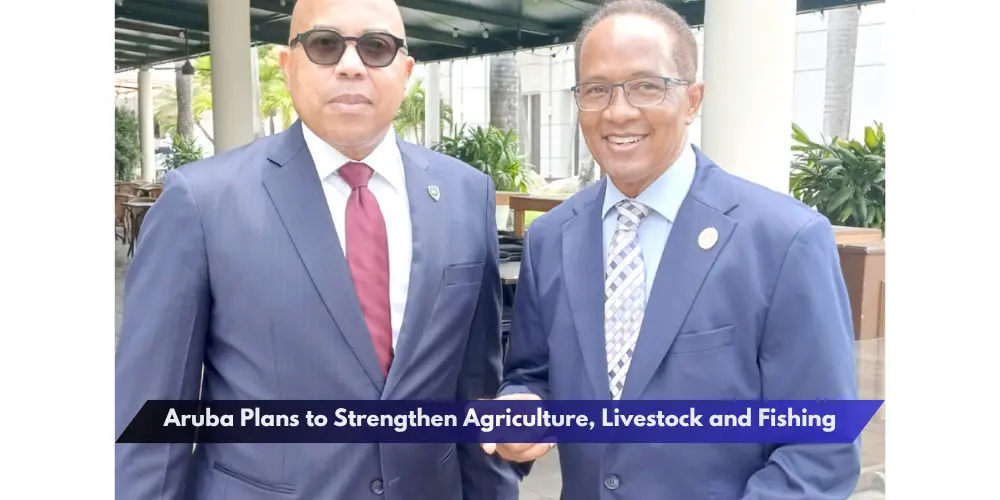
ORANJESTAD, Aruba – Aruba Primary Sector Growth remains a government priority as Minister Geoffrey Wever says new plans are being developed to strengthen agriculture, livestock farming and fishing while creating more opportunities for people active in local production.
Wever highlighted the government’s direction while visiting a group of fishermen during the well-known Hadicurari Fishing Tournament, held in connection with the celebration of International Fishing Day.
The minister said the visit was an opportunity to recognize the dedication, knowledge and perseverance of Aruban fishermen and to reaffirm the government’s commitment to fishing as an important part of the island’s primary sector.

A total of 42 boats registered for the Hadicurari tournament, demonstrating the strong interest that continues to exist within Aruba’s fishing community.
Fishing has formed part of Aruba’s culture and local economy for generations. According to Wever, the challenge now is to create the conditions needed for the sector to develop in a stronger, more modern and sustainable manner while preserving the knowledge passed from one generation of fishermen to the next.
The government’s broader vision goes beyond fishing alone.
Aruba Primary Sector Growth also includes efforts to strengthen productive capacity and expand opportunities for people working daily in agriculture and livestock farming.
Wever said the government is continuing to work on the modernization of Santa Rosa, with the goal of improving and strengthening the services the institution provides to Aruba’s primary sector.
The government also recently introduced a program called Piskechi, designed to teach children how to fish and give them a broader understanding of fishing-related activities.
According to the minister, dozens of children have already completed the program and received certificates after learning practical fishing skills from the rocks.
The initiative is intended to help younger generations become familiar with one of Aruba’s traditional activities while encouraging them to see fishing as something that can remain relevant in the future.
Wever emphasized that local fishermen carry an important part of Aruba’s heritage.
He said the responsibility of government is not only to recognize the work being done today but also to create conditions in which a new generation can see a future in fishing.
A strong primary sector, according to Wever, should include a fishing industry that is sustainable, productive and prepared for the years ahead.
The minister’s comments also reflect a wider policy goal of increasing local production.
Aruba imports a large share of the food consumed on the island, making agriculture, livestock and fishing important areas when discussing food supply, economic diversification and greater local resilience.
By modernizing services and providing training opportunities, the government hopes to create stronger support systems for producers while encouraging more people to become involved in the sector.
The Aruba Primary Sector Growth strategy therefore combines traditional knowledge with modernization and education.
Programs such as Piskechi can help preserve cultural knowledge, while improvements at Santa Rosa can provide more structured support to farmers, livestock producers and fishermen.
Wever congratulated Aruba’s fishermen on the occasion of International Fishing Day and also recognized everyone who participated in the Hadicurari Fishing Tournament.
He thanked local fishermen for their continued contribution to local production and for helping preserve a tradition that remains closely connected to Aruba’s identity.
The government says it will continue working on policies and programs aimed at strengthening agriculture, livestock farming and fishing so the island’s primary sector can become more productive, sustainable and prepared for future generations.