

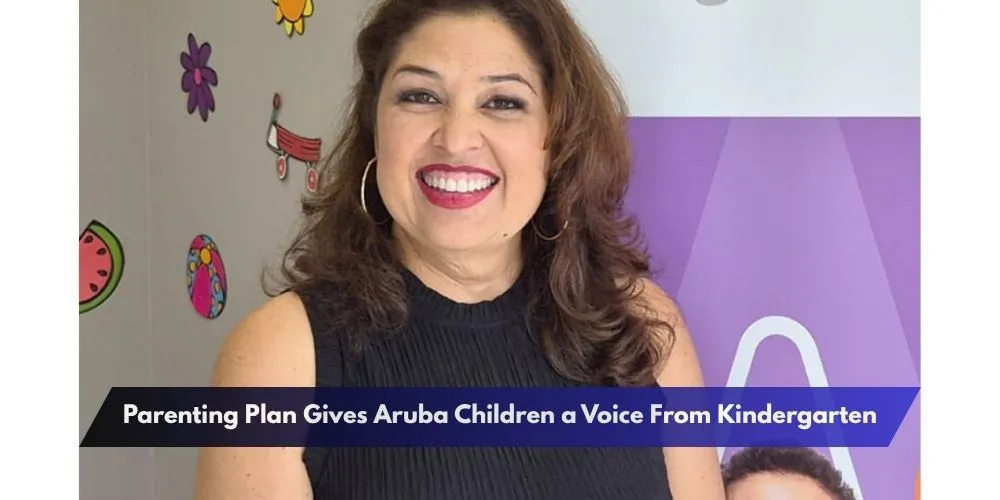
ORANJESTAD (AAN) – Parenting Plan Gives Aruba Children a Voice From Kindergarten as Michella Steenvoorde-Laclé, Director of Aruba’s Parenting Plan (Plan di Mayor) program, explained how children are actively involved in the process when parents separate.
Speaking in an interview with Matutino DIARIO, Steenvoorde-Laclé highlighted that Aruba’s Parenting Plan Act (Bevordering Voortgezet Ouderschap en Zorgvuldige Scheiding) came into effect on March 1, 2024, following the launch of a pilot program during the final months of 2023.
A Holistic Approach to Family Separation
According to Steenvoorde-Laclé, the Parenting Plan program offers different levels of support depending on the degree of conflict between parents going through separation.

She explained that the program is designed as a holistic approach, recognizing that both parents and children require guidance during the separation process.
Depending on each family’s circumstances, parents may participate in two, three, or four intervention sessions aimed at helping them reach agreements that place the child’s well-being first.
Children Are Included From Kindergarten
One of the program’s defining features is that children are given the opportunity to express their feelings and wishes from an early age.
Steenvoorde-Laclé noted that while Aruba’s legal framework allows children to formally exercise certain rights from the age of 12, the Parenting Plan program begins listening to children as early as kindergarten.
The approach is based on Article 12 of the United Nations Convention on the Rights of the Child, which states that children have the right to express their views in matters affecting them. Aruba ratified the convention in 2021.
Professionals working with the program have received specialized training to communicate with children in age-appropriate ways.
Children Create Their Own Plans
As parents prepare their parenting plans, children also create their own age-appropriate plans.
Depending on their age, these may take the form of:
- A kindergarten plan
- A child plan
- A youth plan
These plans allow children to share their thoughts and wishes regarding family arrangements after their parents separate.
Steenvoorde-Laclé explained that children often express simple but meaningful requests, such as:
- Not wanting their parents to argue in front of them.
- Wanting to bring gifts received from one parent to the other parent’s home.
- Wanting to keep a photograph of one parent in their bedroom while staying with the other parent.
Parents Make the Decisions
While children are encouraged to share their feelings, Steenvoorde-Laclé emphasized that parents remain responsible for making the final decisions regarding custody and parenting arrangements.
However, she stressed that parents should carefully consider their children’s emotions and wishes when developing their parenting plans.
According to the Parenting Plan program, giving children a voice helps families navigate separation in a more respectful, supportive, and child-centered manner while promoting healthier long-term family relationships.