

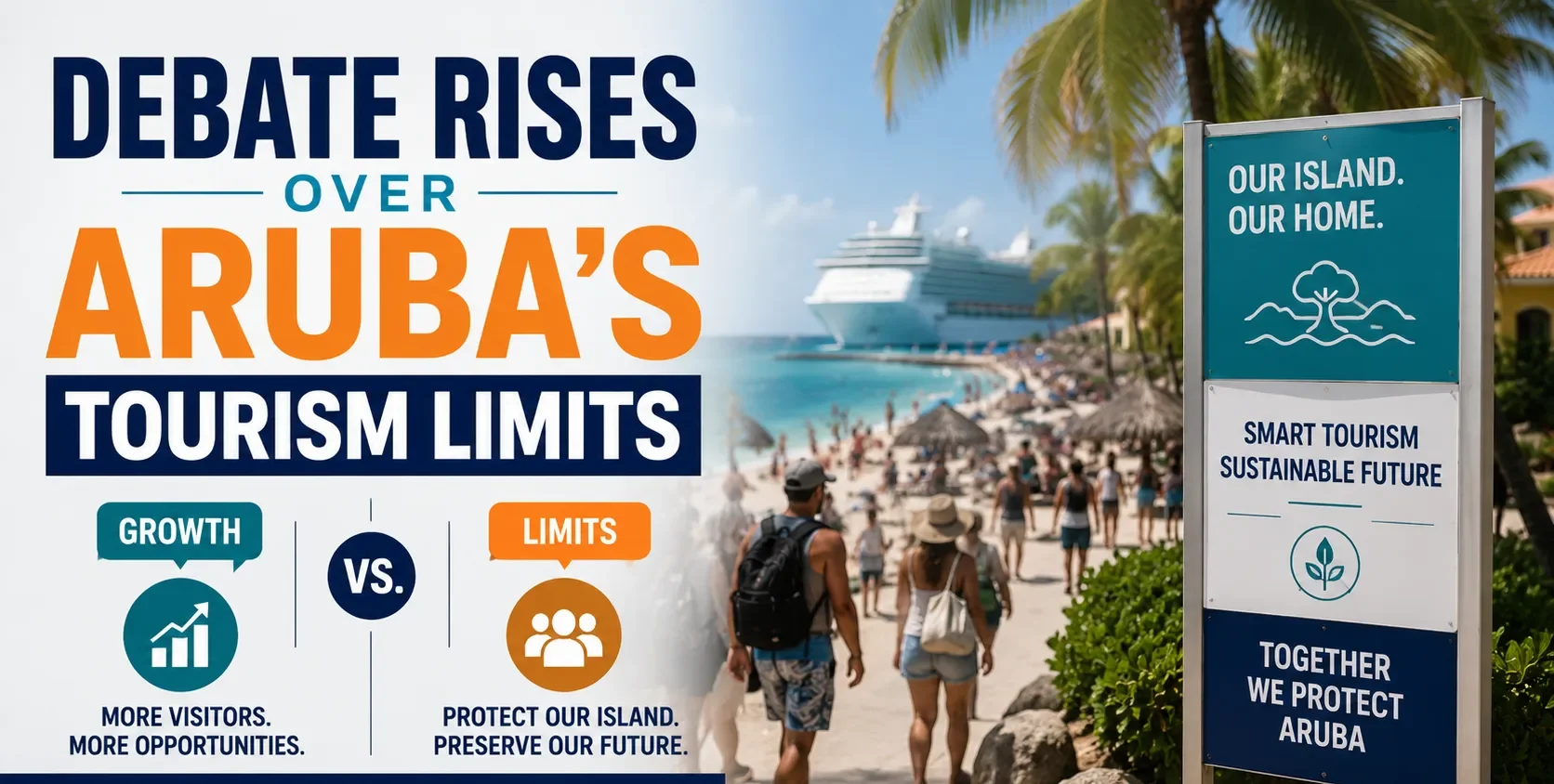
Following recent protests against mass tourism in Barcelona, Mallorca, and the Canary Islands, attention has turned to the sustainability of Aruba’s tourism model. Tourism remains the central pillar of the Aruban economy, responsible for job creation, foreign investment, and a higher standard of living. However, local observers are questioning whether the industry can continue to grow indefinitely on an island with finite resources.
Experts distinguish between quantitative growth and qualitative development, with the latter involving stronger institutions and better quality of life. While the economy may expand, residents often face burdens on housing, infrastructure, and public services. The United Nations World Tourism Organization states that sustainable tourism must balance economic, social, and environmental needs to protect local communities. Furthermore, tourism growth brings hidden costs, such as increased demand for land and labor.