

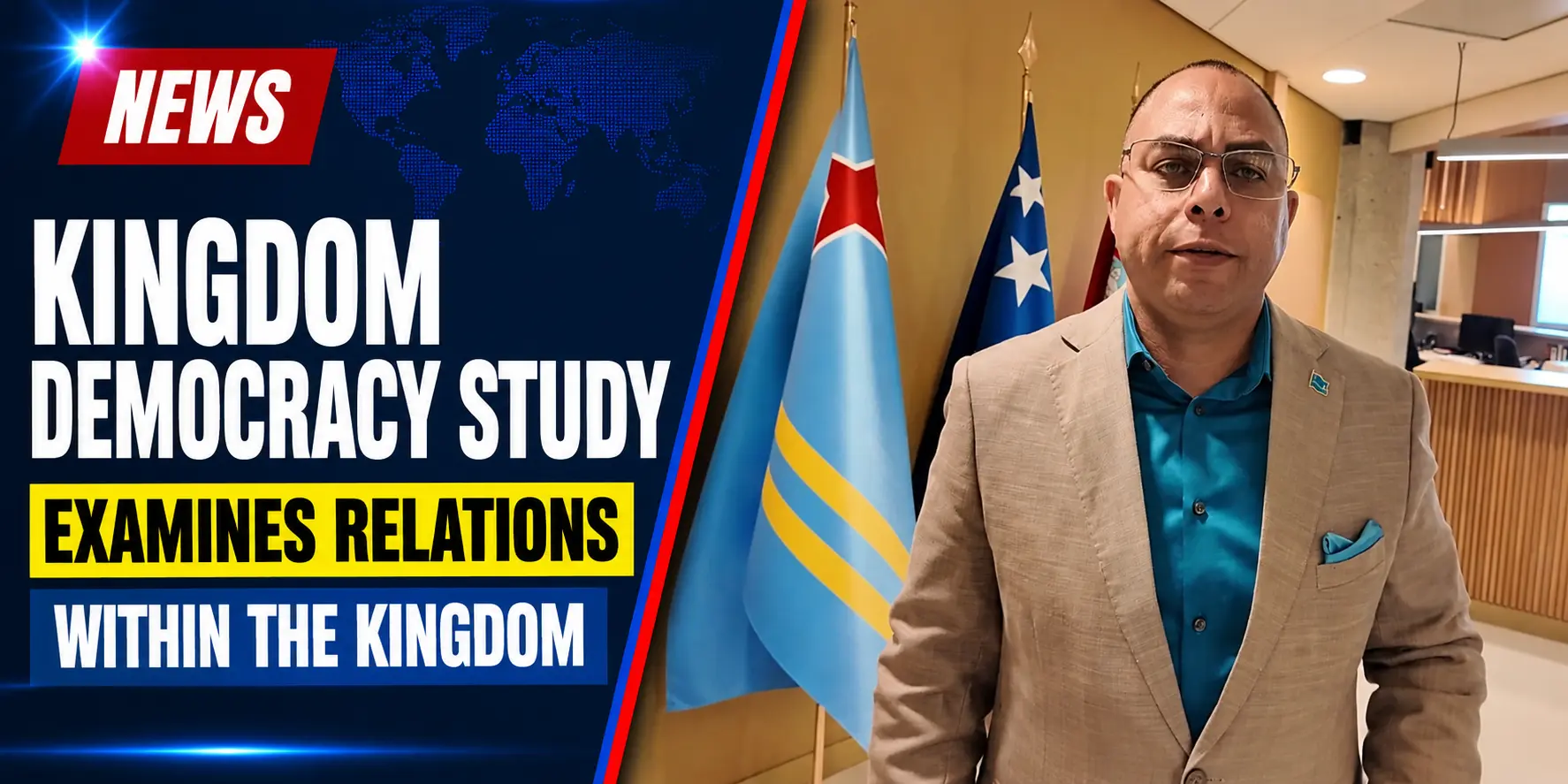
A comprehensive Kingdom Democracy Study was presented during the Interparliamentary Kingdom Consultation (IPKO) meetings in the Netherlands, providing an in-depth analysis of democratic governance and institutional relations among the four countries of the Kingdom of the Netherlands.
According to PPA parliamentarian Eduard Pieters, one of the most significant moments of the conference was the presentation delivered by an independent panel of experts tasked with evaluating the state of democracy within the Kingdom.
The Kingdom Democracy Study was not a political presentation but an evidence-based analysis built on academic research, literature reviews, and investigations conducted by a commission of experts appointed by the parliaments of the Kingdom countries.

At the center of the study was a fundamental question: How healthy is democracy within the Kingdom?
To answer that question, the experts focused on four key dimensions that determine the effectiveness of democratic systems. The first dimension examined representation, assessing whether citizens across the Kingdom feel their voices are heard and adequately represented.
The second area of the Kingdom Democracy Study evaluated influence, specifically the extent to which individual countries can shape decisions that affect their future and autonomy.
The third dimension focused on accountability and oversight, examining the ability of parliaments to monitor government actions and demand responsibility for decisions taken within the Kingdom structure.
The fourth area analyzed institutional capacity, including the resources, expertise, and capabilities available to each country to effectively carry out democratic responsibilities.
According to Pieters, the Kingdom Democracy Study highlighted the importance of maintaining a healthy balance between the various institutions and countries that make up the Kingdom. The report emphasized that democracy is not solely about having institutions in place but ensuring those institutions function fairly and effectively.
The study also identified challenges and opportunities for improvement within the current constitutional and institutional framework of the Kingdom.
Pieters welcomed the initiative, noting that democracy should never be viewed as something guaranteed or permanent. Instead, it requires continuous evaluation, improvement, and protection.
The independent expert group will continue refining its work over the coming months. Additional findings and recommendations are expected to be compiled into a formal report scheduled for completion later this year.
Supporters of the Kingdom Democracy Study believe the findings will contribute to a more constructive and mature discussion about strengthening democratic institutions and cooperation among the Kingdom countries.
For the PPA, the central message is clear: a strong Kingdom depends not only on political agreements but also on transparent institutions, public trust, effective representation, and democratic systems that serve all citizens fairly.
Ultimately, the Kingdom Democracy Study argues that democracy is measured not only through laws and structures but also through the confidence citizens have that their voices genuinely matter within the Kingdom.