

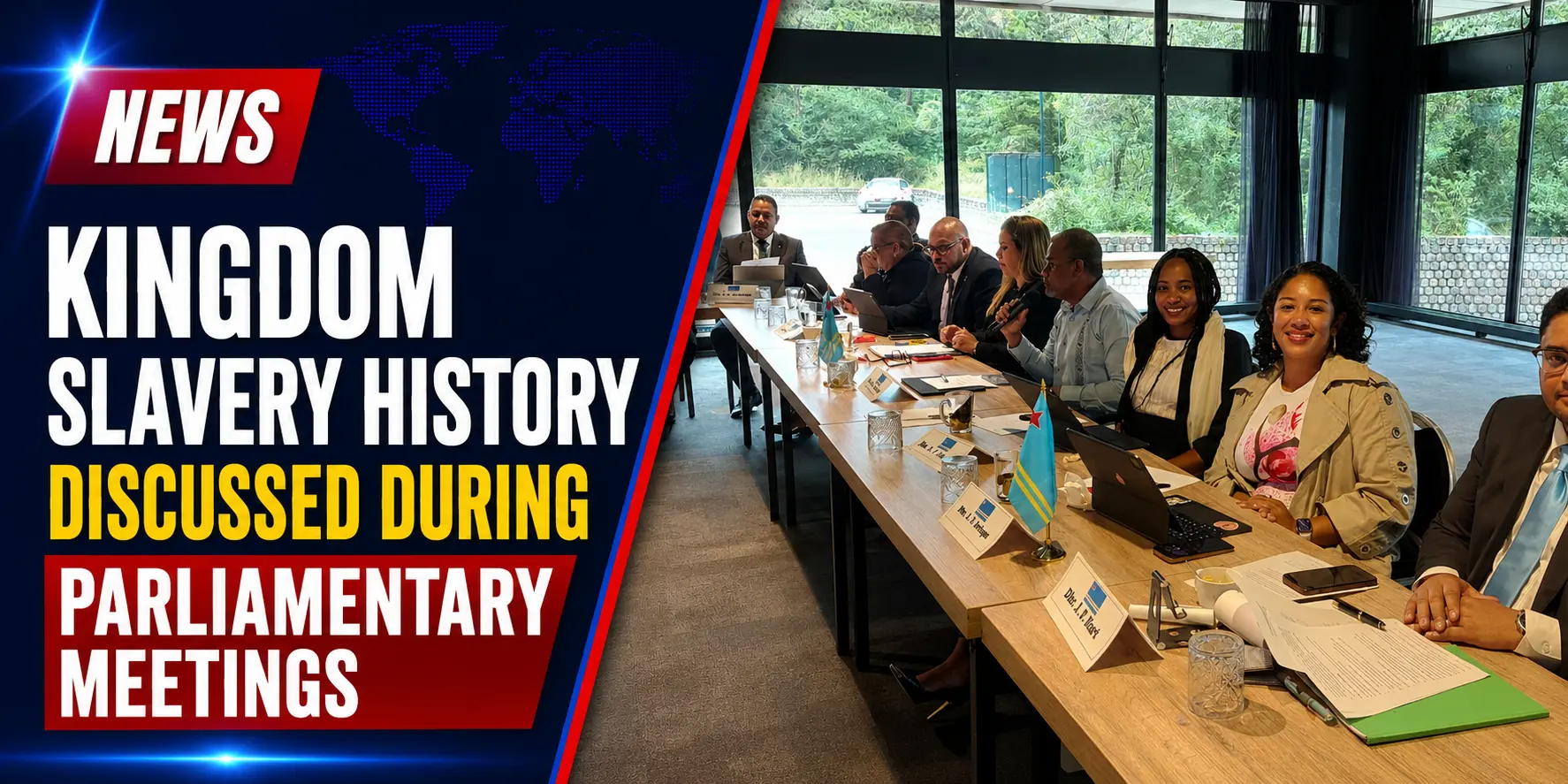
The topic of Kingdom Slavery History received significant attention during recent parliamentary meetings involving representatives from Aruba, Curaçao, and Sint Maarten ahead of the Interparliamentary Kingdom Consultation (IPKO) in the Netherlands.
Jennifer Arends-Reyes, President of the Committee for Kingdom Affairs and Foreign Relations and leader of the AVP parliamentary faction, participated in several productive discussions as part of the Tripartite Meeting between the three Caribbean countries of the Kingdom.
According to Arends-Reyes, the meetings provided an important opportunity to exchange perspectives, share experiences, and strengthen parliamentary cooperation. Various issues of common interest were discussed, including Kingdom relations, the implementation of a dispute resolution mechanism, and the role of central banks and monetary unions within the different countries.

A major topic during the discussions was Kingdom Slavery History and the recent United Nations vote concerning a proposal to recognize slavery and the transatlantic slave trade as among the gravest crimes against humanity.
Representatives from Aruba, Curaçao, and Sint Maarten reportedly reached a common position regarding the abstention of the Kingdom of the Netherlands during the vote. According to Arends-Reyes, Caribbean countries within the Kingdom should have been consulted beforehand because of the historical significance of the issue.
She emphasized that Kingdom Slavery History carries profound meaning for the peoples of the Caribbean and that their perspectives should be considered in decisions of such importance.
The Aruba delegation also highlighted the many shared realities, challenges, and interests among Aruba, Curaçao, and Sint Maarten. Officials stressed the importance of continued collaboration to strengthen their collective voice in discussions affecting the future, autonomy, and wellbeing of citizens across the three countries.
According to Arends-Reyes, the Tripartite Meeting serves as more than a formal gathering. It functions as a platform for building trust, deepening political dialogue, and identifying practical areas for cooperation.
The discussions surrounding Kingdom Slavery History also reinforced the value of direct communication between parliamentarians from the Caribbean countries. Participants noted that despite each nation maintaining its own identity and autonomy, there remain many shared interests that benefit from coordinated action.
The Aruba delegation described the meetings as productive and reaffirmed its commitment to active participation in future cooperation initiatives.
Arends-Reyes concluded that continued dialogue, mutual respect, and collaboration remain essential for addressing shared challenges and building a more stable, fair, and prosperous future for communities throughout the Kingdom.