
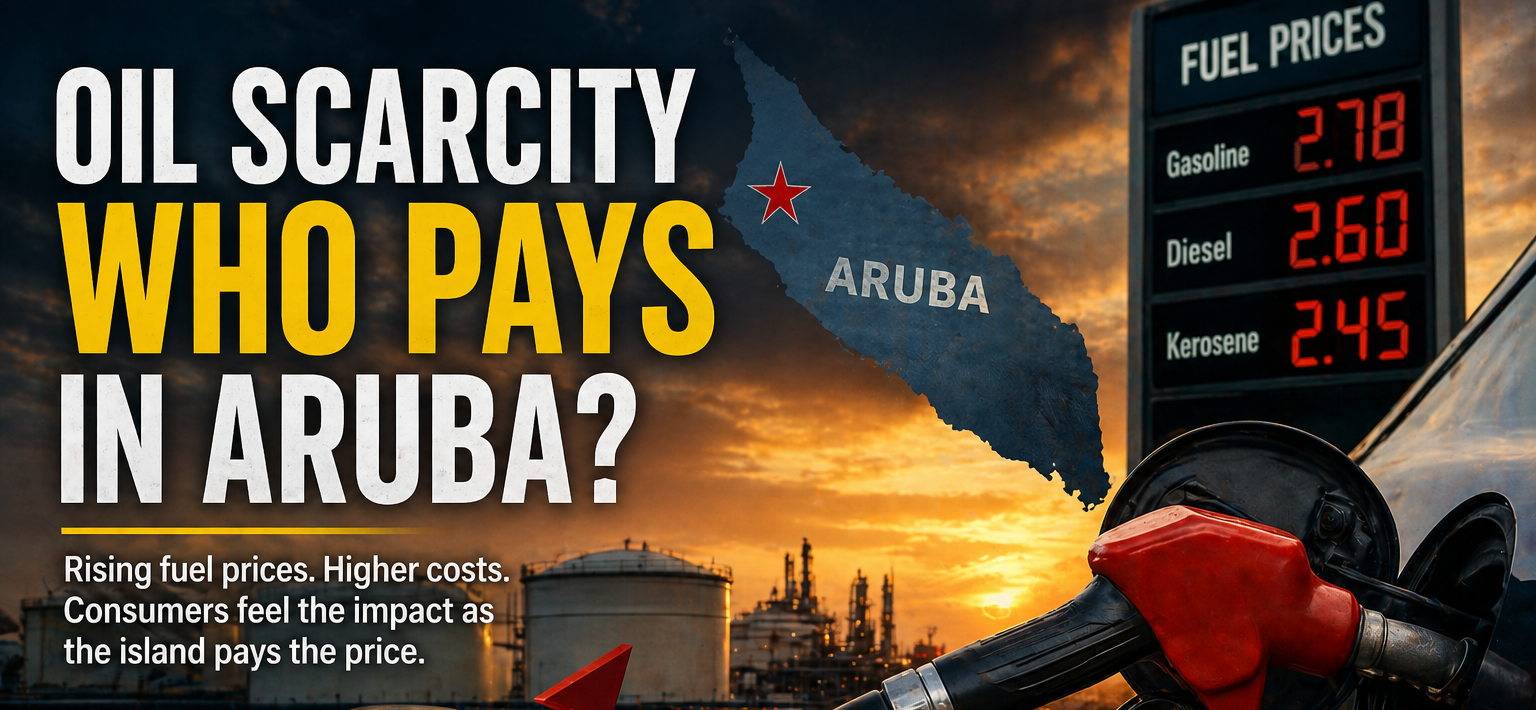
Oil Scarcity Who Pays in Aruba? : In principle, the question asked is partially easy to answer: ultimately the consumer pays the bill in any crisis. But the question remains: who ‘collects’? With so many billions passing through other hands, it would be good to know where all that money ends up. After more than a month of war, we are already in misery and consumers can feel the price increase in the ‘downstream’ (refining and distribution), and that will remain so even if crude oil market prices return to previous levels. According to Central Bank figures, in 2023 Aruba imported a total of Afl. 228 million in chemical products, largely petroleum products. A 40% increase in fuel prices could mean paying close to Afl. 350 million annually. This implies an additional cost equivalent to more than 1% of GDP. In food production, more complications can be expected related to petroleum product price increases and fertilizer scarcity from the Middle East. In 2023, Aruba imported Afl. 344 million in food. The impact on a household could be even greater with the increase in gasoline and diesel, especially for lower-income households that spend a larger portion of their income on food.