

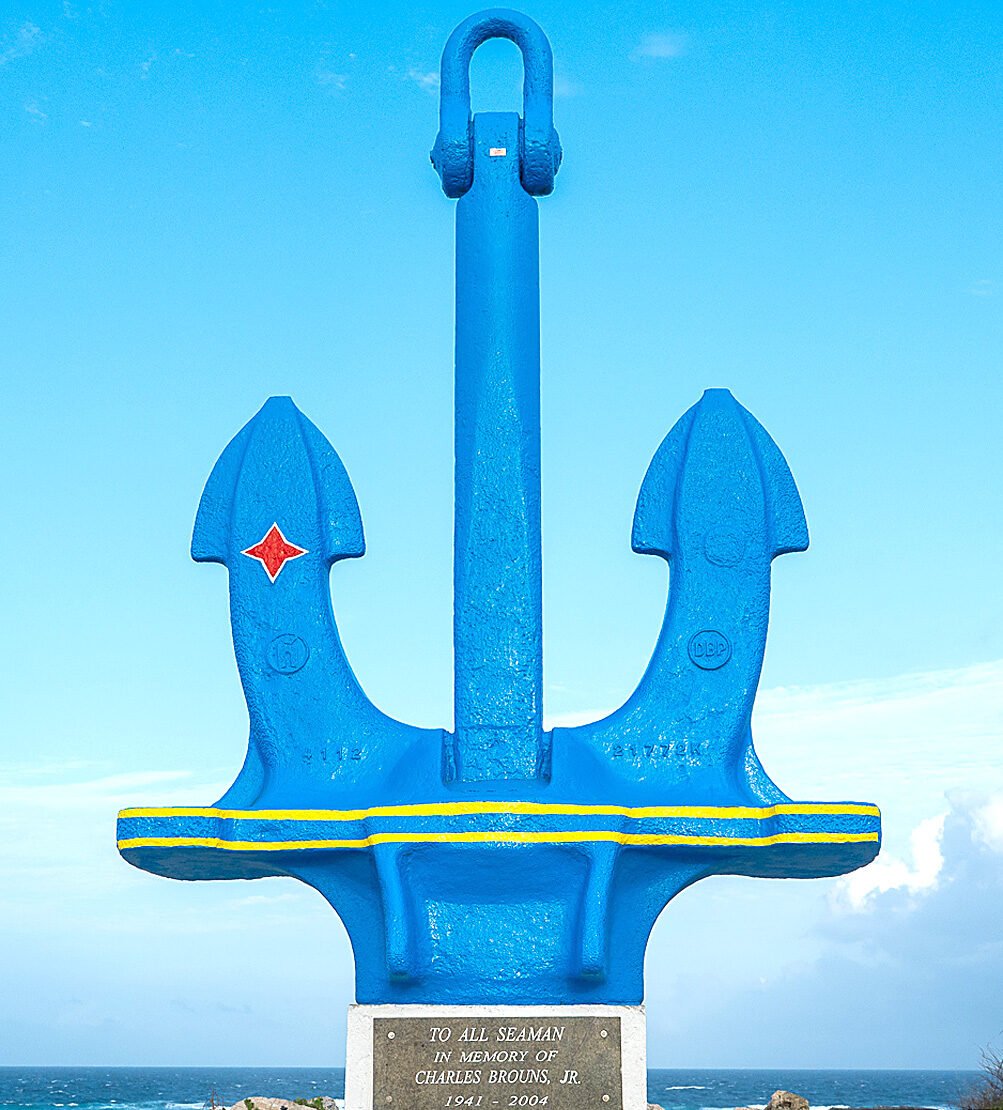
The historic anchor symbolizes strength and cultural heritage of Aruba, serving as a reminder of the island’s history, identity, and resilience. This week began with a special ceremony commemorating the historic monument, which for decades has represented the perseverance and stability of the Aruban people.
During the ceremony, speakers reflected on the importance of the historic anchor symbolizing strength and cultural heritage of Aruba, highlighting its connection to the island’s past and its role as a national symbol. The monument has been decorated in patriotic colors for this month, marking an important moment of remembrance and national pride.
Historian Leon M. Berenos shared the historical background of the anchor during the event. The ceremony was attended by Prime Minister Mike Eman, Minister of Tourism Wendrick Cicilia, members of the Brouns family, including relatives of Charlie Brouns Jr., as well as invited guests.

Prime Minister Mike Eman expressed his appreciation for being able to celebrate the moment alongside the Brouns family. According to the Prime Minister, the anchor was installed partly as a tribute to Charlie Brouns Sr. and Charlie Brouns Jr., two generations that played a significant role in the history of Aruba and the development of its tourism industry.
“Charlie Brouns’ bar is one of the most iconic places visited by tourists when they arrive in Aruba,” Eman said. “Three generations of the Brouns family have contributed greatly to the tourism sector and to the unique hospitality Aruba offers its visitors.”
The historic anchor was installed on March 31, 1985, and since then it has stood as a symbol connecting Aruba’s history, tourism, and national identity.
Berenos explained that the story behind the monument is closely tied to the life of Charlie Brouns Sr., who settled in Aruba after being born in the Netherlands. Together with his wife Marie, he established a business that later evolved into an important meeting place for sailors, oil industry workers, and visitors to the island.
In 1941, he opened Charlie’s Bar, a well-known establishment that later passed to his son Charlie Brouns Jr. after 36 years. The family tradition continued with Charlie Brouns III, who maintained the cultural and commercial legacy of the family.
One of the most notable moments in this history was the installation of the anchor itself. The German-origin anchor became a lasting symbol of strength, stability, and resilience for Aruba.
Berenos compared the monument to well-known global symbols such as the Statue of Liberty in New York, explaining that every country has symbols that represent its spirit. In Aruba’s case, the anchor represents an island that has remained strong despite historical challenges.
During the ceremony, Charlie Brouns III also spoke about the importance of preserving Aruba’s history and passing it on to future generations.
“We are a small island, but we have a big heart,” Brouns said, highlighting the pride and resilience that characterize the Aruban people.
The ceremony also recognized the contributions of Wilhelm “Bill” Geerman, who volunteered his efforts during the installation of the anchor at Colony. His children, Alvin and Edith Geerman, shared that their father was deeply dedicated to the community of San Nicolas. Together with Robby Brinkman, a boat builder, and members of the Brouns family, he helped place the historic monument.
For more than 40 years, the anchor has remained firmly in place despite storms and changes over time. Today, it continues to stand as a powerful symbol reminding both residents and visitors of Aruba’s strength, cultural heritage, and enduring spirit.