

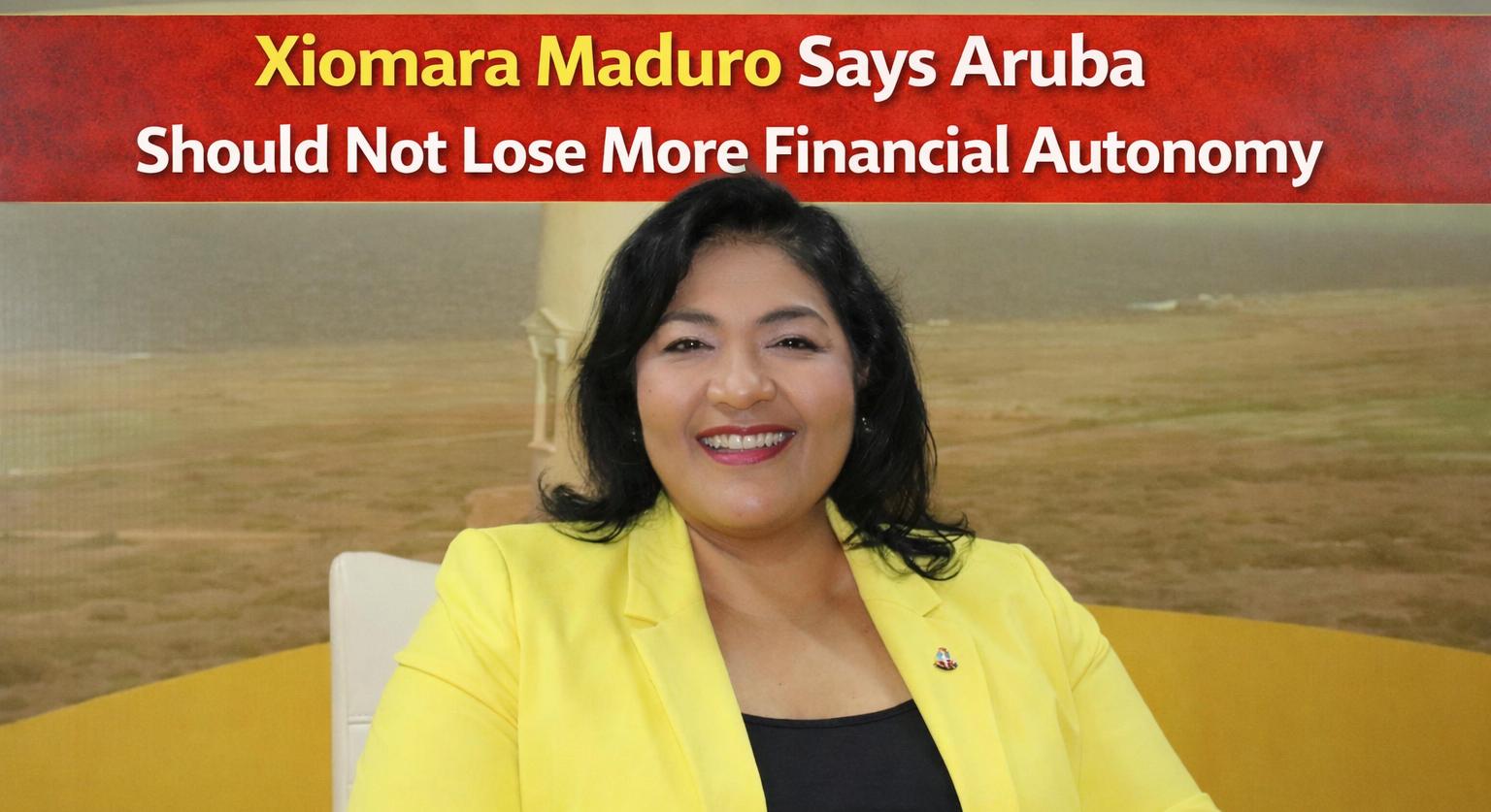
Parliamentarian Xiomara Maduro stated that there is no valid reason for Aruba to lose additional financial autonomy through the introduction of the Rijkswet HOFA Aruba autonomy, emphasizing that the island already operates under financial supervision mechanisms.
Maduro, who previously served as Minister of Finance, explained that Aruba has been subject to financial oversight since 2015, when the country introduced its own financial supervision system designed to strengthen fiscal discipline and improve the management of public finances.
Existing Financial Supervision Already in Place
According to Maduro, Aruba already has mechanisms that monitor government spending and ensure responsible fiscal management. These systems were implemented to maintain transparency and discipline in the country’s public finances.

She stressed that the current framework has produced visible results in recent years.
“Aruba already operates under financial supervision,” Maduro said. “The real question is not whether supervision is necessary, but whether the current system should be replaced with one that gives the Netherlands greater influence over Aruba’s financial decisions.”
Debate Over the Rijkswet HOFA
The Rijkswet HOFA (Kingdom Act on Sustainable Public Finances for Aruba) is a proposed law within the Kingdom of the Netherlands aimed at ensuring long-term financial sustainability and stronger oversight of Aruba’s public finances.
Under this framework, financial standards and monitoring mechanisms would be established at the Kingdom level, with advisory oversight continuing through the College Aruba financieel toezicht (CAft).
Supporters argue the law could improve financial stability and allow Aruba to access lower interest rates on loans and refinancing options through the Netherlands, which could support investment in infrastructure, healthcare, and education.
However, critics have expressed concern that the proposal could increase Dutch influence over Aruba’s financial policies, potentially affecting the island’s autonomy.
Financial Results Show Progress
Maduro highlighted recent financial data showing improvements in Aruba’s fiscal position. According to her, stronger fiscal discipline has helped stabilize government finances, reduce public debt, and create room for economic investment and social programs.
She argued that these developments demonstrate Aruba’s ability to manage its finances responsibly without additional external control.
“If a system is working and producing results, there is no reason to replace it with a model that shifts more power outside Aruba,” Maduro said.
Protecting Aruba’s Constitutional Autonomy
Maduro also emphasized that Aruba’s constitutional autonomy, as defined in the Statute of the Kingdom of the Netherlands, should continue to be respected.
Each country within the Kingdom has primary responsibility for managing its own internal affairs, including financial policy, she noted.
The parliamentarian called for a balanced and serious national discussion about the future of financial supervision in Aruba, ensuring that the island’s interests and institutional autonomy remain central to the debate.