

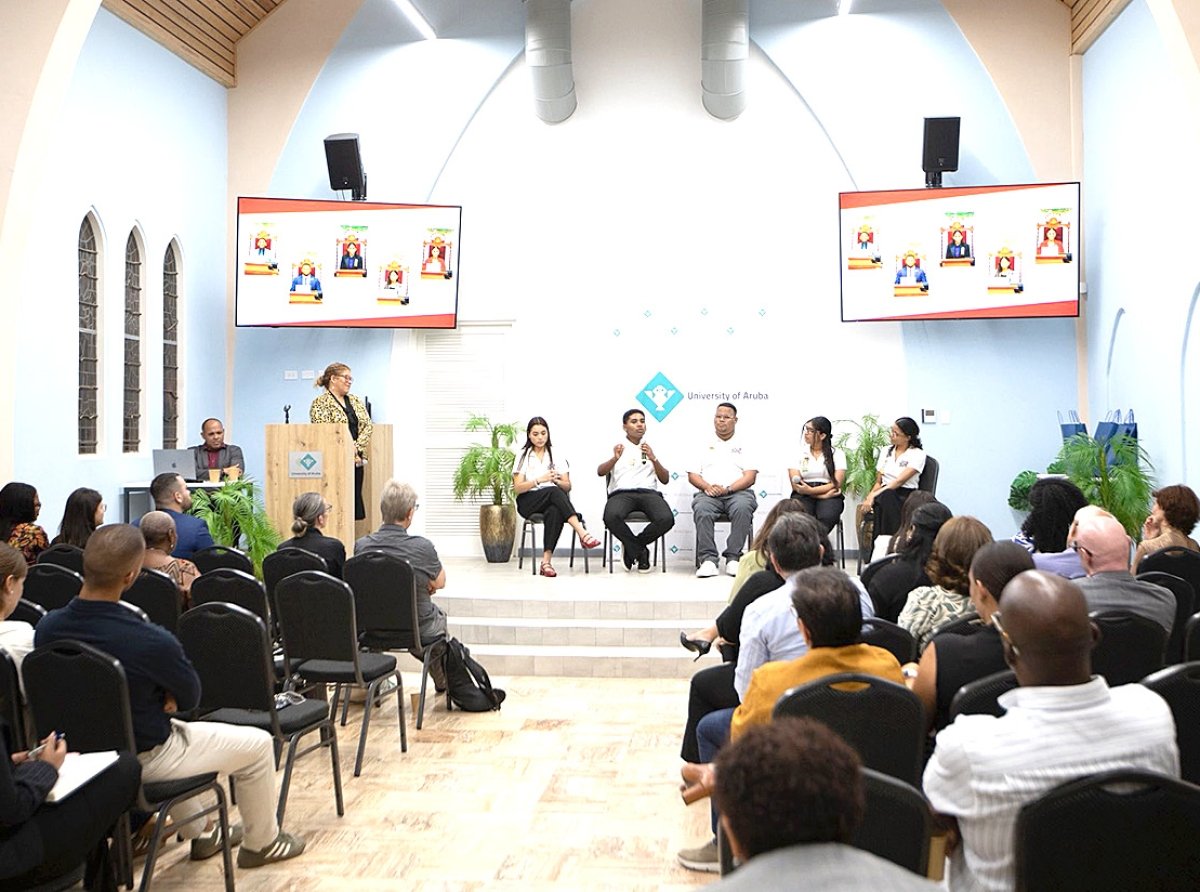
HOPE Aruba and the Centre for Lifelong Learning (CLL) of the University of Aruba recently hosted a national symposium to present the newest findings from the Aruba Youth Monitor Post-COVID, titled Quality of Life of Aruban Youth. The results reveal clear concerns regarding students’ mental health, school experiences, family conditions, and neighborhood safety. The symposium was held on Tuesday, November 25, at the Maria Convent Hall of the University of Aruba.
The Monitor represents a unique national dataset covering Aruba’s population of youth ages 10 to 12, along with all first- and second-year secondary students who voluntarily completed the survey with their parents’ permission. All school boards cooperated, over 100 education professionals were interviewed, and group discussions with parents added essential context.
Together, these efforts produced one of the most comprehensive youth well-being datasets in the region. The findings highlight interconnected challenges affecting Aruban youth: emotional stress, limited support at school, family pressures, and concerns about safety in their neighborhoods. Many students reported feeling overwhelmed emotionally and insufficiently supported by their educational and social environments.

The study was led by Dr. Paula Kibbelaar of the Instituto Pedagógico Arubano (IPA), with quantitative analysis conducted by Professor Dr. Annemarie Slotboom and Professor Dr. Jan Hendriks of Vrije Universiteit Amsterdam. The research team included several IPA professionals: Janneke Dapper, Gregory Goedgedrag, Rainier Kock, Marvin Odor, and Marlene de Cuba. Minister of Education, Youth, Innovation, Kingdom Relations, and Sports, Ms. Gerlien Croes, opened the symposium and emphasized the importance of using these findings to strengthen youth support systems and development opportunities.
A youth panel featuring representatives from the Youth Parliament, moderated by HOPE Aruba’s Project Officer Jessica Besselink, shared honest reflections on their daily realities. The event took place shortly after Aruba commemorated Universal Children’s Day, reinforcing the nation’s commitment to ensuring that every child is heard, protected, and supported. The presence and participation of young people highlighted the value of giving youth a genuine voice in shaping policies that affect their lives.
A second expert panel, moderated by Michele Brooks, offered deeper insights into the significance of the data. Experts Raymicheline (Misha) Raymond, Jonathan Trinidad, Dalgis Montalvo, and Jennifer Margaretha discussed the connection between home, school, and neighborhood environments; the need for more accessible support systems; teacher capacity and school well-being; community conditions; and the importance of institutionalizing the Youth Monitor as a long-term tool for timely interventions and evidence-based policy. The symposium emphasized the need for follow-up measurements every three years, ensuring Aruba maintains continuous, reliable data to guide sustainable youth policies.
As an organization focused on social transformation and empowerment, HOPE Aruba stressed that these findings require more than concern—they demand coordinated action grounded in evidence, collaboration, and compassion. The evening concluded with recognition of all partners, including the Government of Aruba, the Department of Education, IPA, Vrije Universiteit Amsterdam, the Centre for Lifelong Learning, and the wider community of educators and families who contributed to the study.
Aruba now has the data it needs, and HOPE Aruba is calling on all partners to unite and transform this information into concrete, coordinated actions that will strengthen, support, and protect the well-being of every child on the island.













Discussion about this post