


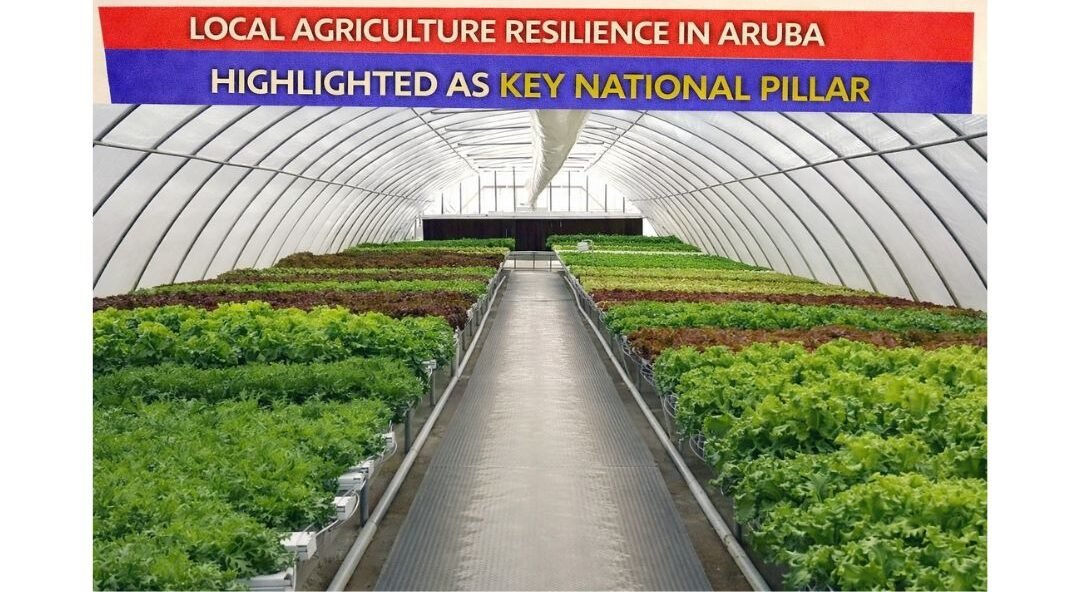
ORANJESTAD (AAN): Local agriculture resilience in Aruba has once again been emphasized as a critical pillar for national stability, according to the United Farmers Association of Aruba (UFA), as the island enters 2026.
UFA reaffirmed its commitment to strengthening local food production, stressing that recent disruptions—such as the logistical challenges following events on January 3 in Venezuela that caused flight cancellations and supply uncertainty—serve as a reminder of how vulnerable Aruba’s supply chains can be to external events. Similar lessons were learned during the COVID-19 pandemic, when import access was limited and local capacity proved essential.
According to UFA, these moments demonstrate why local agriculture resilience in Aruba must remain a strategic priority. Local farmers are not only food producers, but also guardians of knowledge, infrastructure, and production capacity that ensure food availability during times of crisis.

While regional conditions are stabilizing and markets are returning to normal, UFA cautioned against reverting to excessive dependence on low-cost imported food. Short-term affordability, the association stated, should not undermine long-term resilience.
UFA highlighted the need for continued political support, including access to land, water, electricity, financing, technology, and agricultural extension services. Strengthening and expanding existing fiscal incentives would allow farmers to remain competitive and reinvest in modern, efficient, and sustainable production systems—key factors for maintaining local agriculture resilience in Aruba over the long term.
Looking ahead, UFA expressed confidence in 2026, stating that with clear priorities and consistent commitment, Aruba can continue building a stronger, more self-sufficient, and more resilient food system that benefits both farmers and the wider community.
The association reaffirmed its mission to support local farmers and advocate for a resilient, sustainable, and competitive agricultural sector that contributes to Aruba’s long-term food security.
















Discussion about this post