


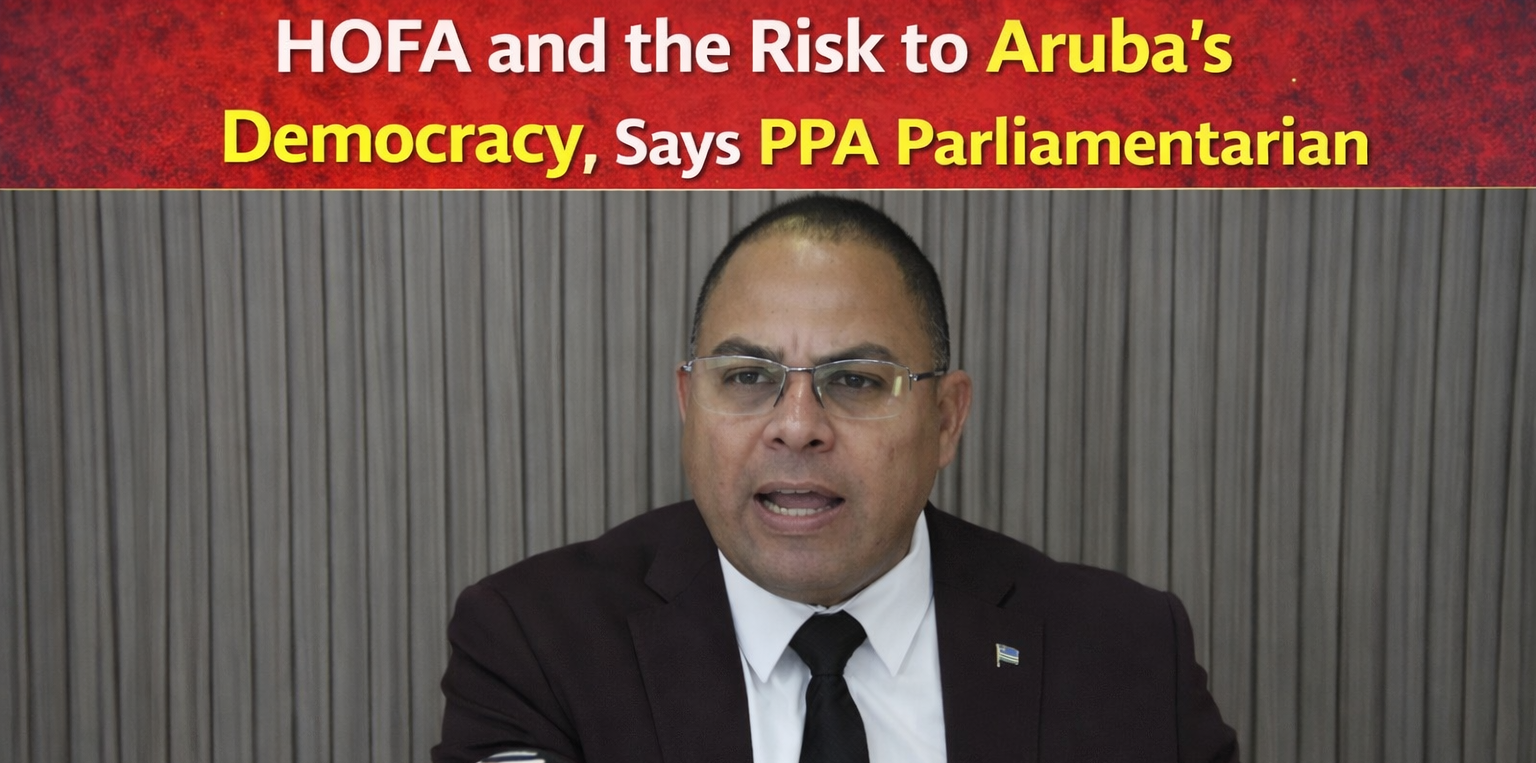
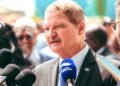
HOFA risk to Aruba democracy has become a central concern in the ongoing political debate surrounding the proposed consensus Kingdom law. According to Eduard Pieters of the PPA faction, the discussion is not merely about financial supervision but about the fundamental principles of democracy and autonomy in Aruba.
Pieters argues that the proposed Rijkswet HOFA raises important questions about the balance of power between Aruba and the Kingdom of the Netherlands. In particular, he points to the possible impact on the budgetary authority of Aruba’s Parliament, a core element of democratic governance.
The Budget Right as the Heart of Parliamentary Democracy
In any parliamentary democracy, the budget right gives the national parliament the final authority over the country’s finances. This right allows elected representatives to determine how public funds are spent and to hold the government accountable.

According to Pieters, the structure proposed under HOFA and the risk to Aruba’s democracy may alter this balance. The supervision and approval processes for Aruba’s financial decisions could become more closely connected to the Rijksministerraad, the Council of Ministers of the Kingdom.
Pieters warned that this arrangement may also involve influence from institutions in the Netherlands, such as the Dutch Parliament (Tweede Kamer).
“If crucial decisions about Aruba’s budget depend on institutions in The Hague, what remains the real role of Aruba’s Parliament?” Pieters questioned.
He emphasized that the Aruban people elect 21 members of Parliament to represent them locally, not representatives in the Dutch Parliament.
Autonomy in Practice
Aruba’s constitutional position is defined by the Statute of the Kingdom of the Netherlands, which grants the country autonomy in managing its internal affairs, including financial policy.
Pieters stated that if Aruba’s financial decisions become conditioned by Kingdom-level mechanisms, the island’s financial autonomy could become limited in practice, even if it remains recognized in theory.
For the PPA faction, Aruba’s Status Aparte, achieved in 1986, represents an important historical achievement that should not be compromised without broad public debate.
Need for Flexibility During Crises
Another concern raised by Pieters is the potential impact on Aruba’s ability to act quickly during economic or social crises.
As a small island economy, Aruba must often respond rapidly to international developments that affect tourism and economic stability.
Recent examples include:
-
The global financial crises
-
The COVID-19 pandemic
-
International tensions affecting tourism and economic activity
According to Pieters, if financial decisions require approval through lengthy Kingdom-level procedures, Aruba’s ability to respond quickly could be reduced.
“We cannot remain waiting for decisions in The Hague when local situations demand immediate action,” he said.
Lessons from the Caribbean
Pieters also referenced the experience of Bonaire, which became a special municipality of the Netherlands in 2010. In that system, many administrative and financial decisions are managed directly within the Dutch framework.
For Pieters, Aruba never fought for that type of relationship. Instead, the island pursued Status Aparte to maintain a unique and autonomous position within the Kingdom.
A Question for the Future
The debate surrounding HOFA and the risk to Aruba’s democracy ultimately raises a broader question about the island’s political future.
Pieters concluded by asking whether Aruba can truly claim its autonomy remains intact if one of Parliament’s most important powers—the authority over the national budget—becomes restricted.
He reminded the public that Aruba’s autonomy was achieved through decades of political struggle and sacrifice.
“The decisions made today will determine whether future generations inherit the same freedom of decision that Aruba gained in 1986,” Pieters said.












Discussion about this post