


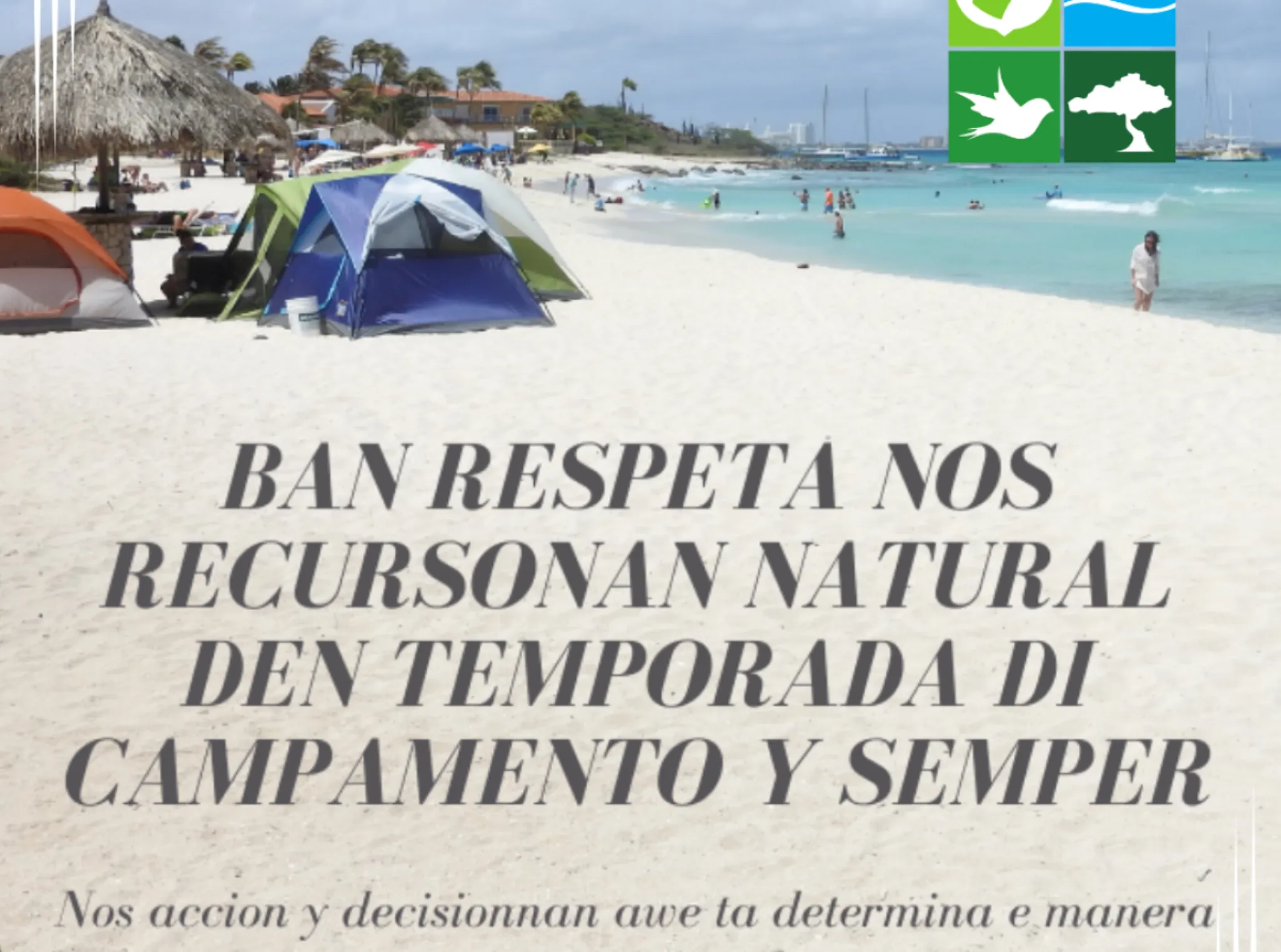
ORANJESTAD (AAN): As the 2026 camping season kicks off, the community of Aruba prepares to enjoy the natural beauty of the island, including its beaches, forests, and fresh air. The Department of Nature and Environment (DNM) has issued an urgent call for all campers to not only comply with the regulations stated in their permits but to place special emphasis on the protection of Aruba’s flora and fauna during this critical time for wildlife.
Aruba’s nature is home to many species that are now in a critical phase of their life cycle. One key focus is the protection of sea turtles, as the camping season coincides with the turtle nesting period. The DNM reminds campers that all turtle species are protected by law, and disturbing the turtles or shining artificial lights near their nesting sites can lead to disorientation and cause them to abandon their nests. Campers are asked to follow these crucial guidelines:
- Respect: If you spot a turtle or nest, keep a safe distance and report it to the Turtugaruba hotline.
- Lights: Avoid using strong artificial lights near beaches at night, as they confuse the turtles.
- Obstacles: Do not leave furniture, tables, or any structures on paths where turtles might need to pass.
Additionally, the DNM highlights the importance of protecting nesting sites for other wildlife. Many local and migratory bird species use the island’s coastal areas to rest and breed. Campers are urged to avoid disturbing these areas:

- Quiet Zones: Keep noise levels to a minimum and stay out of designated wildlife areas.
- Pets: Keep pets under control to prevent them from disturbing nesting sites.
The DNM also emphasizes the critical role that vegetation plays in protecting Aruba’s coastline from erosion. Campers should be mindful of the following:
- No Cutting: Cutting or damaging vegetation, such as mangrove and coastal plants, is prohibited.
- No Trampling: Avoid walking on sensitive coastal plants to prevent accelerating erosion.
Finally, campers are encouraged to leave no trace behind by cleaning up all waste, especially sushi (garbage) found during their stay. Items left behind can be hazardous to wildlife.
Through these collective efforts, the goal is to enjoy Aruba’s beautiful camping tradition without compromising the future of its natural resources. The DNM urges the community to be vigilant and proactive in safeguarding the environment for future generations.
For more information on the nature regulations or to report an emergency, contact the relevant authorities, including KPA, BCI, and DNM at info@dnm-aruba.org.













Discussion about this post