


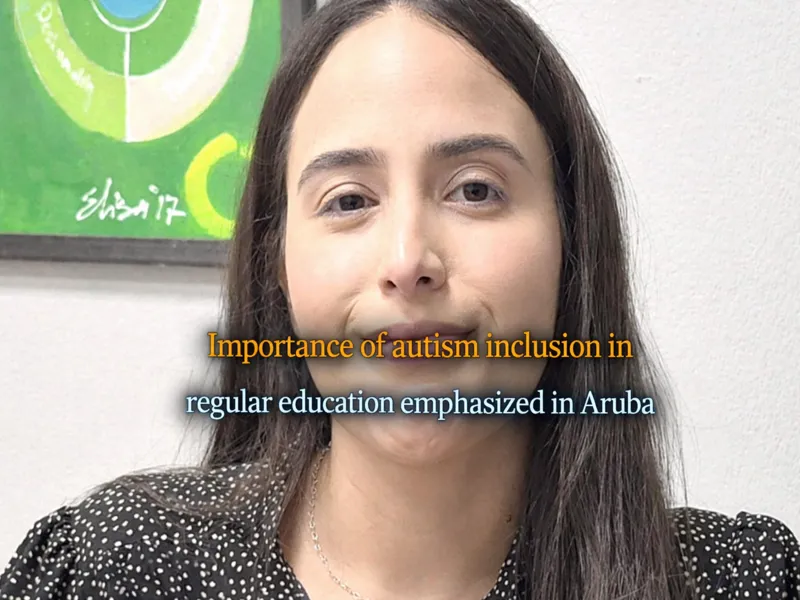
ORANJESTAD (AAN): Every child deserves a place where they can learn, grow, and feel like they belong. For children with autism, inclusion in regular education is a crucial step for their social and academic development. When given the opportunity to participate in an inclusive environment, these children not only thrive but also contribute to creating a more humane and just community.
Carolina Span, of the Fundacion Autismo Aruba (FAA), emphasizes the importance of including as many children with autism as possible in regular education. However, she points out that this requires a serious expansion of the support and resources that educators need in the classroom.
Span stresses the need for more teaching assistants and smaller class sizes. According to her, the government has previously implemented similar measures that have shown positive results, but these need to be formalized and regulated to ensure that classrooms do not exceed 24 students.

Furthermore, educators must have the support they need when they need it. This includes having assistants who can dedicate more attention to students with special needs, and a stronger support system for all schools. Currently, many schools share social and psychological services, but Span argues that this model is insufficient to meet the growing demand.
“The demand in each school is growing, and it would be ideal to have care teams that are more accessible and available for every school,” said Span.
To conclude, she emphasizes that only with a solid and structural support system will Aruba be able to ensure truly inclusive education for all its children. Without proper support, children with autism will not be able to reach their full potential. Therefore, strengthening the resources and training of educators is critical to ensuring that no child is left behind in the educational system.















Discussion about this post