

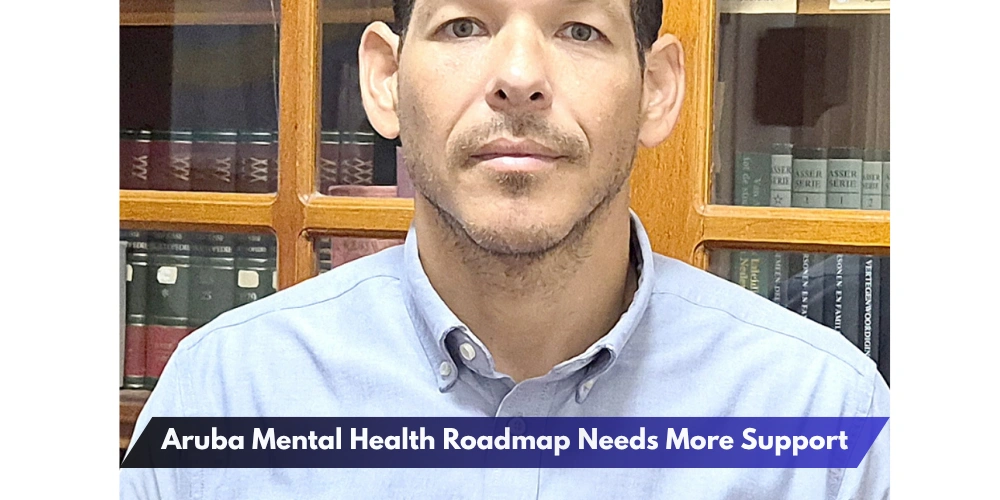
ORANJESTAD, Aruba — The Aruba Mental Health Roadmap needs adequate funding and additional professionals if the island is to fully implement its long-term mental-health strategy, according to MEP parliamentarian and former minister Rocco Tjon.
Tjon said he is concerned that mental health is not receiving sufficient priority, despite an existing structure and roadmap intended to guide development of the sector through 2030.
According to Tjon, the roadmap was developed with professionals and organizations throughout Aruba’s mental-health sector in cooperation with the Pan American Health Organization, or PAHO.

He said the current government has indicated that it intends to continue implementing the roadmap.
Aruba Mental Health Roadmap Requires Funding
Tjon emphasized that continuing the Aruba Mental Health Roadmap requires more than maintaining plans on paper.
Financial resources must be available to implement programs, and enough qualified professionals must be recruited to provide the necessary services.
Mental-health services are particularly dependent on trained personnel, making staffing an essential part of expanding treatment and reducing pressure on existing organizations.
Tjon argued that a lack of sufficient funding or professionals could prevent parts of the roadmap from being fully implemented.
He said the mental-health system needs continued investment if Aruba wants to strengthen prevention, early intervention and specialized treatment.
Tjon Points to Stichting HUNTO Reorganization
Tjon also reflected on work carried out during his period as a minister.
He said one of the important developments was the reorganization that ultimately strengthened Stichting HUNTO, bringing together professionals and services involved in mental-health and addiction care.
Historical reporting shows that Stichting HUNTO developed from efforts to bring the Fundacion Maneho di Adiccion Aruba and the Department of Social Psychiatry closer together, with multiple stakeholders involved in building a more coordinated structure.
Tjon described Stichting HUNTO as an organization that has developed a strong reputation within Aruba’s social and mental-health sector.
The organization continues to provide addiction and mental-health services and has expanded outreach activities for people living on the streets.
Mental-Health Support in Primary Care
Tjon also highlighted the introduction of specialized POH mental-health support professionals as an example of innovation within Aruba’s healthcare system.
According to Tjon, professionals received training intended to strengthen support for people experiencing mental-health challenges.
The broader objective was to make mental-health assistance more accessible and improve coordination between primary care and specialized services.
He argued that initiatives of this kind demonstrate the importance of investing not only in infrastructure but also in professional knowledge and staffing.
Long-Term Strategy Needs Continued Priority
Tjon said Aruba already has a structure that can continue to be developed, but implementing it successfully requires sustained political and financial commitment.
The Aruba Mental Health Roadmap, according to his account, was created with involvement from stakeholders across the sector rather than by one organization alone.
That gives the strategy continuity beyond changes in government, he argued.
However, Tjon warned that a roadmap cannot achieve its objectives without the resources required to execute individual programs.
His main concern is therefore whether sufficient funding and personnel will be made available to continue the work through 2030.
For Aruba’s mental-health system, he said, the next step should be ensuring that existing plans are translated into practical services that residents can access when they need professional support.