


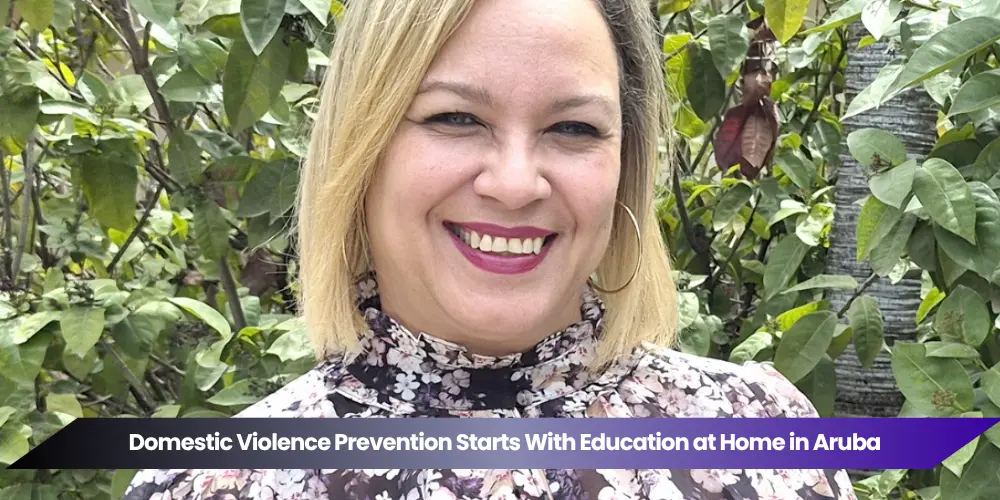
ORANJESTAD, Aruba — Domestic violence Aruba concerns are closely connected to how children are raised at home, according to Esther Broeksema, director of Fundacion Contra Violencia Relacional (FCVR).
Broeksema said domestic and gender-based violence are complex problems influenced by several social and behavioural factors, but education within the family plays a particularly important role.
FCVR organizes talks and educational programs designed to promote healthy relationships and increase awareness of warning signs that could indicate a harmful or potentially violent relationship.

The organization also wants people experiencing violence to understand that they do not have to face the situation alone.
Domestic Violence Is Not a Private Matter
Broeksema stressed that violence, particularly domestic violence, should not be treated as something that must remain behind closed doors.
She encouraged people experiencing abuse to seek assistance and speak with someone they trust.
According to FCVR, the effects of Domestic violence Aruba cases can extend far beyond the two people directly involved.
Children can be affected by violence in the home, while employment, productivity and the wider community may also experience consequences.
Broeksema said this makes domestic violence a community-wide issue that requires collective responsibility and attention.
Childhood Education Can Shape Future Relationships
According to Broeksema, violence can develop from a combination of factors, including upbringing, bullying, stalking and online harassment.
She specifically highlighted harassment through digital platforms and messaging applications such as WhatsApp as behaviour that is becoming increasingly concerning.
Another issue requiring attention, she said, is the continued influence of machismo and traditional gender expectations within society.
Parents may consciously or unconsciously reinforce these patterns by raising boys and girls differently or teaching them different expectations about how men and women should behave.
Broeksema believes these early lessons can influence how children understand relationships as they grow older.
The behaviour children observe at home, the examples adults provide and the roles assigned to different genders may all affect how young people eventually approach their own relationships.
FCVR Focuses on Education and Prevention
For this reason, FCVR considers prevention and education essential components in addressing Domestic violence Aruba concerns.
The organization believes that teaching children about respect, equality, personal boundaries and healthy relationships from an early age can contribute to breaking harmful patterns.
Broeksema acknowledged that considerable work remains to increase awareness throughout the community.
She also welcomed cooperation from organizations in Aruba’s social sector that support educational and preventative efforts.
Among those partners is Tienda di Educacion, which provides workshops addressing subjects connected to relationships, behaviour and social development.
FCVR plans to continue promoting awareness so residents can better recognize warning signs, understand the broader consequences of abuse and encourage healthier relationships.
Broeksema’s message emphasizes that preventing Domestic violence Aruba cases cannot depend only on responding after violence occurs. Long-term prevention also requires attention to what children learn at home, the examples they observe and the values communities teach future generations.