

ORANJESTAD, Aruba – Aruba Organic Waste Becomes Valuable Resource through the Compost Alliance, an initiative bringing together hotels, businesses and other partners to transform food scraps and other organic waste into compost that can benefit agriculture, nature and green spaces across the island.
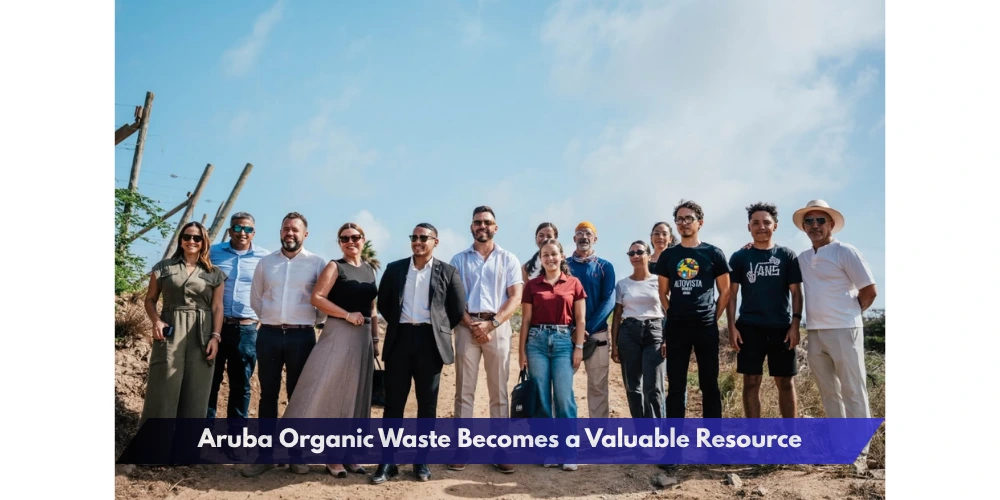
Parliamentarian Jennifer Arends-Reyes, president of Parliament’s Tourism Committee, recently joined Tourism Minister Wendrick Cicilia at a meeting held at Alto Vista Winery to learn more about the Compost Alliance and its contribution to sustainable development in Aruba.
The Compost Alliance is an initiative connected to Iberostar that brings together several hotels and partners, including Aruba Airport Authority (AAA). The project focuses on collecting food waste and other organic material that would normally be discarded and processing it into compost.

By converting organic waste into a useful product, the initiative provides a practical example of a circular economy. Instead of treating waste as something with no further value, the material is reused and returned to the local economy in a form that can support agriculture, landscaping, environmental projects and the maintenance of green areas.
Arends-Reyes said the initiative demonstrates what can be achieved when cooperation and creativity are combined. She emphasized that material normally considered waste can become a valuable resource that benefits the entire island.
According to the parliamentarian, Aruba should continue encouraging projects that reduce waste, increase the reuse of resources and help the tourism industry contribute directly to sustainability.
As a tourism-dependent island, Aruba generates considerable amounts of waste every day through hotels, restaurants, households, businesses and other activities. Arends-Reyes said this makes cooperation between the public and private sectors especially important when developing innovative solutions for waste management.
Aruba Organic Waste Becomes Valuable Resource when food scraps and other biodegradable materials are separated from conventional waste and processed for another productive use rather than being discarded.
Arends-Reyes stressed that sustainable tourism involves more than protecting natural areas. It also requires responsibility, education and cooperation between different sectors of society.
Hotels, airports, businesses, local producers and government agencies can all contribute to the transition toward a more circular economy by reducing unnecessary waste and identifying ways to reuse materials.
The parliamentarian said Aruba’s tourism sector is already one of the main engines of the economy, but it can also become a driver of positive environmental change. Initiatives such as Compost Alliance demonstrate that economic activity and environmental responsibility do not have to work against each other.
Instead, she believes sustainable practices can strengthen the tourism product while also helping protect the island for residents and future generations.
Arends-Reyes thanked Arnaud Le Lanchon, General Manager of JOIA by Iberostar, and Jareth Vermeulen, Destination Steward Manager, for the invitation, information and hospitality provided during the meeting.
She concluded that projects bringing different organizations and sectors together can create meaningful progress for Aruba. Through continued cooperation, the island can gradually reduce waste, better protect its natural environment and build a more sustainable future.
The Compost Alliance represents one example of how the tourism industry, private companies and public institutions can work together to turn environmental challenges into practical opportunities for the island.