

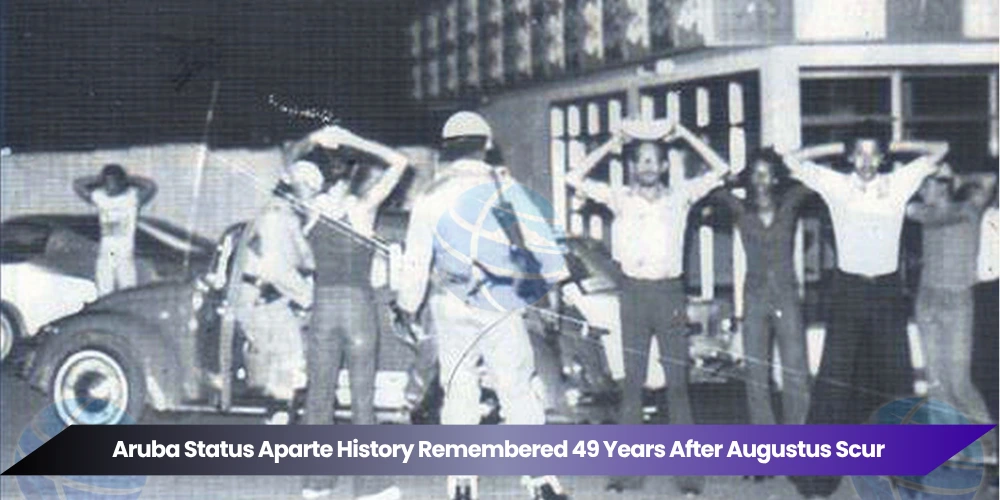
Aruba Status Aparte history was commemorated by Parliamentarian Endy Croes as Aruba marked 49 years since the events of August 11, 1977, known as “Augustus Scur.”
Croes reflected on the political and social unrest that formed part of Aruba’s long struggle for greater autonomy within the Kingdom of the Netherlands.
According to Croes, the events followed the March 1977 referendum in which 83 percent of voters supported Status Aparte for Aruba.

Political and labor tensions later increased after the MEP was excluded from the Central Government of the Netherlands Antilles.
A general strike was declared on August 10, 1977, and two union leaders were arrested.
The following day, Aruba experienced a power outage while special police forces from Curaçao were deployed during the unrest.
The confrontations resulted in violence and injuries.
Croes said the events helped place Aruba’s demand for greater autonomy more clearly on the political agenda in the Netherlands.
On August 19, 1977, the Dutch government indicated that it was prepared to receive an Aruban delegation for discussions about the island’s constitutional future.
The political process continued over the following years and eventually led to an agreement on Status Aparte in 1983.
Aruba officially obtained Status Aparte on January 1, 1986.
For Croes, the anniversary serves as a reminder that Aruba’s autonomy was the result of a long political struggle and sacrifices made by different generations.
He emphasized the importance of teaching this history to younger generations so they can understand the events that shaped Aruba’s constitutional development.
The commemoration of Aruba Status Aparte history also highlights the significance of Augustus Scur as a turning point in the island’s path toward greater political self-government.