


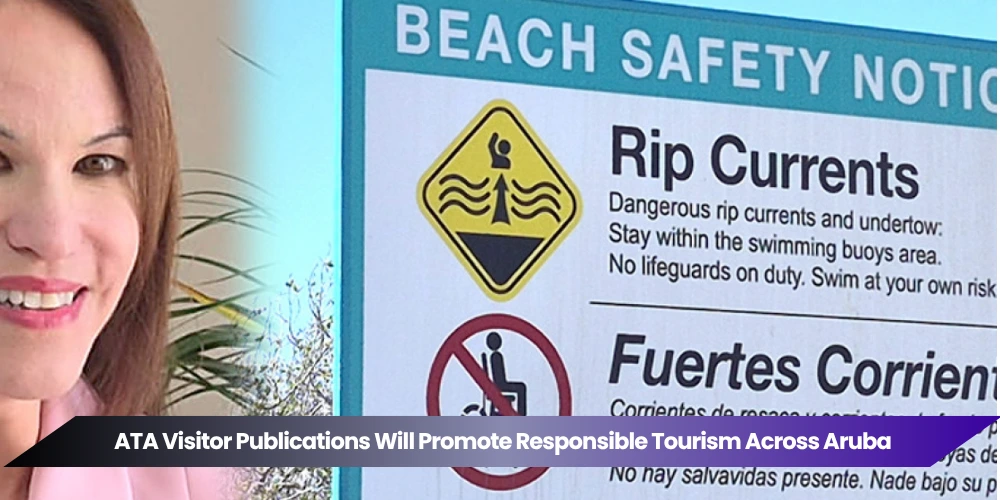
ORANJESTAD, Aruba — ATA Visitor Publications will soon provide travellers with more information about responsible tourism, respectful behaviour and the role visitors can play in protecting the island.
Aruba Tourism Authority CEO Ronella Croes announced the upcoming publications during an interview with Matutino DIARIO.
Unlike information intended for local residents, the new materials will be directed specifically at visitors after they have selected Aruba as their destination and arrived on the island.

Visitors Will Receive More On-Island Guidance
Croes said welcoming additional visitors can naturally create more movement and activity across Aruba.
Providing travellers with clear information is therefore considered an important part of managing their experience and reducing negative pressure on neighbourhoods, roads, beaches and natural areas.
The ATA Visitor Publications are expected to explain what Aruba represents, why the island must be protected and how travellers can behave as responsible guests.
The initiative forms part of ATA’s wider transition from operating only as a destination-marketing organisation to placing greater emphasis on destination management.
ATA officially describes its purpose as enriching Aruba’s quality of life through responsible and integrated destination management.
Responsible Tourism Message Begins Before Arrival
ATA has already changed the way Aruba is promoted internationally.
In 2025, the organisation introduced the message “When You Love Aruba, It Loves You Back,” presenting the island not simply as a tourism product but as a home shared by residents and guests.
The strategy encourages potential visitors to consider their responsibilities before booking or arriving in Aruba.
It asks travellers to protect natural areas, respect local culture and recognise that their actions can affect the island’s environment and community.
Croes said the upcoming local publications will extend that communication beyond international advertising.
Once visitors arrive, they will encounter more information explaining how to enjoy Aruba while helping preserve it.
From Tourist to Responsible Guest
ATA’s communication increasingly refers to visitors as guests rather than tourists.
The distinction supports the idea that someone entering another person’s home should treat that home with respect.
Responsible guests can contribute by avoiding littering, respecting protected areas, following local rules, supporting Aruban businesses and treating residents, wildlife and cultural locations appropriately.
Aruba’s official responsible-tourism guidance also asks visitors to consider their environmental footprint, protect marine life, respect landscapes and support local communities.
The ATA Visitor Publications may help turn those broad principles into practical information that travellers can follow during their stay.
Information Could Support Better Visitor Behaviour
Croes said ATA already invests in signs and visitor information around the island but plans to increase those efforts.
The new approach will not focus only on communicating directly with individual visitors.
ATA also intends to provide more information to tourism operators, who play an important role in explaining local rules and responsible practices to their customers.
Tour companies, hotels, vacation-rental operators, transportation providers and attraction managers frequently communicate with visitors before and during excursions.
Providing these businesses with consistent information could help ensure guests receive the same responsible-tourism message across different parts of the industry.
ATA Supports Recommendations on Tourism Activities
Croes also referred to long-running discussions about UTVs, ATVs and other tourism activities that may affect Aruba’s environment and communities.
She said ATA has participated for more than a decade in committees and platforms that have produced recommendations concerning these matters.
However, she noted that implementing many regulatory recommendations does not fall directly under ATA’s authority.
ATA can contribute research, tourism expertise, communication and recommendations, while enforcement or legislative changes may require action from government departments and other responsible institutions.
The planned publications are therefore an educational measure rather than a new law or regulatory programme.
Campaign Focuses on Protecting Aruba
ATA’s international strategy highlights Aruba’s people, heritage, culture, landscapes and hospitality.
The organisation says responsible tourism should create a balance between the visitor experience, residents’ wellbeing, environmental protection and the preservation of local identity.
ATA has also promoted its responsible-tourism position internationally through campaigns and sustainability discussions in important visitor markets.
The new local publications will bring that international message directly to travellers while they are physically present on the island.
Visitors Asked to Share Responsibility
Croes said protecting Aruba cannot remain the responsibility of residents alone.
Visitors benefit from the island’s beaches, climate, natural environment, hospitality and recreational opportunities.
ATA therefore wants guests to understand that they also have a role in preserving the qualities that attracted them to Aruba.
The message is based on shared responsibility: residents care for their home, businesses operate responsibly and visitors minimise their negative impact.
ATA’s Aruba Promise similarly invites travellers to become responsible and respectful guests who help preserve the island for future generations.
More Details Expected Before Launch
ATA has not yet announced when the publications will be launched or where visitors will receive them.
The organisation has also not confirmed whether the materials will be printed, digital or available in several formats.
Additional details may include the languages used, participating tourism operators, distribution points and the specific rules or recommendations presented to visitors.
Possible locations could include hotels, airports, car-rental offices, tourism attractions and excursion businesses, but no official distribution list has been released.
Tourism Management Becomes Greater Priority
The introduction of ATA Visitor Publications reflects a broader change in Aruba’s tourism strategy.
Rather than concentrating only on attracting travellers, ATA is increasingly communicating how visitors should interact with the destination after arrival.
This approach recognises that tourism success cannot be measured only through arrival figures, hotel occupancy or visitor spending.
It must also consider congestion, environmental impact, community wellbeing, cultural preservation and the long-term quality of Aruba’s tourism product.
By combining international campaigns with information distributed locally, ATA aims to encourage visitors to enjoy Aruba while respecting the island as the home of its residents.