


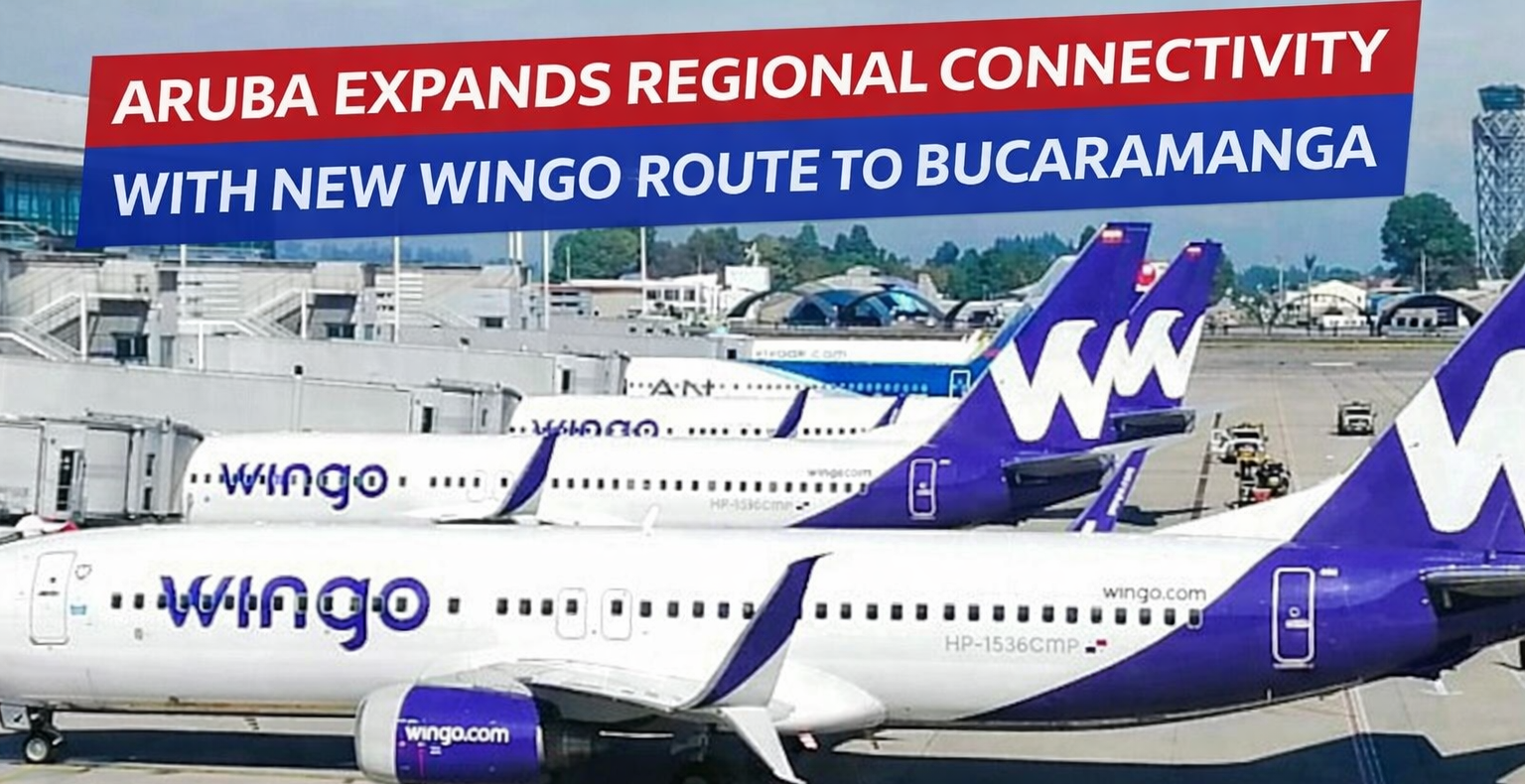
The Aruba Bucaramanga Wingo route 2026 marks a new step in strengthening the island’s regional air connectivity. Aruba has officially announced a new seasonal direct route operated by Wingo, connecting the island with Bucaramanga, Colombia, via Palonegro International Airport.
The route was announced on January 22, 2026, and will operate from June through August 2026, with two weekly flights on Thursdays and Saturdays. This new connection expands travel options for Aruba residents and facilitates increased visitor arrivals from the Colombian market.
Beyond leisure travel, the Aruba Bucaramanga Wingo route 2026 also offers important benefits for residents interested in traveling to Bucaramanga, a city widely recognized for medical tourism, specialized healthcare services, competitive costs, and strong land connectivity to other destinations in Colombia.

Minister of Tourism, Transport and Labor Wendrick Cicilia stated that the new route aligns with Aruba’s broader vision of building a more connected and resilient island. He emphasized that improved air connectivity supports not only tourism, but also access to specialized healthcare, new travel opportunities, and practical needs of the community.
Ronella Croes, CEO of the Aruba Tourism Authority, highlighted that strategic partnerships with airlines like Wingo are essential for Aruba’s tourism development and market diversification. She noted that the Aruba Bucaramanga Wingo route 2026 strengthens Colombia as a key source market, supports medical tourism opportunities, and further positions Bogotá as a regional hub while expanding access from additional Colombian cities.
From an aviation perspective, Jo-Anne Arends, Aviation Business Development Executive at Queen Beatrix International Airport, stated that each new route enhances mobility for both residents and visitors, reinforcing Aruba’s role as a strategic regional connection point.
Through initiatives like the Aruba Bucaramanga Wingo route 2026, Aruba continues to reinforce its commitment to connectivity that supports tourism, healthcare access, business travel, and cultural exchange—contributing to sustained economic dynamism for the island and the wider region.