


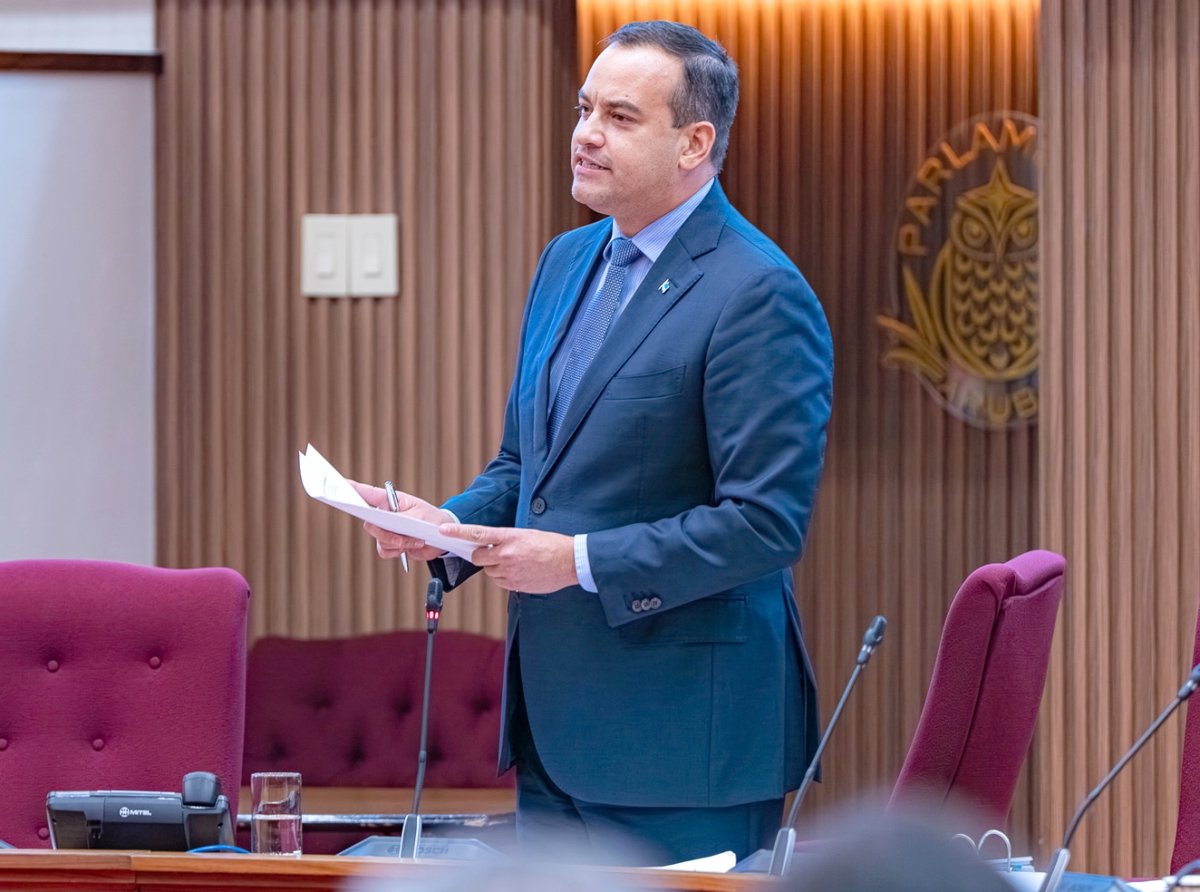
As part of a broader strategy to stimulate new businesses and further diversify Aruba’s economy, Minister of Finance, Economic Affairs and Primary Sector Geoffrey Wever has officially introduced the “Startersregeling,” a new scheme designed to remove fiscal barriers and create a more favorable tax climate for newly established companies.
Minister Wever explained that the Startersregeling forms a key component of the AVP-Futuro government’s economic vision. The initiative aims to encourage the establishment of new businesses, particularly within the so-called Promising Sectors as defined by the Department of Economic Affairs, Trade and Industry (DEZHI). These efforts are intended to strengthen entrepreneurship, create innovative new jobs, and generate additional revenue for the government.
The scheme specifically targets new companies operating in sectors such as cultural and sports tourism, knowledge-based industries including solar energy, ocean technology, higher education, ICT and FinTech, export-oriented island solutions, maritime and aviation logistics, agricultural production focused on local food, the circular economy, and creative industries such as art, music, graphic design, photography, web design, fashion, and art studios.

To support businesses during their start-up phase, the Startersregeling introduces a range of concrete fiscal incentives for the first five years after establishment. These include an annual profit exemption of up to Afl. 50,000, an increased investment deduction of up to 20 percent, and partial deductibility of the principal amount of new commercial loans. Additional flexibility is provided for shareholder salary requirements for owners who work within their own companies, with salaries based on the legal minimum wage.
Under the small business arrangement, newly established companies will also be exempt from paying BBO, AZV and BAVP for a period of five years. According to Minister Wever, the combination of these measures is intended to directly improve liquidity, access to financing, and continuous reinvestment.
The Startersregeling applies exclusively to companies founded and established in Aruba as of January 1, 2026, operating within the designated Promising Sectors and holding the required business permits. Participating companies must demonstrate annual reinvestment of at least 15 percent of their gross turnover into business growth, maintain a minimum level of employment relative to their activities, and meet requirements for real economic presence in Aruba.
“With the introduction of the Startersregeling, the Government of Aruba is making a deliberate investment in economic diversification,” Minister Wever stated. “This approach reflects a clear balance between stimulating entrepreneurship and offering fiscal benefits, with the ultimate goal of building a more diversified, innovative, and resilient economy.”
The Startersregeling officially came into effect on January 1, 2026, marking what the minister described as an important step toward preparing Aruba’s economy for the future.
Photo Credits : https://diario.aw/categories/noticia/general/minister-geoffrey-wever-ta-introduci-startersregeling-pa-stimula-empresanan-nobo


















Discussion about this post