



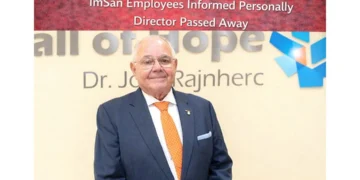
The legacy of Dr Joel Rajnherc and his impact on Aruba’s healthcare continues to be widely recognized following his passing. Dr. Rajnherc was not only a respected physician but also a leader whose work significantly shaped the direction of healthcare on the island.
For many people in Aruba, the Instituto Medico San Nicolas (ImSan) represents more than just a medical institution. It stands as a symbol of hope, innovation, and compassionate healthcare. Over the years, that reputation was strongly influenced by the leadership and vision of Dr Joel Rajnherc.
His passing has left a deep sense of loss within the community. However, shortly after the news of his death was announced, public discussions reportedly began regarding potential replacements for leadership roles within the institution. Some observers felt these conversations were premature, suggesting that the moment should first be dedicated to reflection and respect for the contributions he made to Aruba’s healthcare system.

A Legacy That Cannot Be Ignored
The legacy of Dr Joel Rajnherc and his impact on Aruba’s healthcare is reflected in the development and recognition of ImSan under his leadership.
Among the most significant achievements associated with his tenure are:
-
Accreditation by Joint Commission International (JCI)
-
Development of a high-level oncology center
-
International recognition for the quality of medical care
-
Strong public trust among Aruba’s residents
Yet many believe his greatest achievement was not only related to infrastructure or technology. His leadership emphasized investing in people. Healthcare institutions rely heavily on skilled professionals who dedicate themselves to patient care, and Dr. Rajnherc was known for encouraging collaboration, unity, and professional growth within medical teams.
Through this approach, he helped create a culture of cooperation and commitment that continues to influence the institution today.
The Next Step for ImSan
In the future, ImSan will eventually appoint a new director, but many observers stress that such a decision should be approached carefully and responsibly.
Leadership of a modern healthcare institution requires more than technical expertise. A director must also demonstrate strong institutional leadership, a proven record of successful projects, and the ability to guide healthcare professionals while maintaining a focus on patient care.
Hospitals are not simply buildings with equipment; they are communities of professionals dedicated to improving the lives of patients.
A Call for Institutional Maturity
The discussion surrounding future leadership also highlights a broader issue: the need for transparency and maturity in public decision-making.
Appointments that influence national healthcare systems should ideally be based on merit, professional experience, and demonstrated leadership ability. The goal should be to protect the quality of healthcare services and maintain public trust in institutions responsible for patient care.
In addition, patient organizations can provide valuable perspectives during discussions about healthcare leadership, as they represent individuals who directly experience medical services.
Protecting the Legacy
The legacy of Dr Joel Rajnherc and his impact on Aruba’s healthcare extends beyond the institutions he helped develop. His work contributed to building a culture of compassionate and high-quality healthcare in Aruba.
Honoring that legacy means ensuring that future decisions about leadership and institutional development reflect the same commitment to professionalism, transparency, and patient care.
By continuing to strengthen these values, Aruba not only preserves the contributions of Dr Joel Rajnherc, but also reinforces the shared responsibility of protecting healthcare for the entire community.















Discussion about this post