


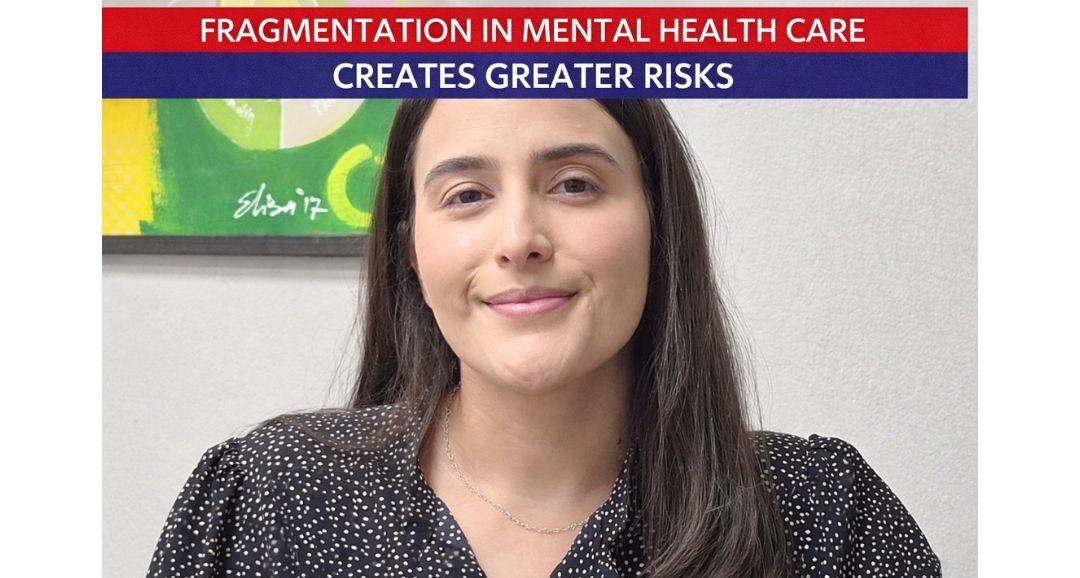
ORANJESTAD (AAN): Mental health is a topic of great importance. Mental health care falls under medical care oversight, and the Aruba Health Inspection (IVA), a relatively new organization, plays a major role in controlling and safeguarding the quality of care and patient safety.
In a recent interview, Mrs. Carolina Thiel-Span emphasized that IVA started a study in 2024 on the medical field in Aruba to create an overview of the current state of fragmentation in mental health care in the country. A baseline survey was conducted to better understand the status of the mental health sector in Aruba, the associated risks, and the areas requiring more attention to avoid undesirable situations or potential crises.
The study included various mental health care providers in Aruba, including psychiatrists, psychologists, psychotherapists, educational specialists, and organizations employing these professionals, along with general practitioners. This provided clarity on how the sector operates in Aruba. Mrs. Thiel-Span pointed out that the report identifies areas where mental health care providers need to pay more attention in order to mitigate risks.

She noted that, for a long time, there has been no clear management line to facilitate the work of mental health care providers. The sector remains fragmented, with many different lines of care and varying forms of support, including individuals working alone or within organizations. There is both subsidized care covered by AZV and entirely private care. This fragmentation in mental health care, according to Mrs. Thiel-Span, leads to varying levels of care and decisions based on what people can afford, among other factors.
One recommendation in the IVA report is the need for a unified line of care. However, it is not IVA’s role to create this line. She mentioned that IVA’s role is to monitor and investigate and identify where the risks lie. After conducting this recent study, IVA informed the medical field and care providers that they need to work towards improvement. “But we need a unified line. We cannot continue working in fragmentation because the risks grow in undesirable real-life situations when people with mental health issues are not getting the proper care and attention from the correct professionals,” Mrs. Thiel-Span stated.















Discussion about this post