

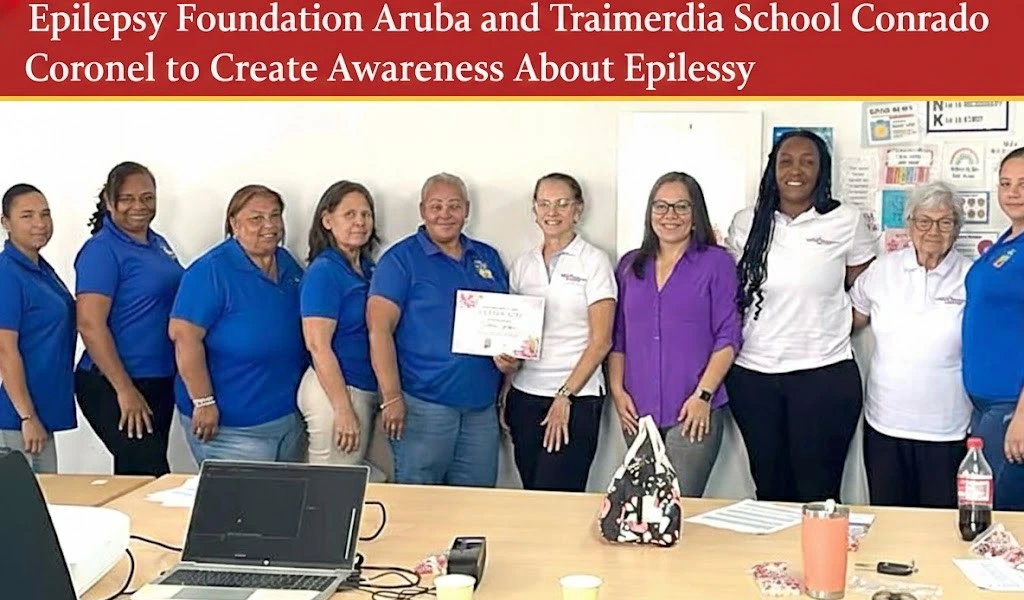
The Epilepsy Foundation Aruba recently visited Conrado Coronel School with the goal of increasing awareness about epilepsy, specifically focusing on school staff to ensure they can recognize and properly respond when a seizure occurs during school hours.
During the presentation, representatives from the Foundation shared information about the different ways epilepsy can manifest. Not all seizures are as obvious as those seen on television. Sometimes, seizures can be subtle, such as:
-
“Staring spells” (a person may look blankly without responding).

-
Sudden confusion.
-
Involuntary small movements.
-
Loss of attention.
-
Extreme fatigue following an episode.
Epilepsy is a neurological condition where electrical activity in the brain does not function normally, often resulting in seizures. For many families, the process of recognizing and diagnosing the condition can be difficult.
Teachers and school staff play a fundamental role, as they spend much of the day with students and are often the first to notice different behavioral patterns in children and young people.
During the session, Epilepsy Foundation Aruba emphasized that the correct response during a seizure is crucial:
-
Stay calm.
-
Note the time the seizure lasts.
-
Protect the individual from injury.
-
Do not restrict their movements.
-
Do not put anything in their mouth.
-
Allow them to rest and recover after the episode.
The talk aimed to promote understanding, improve communication, and reduce stigma. With the information provided, school staff are now more confident and capable of supporting students with epilepsy, contributing to a more inclusive and understanding environment.
This visit is part of the Foundation’s 2026 initiative, based on the international theme: “Turn Stories Into Action.” By sharing real stories and practical information, Epilepsy Foundation Aruba seeks to turn personal experiences into tangible actions to create a more aware and prepared community.
The Epilepsy Foundation Aruba continues its mission to educate, inform, and strengthen the community, fostering an environment that promotes dignity, safety, and understanding for people living with epilepsy.













Discussion about this post