


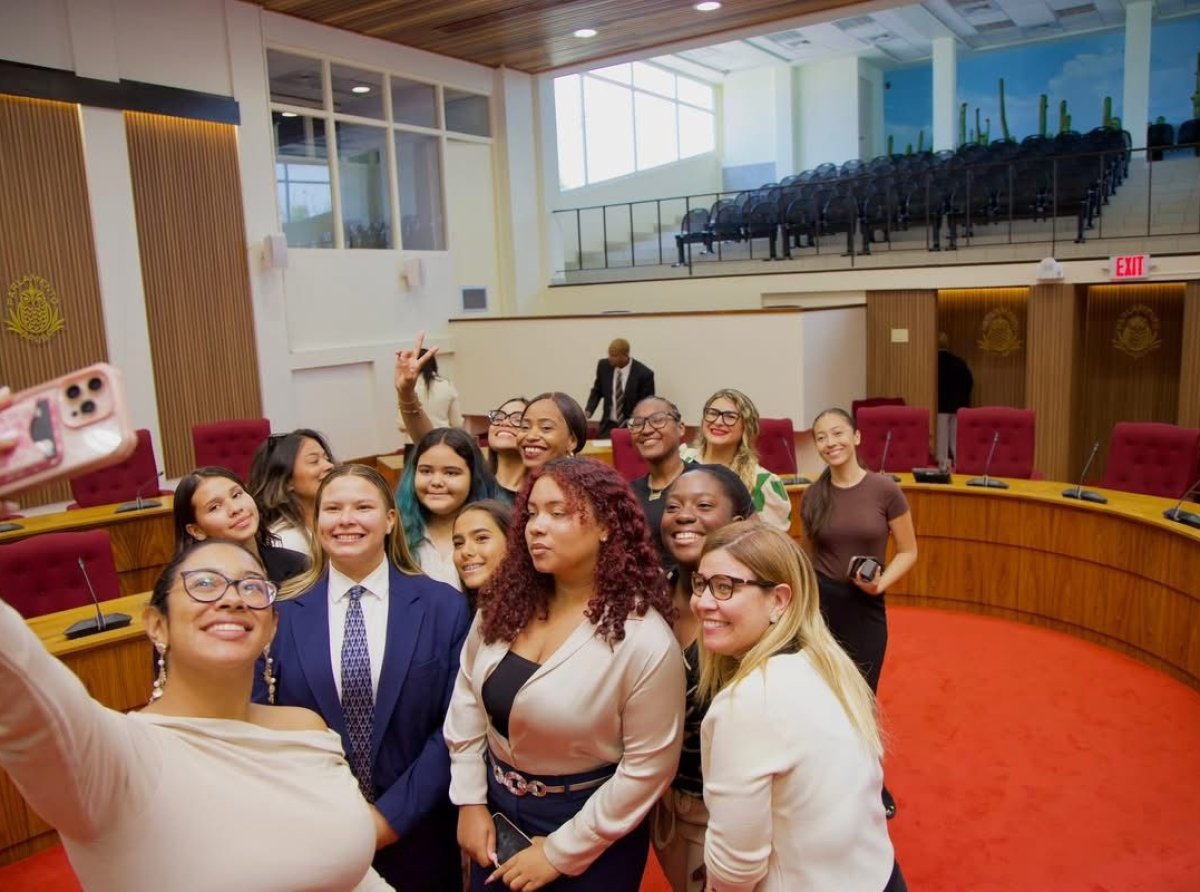
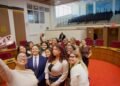
Education equality and dignity for young women were central themes during a recent meeting held in recognition of International Women’s Day. The meeting brought together female members of Parliament and a group of students from Educampus, organized through the parliamentary commission responsible for the United Nations Sustainable Development Goals (SDGs).
During the discussion, AVP Parliamentarian Jennifer Arends-Reyes shared her vision on the participation of women in politics, equal opportunities, and the important role education plays in strengthening the position of young women in society.
Women’s Participation in Politics
According to Arends-Reyes, her decision to enter politics came from a strong desire to serve the community and contribute to a better future for Aruba.

“Politics ultimately is about people. It is about decisions that affect families, education, opportunities, and the quality of life on our island,” she said.
The parliamentarian acknowledged that for many women, entering politics can come with additional challenges because politics has historically been seen as a space dominated by men.
However, she emphasized that women bring valuable perspectives to leadership, especially on issues related to social development, education, family well-being, and community progress.
“Representation matters. When young girls see women in leadership positions, it sends a powerful message that their voices also belong at the decision-making table,” Arends-Reyes explained.
Role of Education in Leadership
During the meeting with the Educampus students, Arends-Reyes highlighted the critical role education plays in shaping future leaders.
She noted that schools can encourage interest in politics through initiatives such as:
-
Debate clubs
-
Youth parliaments
-
Student councils
-
Programs explaining how government works
“When young people understand how political decisions influence their daily lives, they begin to see that they themselves can be part of the process,” she said.
Menstrual Health and Awareness
Another important topic discussed during the meeting was menstrual health and its impact on young women in schools.
Arends-Reyes pointed out that Parliament can play a role by supporting policies that promote comprehensive health education, including accurate information about the menstrual cycle.
She stressed that the topic still carries stigma and misunderstanding in many places.
“Proper education can help both girls and boys understand that menstruation is a natural process. This knowledge creates empathy, respect, and understanding in the classroom,” she explained.
She also highlighted the importance of schools providing adequate guidance and support to young girls during this stage of development.
Access to Hygiene Products
Access to menstrual hygiene products was another key issue raised during the discussion.
Arends-Reyes emphasized that such products should be viewed as basic necessities rather than luxury items.
“No young woman should feel ashamed, miss classes, or fall behind academically because she lacks access to basic hygiene products,” she stated.
Among the possible solutions discussed were reviewing taxes or import duties on these products and considering programs to make them free or subsidized in schools and community institutions.
Breaking Harmful Stereotypes
Arends-Reyes concluded by stressing the need to eliminate harmful stereotypes that continue to limit opportunities for women.
She said achieving equality requires a long-term commitment through education, political action, and cultural change.
“Leadership has no gender. Emotional intelligence, empathy, and collaboration are powerful leadership qualities,” she said.
According to the parliamentarian, when young women and women in general are given the opportunity to reach their full potential, the entire society benefits.
“Equality is not only a women’s issue—it is an investment in a stronger future for Aruba,” she concluded.











Discussion about this post