


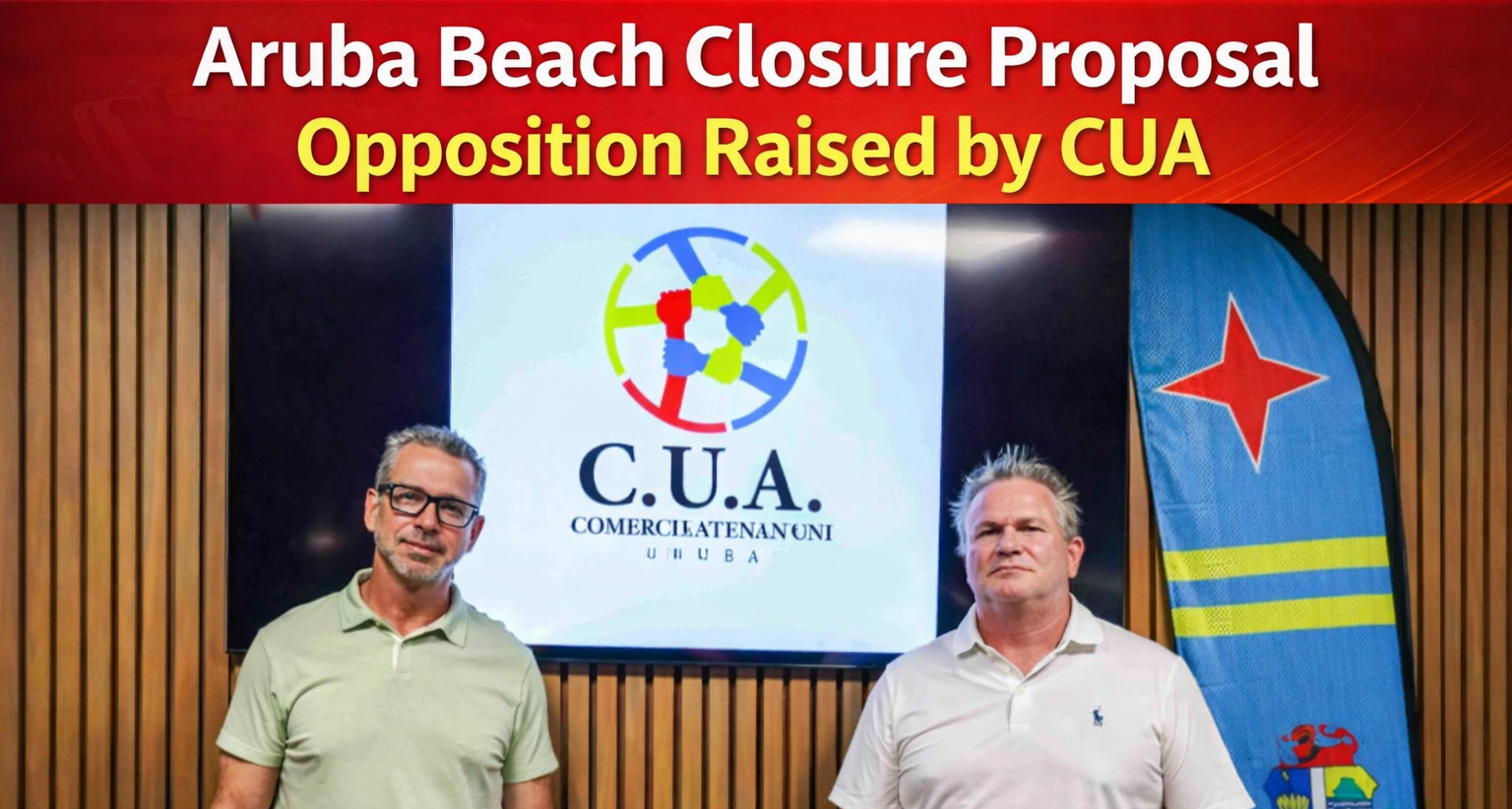
The Aruba beach closure proposal opposition is growing as the United Merchants Association of Aruba (C.U.A.) raises concerns over a plan to close beaches one day per month.
Frans Ponson, representing C.U.A., strongly criticized the proposal introduced by Minister of Tourism Wendrick Cicilia, describing it as contradictory. While the minister promotes giving beaches and marine life a rest day, Ponson pointed out that the same government continues to approve hotel developments along Aruba’s coastline—highlighting the beaches as a key economic driver.
According to Ponson, the Aruba beach closure proposal opposition is based on both economic and practical concerns. He noted that studies conducted by C.U.A. suggest that closing beaches for one day per month would have little to no meaningful environmental impact.

“We want to take actions that truly benefit the country. If we are serious about sustainability, we need to address the root issues in tourism,” Ponson stated.
He also emphasized the scale of tourism in Aruba, explaining that the island receives approximately 40,000 visitors per week. Even with beach closures, tourism numbers could continue to rise, making the measure ineffective in reducing environmental pressure.
Additionally, Ponson raised concerns about the visitor experience, questioning how tourists—many of whom spend large amounts on luxury accommodations—would react to finding beaches closed during their stay.
A key issue highlighted in the Aruba beach closure proposal opposition is the legal authority behind such a decision. Ponson questioned whether a minister has the power to close public beaches, noting that similar restrictions in the past were only possible under emergency pandemic laws, which are no longer in effect.
“What message are we sending if decisions like this are made without clear legal backing?” he asked, adding that closures would affect all public areas, including popular destinations like Palm Island.
Ponson described the proposal as “nonsensical” and called for a more structured and unified government approach. He stressed the importance of long-term planning and collaboration across administrations, rather than introducing isolated ideas.
The Aruba beach closure proposal opposition continues to highlight the need for balanced decision-making that protects both the environment and Aruba’s tourism-driven economy.

















Discussion about this post