

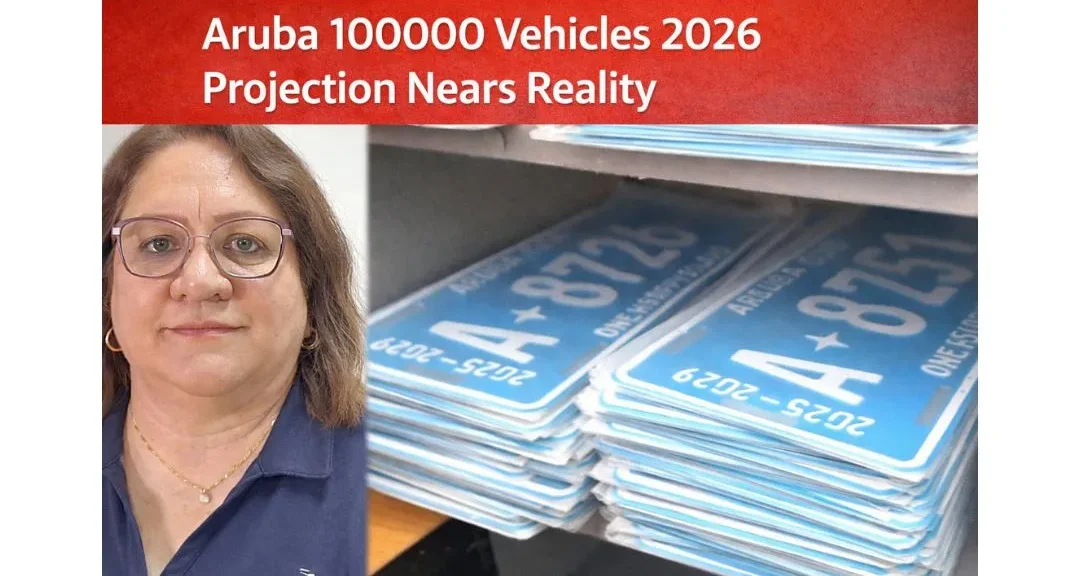
ORANJESTAD, Aruba – The Aruba 100000 vehicles 2026 milestone is expected to become reality before the end of the year, according to recent statements from Meverly Romano, Public Relations Officer of the Department of Infrastructure and Planning Management (DIMP).
In an interview, Romano explained that based on current registration trends, Aruba is on track to reach 100,000 registered vehicles before the end of 2026. The Aruba 100000 vehicles 2026 projection reflects a dramatic increase compared to previous decades.
She highlighted how remarkable this growth truly is. In 1984, Aruba had only about 18,000 vehicles with A-number license plates. Forty years later, the island is approaching nearly 100,000 registered vehicles — an extraordinary rise for a small island nation.

“From my experience and observing how things are progressing, it is very likely that before the year ends, we will reach 100,000 registered vehicles in Aruba,” Romano stated.
The Aruba 100000 vehicles 2026 estimate underscores the rapid expansion of motor vehicle ownership despite the island’s fixed geographic size. Unlike larger countries that expand in territory or infrastructure, Aruba remains the same physical size, yet the number of vehicles on its roads continues to grow steadily.
Romano noted that this number is significant for a small island like Aruba. The island’s land area does not increase, but the volume of cars operating on public roads continues rising each year. This growth presents both economic indicators of development and potential challenges related to traffic congestion, infrastructure maintenance, parking capacity, and environmental impact.
The Aruba 100000 vehicles 2026 projection also reflects population growth, tourism-related vehicle usage, business expansion, and higher personal vehicle ownership rates. As more residents and businesses rely on private transportation, vehicle registrations naturally increase.
Government authorities continue monitoring these trends carefully. With nearly 100,000 vehicles expected to be registered by the end of the year, policymakers may need to consider long-term infrastructure planning, traffic management strategies, and sustainable transportation initiatives.
The rapid increase in vehicle numbers also emphasizes the importance of road safety, environmental protection, and proper vehicle tax compliance.
As Aruba approaches the Aruba 100000 vehicles 2026 benchmark, officials stress the importance of responsible vehicle ownership and infrastructure planning to ensure that growth remains manageable and sustainable for future generations.


















Discussion about this post