


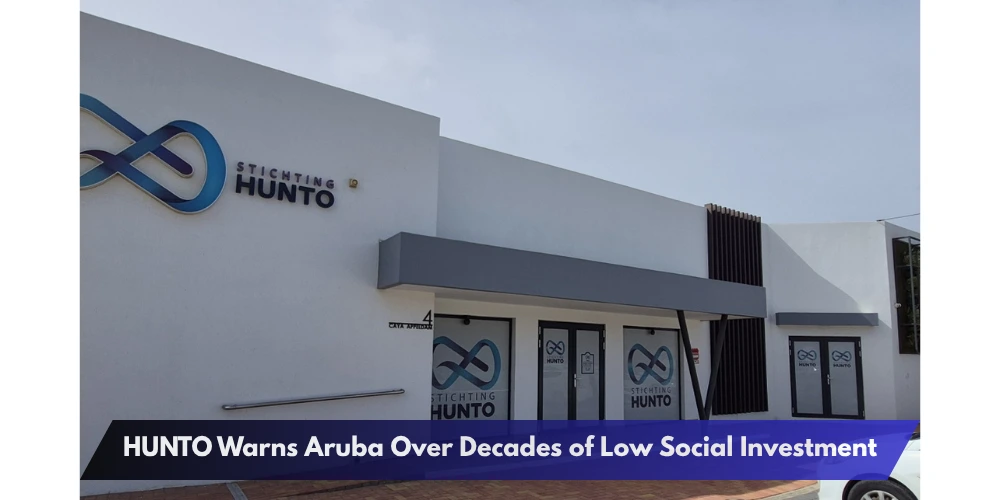
ORANJESTAD, Aruba – HUNTO Warns Aruba Over Social Investment as Randall van Trigt, financial director of Stichting HUNTO, says the island is now seeing the consequences of decades in which too little attention was given to social conditions, addiction and mental health.
During an interview with Matutino DIARIO, van Trigt said mental health problems are increasing faster than available solutions, especially when there is insufficient investment in addiction treatment and broader social support.
He explained that one of the questions discussed within the HUNTO team is what the organization has been able to accomplish during the past three years and why the demand for help continues to remain so high.

According to van Trigt, Aruba has gone approximately 40 years without sufficient investment at the social level, and the effects of that situation are now becoming increasingly visible. He argued that when a country fails to invest consistently in social development, prevention and support systems, the consequences eventually appear in the form of addiction, trauma, mental health problems and other social challenges.
Van Trigt said many of the clients he speaks with have experienced serious trauma earlier in life. He mentioned examples such as sexual abuse during childhood, growing up without a father present in the home, or living through other forms of emotional or family trauma.
In his view, addiction often develops within a much broader personal history and cannot be treated simply as an isolated issue of drug use.
HUNTO Warns Aruba Over Social Investment because, according to van Trigt, the current drug environment has also become more dangerous. He emphasized that the concern is not only about traditional substances, but about the quality and composition of drugs circulating on the streets.
Van Trigt pointed specifically to synthetic drugs, saying that some users can quickly experience severe psychiatric reactions after consuming substances whose chemical composition may be unpredictable.
According to him, once a person enters an acute psychiatric episode, the situation becomes very different and often requires more specialized care than a conventional addiction program alone can provide.
His comments highlight the strong relationship between addiction treatment and mental health services. For organizations such as Stichting HUNTO, addressing substance dependency increasingly means also dealing with trauma, psychiatric symptoms, family instability and other social factors that may have contributed to a person’s condition.
Van Trigt’s remarks also suggest that long-term solutions will require more than emergency intervention. He believes Aruba needs sustained investment in prevention, mental health care, addiction treatment and social programs that can address problems before they become severe.
The comments reflect growing concern about the pressure being placed on organizations working with vulnerable residents and people experiencing addiction.
Stichting HUNTO continues to work with individuals facing substance dependency and related social and mental health challenges, but van Trigt said the scale of the problem requires a broader response.
He emphasized that the consequences Aruba is experiencing today did not develop overnight and therefore cannot be solved quickly without consistent support, planning and investment.