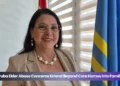


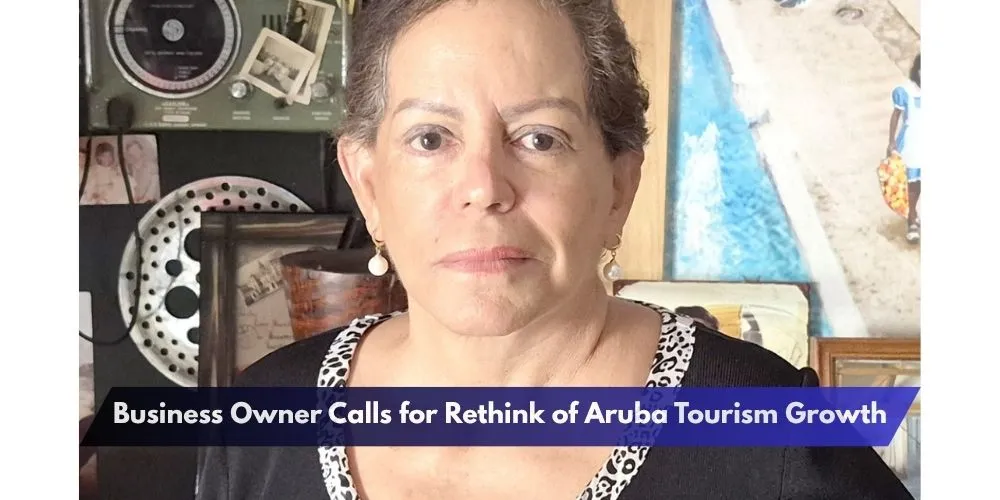
ORANJESTAD (AAN) – Business Owner Calls for Rethink of Aruba Tourism Growth after local business owner Marjorie Vermeer-Luidens shared her views on the social and economic effects of overtourism during an interview with DIARIO.
According to Vermeer-Luidens, Aruba’s continued growth in visitor numbers has created increasing pressure on the island’s infrastructure, workforce, and quality of life. She argued that the country should focus on sustainable tourism rather than simply attracting more visitors.
Concerns About Overtourism
During the interview, Vermeer-Luidens said Aruba is experiencing the effects of overtourism, adding that residents often have less time for family and personal well-being because of growing demands within the tourism industry.

She also questioned the continued expansion of hotel developments, stating that new projects bring additional workers and place greater pressure on an island with limited space and resources.
According to her, Aruba needs leaders willing to make long-term decisions about balancing tourism growth with the well-being of residents.
Infrastructure and Economic Impact
Vermeer-Luidens argued that tourism also places significant demands on public infrastructure.
She claimed that although visitors contribute to the economy, the costs associated with roads, transportation, public services, and other infrastructure should also be considered when evaluating tourism’s overall impact.
During the interview, she stated:
“Every tourist who comes to Aruba, if they bring $1,000, costs Aruba $1,300.”
The statement reflects her personal assessment of the costs associated with supporting continued tourism growth and was presented as her opinion during the interview.
She also pointed to increasing traffic congestion and limited road capacity as examples of challenges residents face.
Family and Workforce Challenges
Vermeer-Luidens expressed concern about working families employed in the hospitality industry.
She said many parents work extended hours and noted that childcare remains a challenge for some families, arguing that additional support services could help working parents balance employment and family responsibilities.
A Different Tourism Strategy
According to Vermeer-Luidens, Aruba should not eliminate tourism but instead reconsider the pace of future growth.
She said she would like to see the government develop a comprehensive plan to manage tourism sustainably before expanding visitor numbers further.
Referring to a conversation with Ronella Croes of the Aruba Tourism Authority (ATA), she said Aruba is increasingly being promoted under the concept of “Less is More.”
In her view, the “more” should represent the warmth and hospitality of Aruba’s people rather than a higher volume of tourists.
She argued that fewer visitors could help reduce pressure on roads, natural areas, and public spaces while preserving the peaceful atmosphere that many travelers seek when visiting the island.
Call for Long-Term Planning
Vermeer-Luidens concluded by urging policymakers to develop a long-term strategy to address the challenges associated with overtourism.
She said Aruba has an opportunity to strengthen its tourism product by focusing on sustainability, quality of life, and protecting the island’s natural and social environment for future generations.