

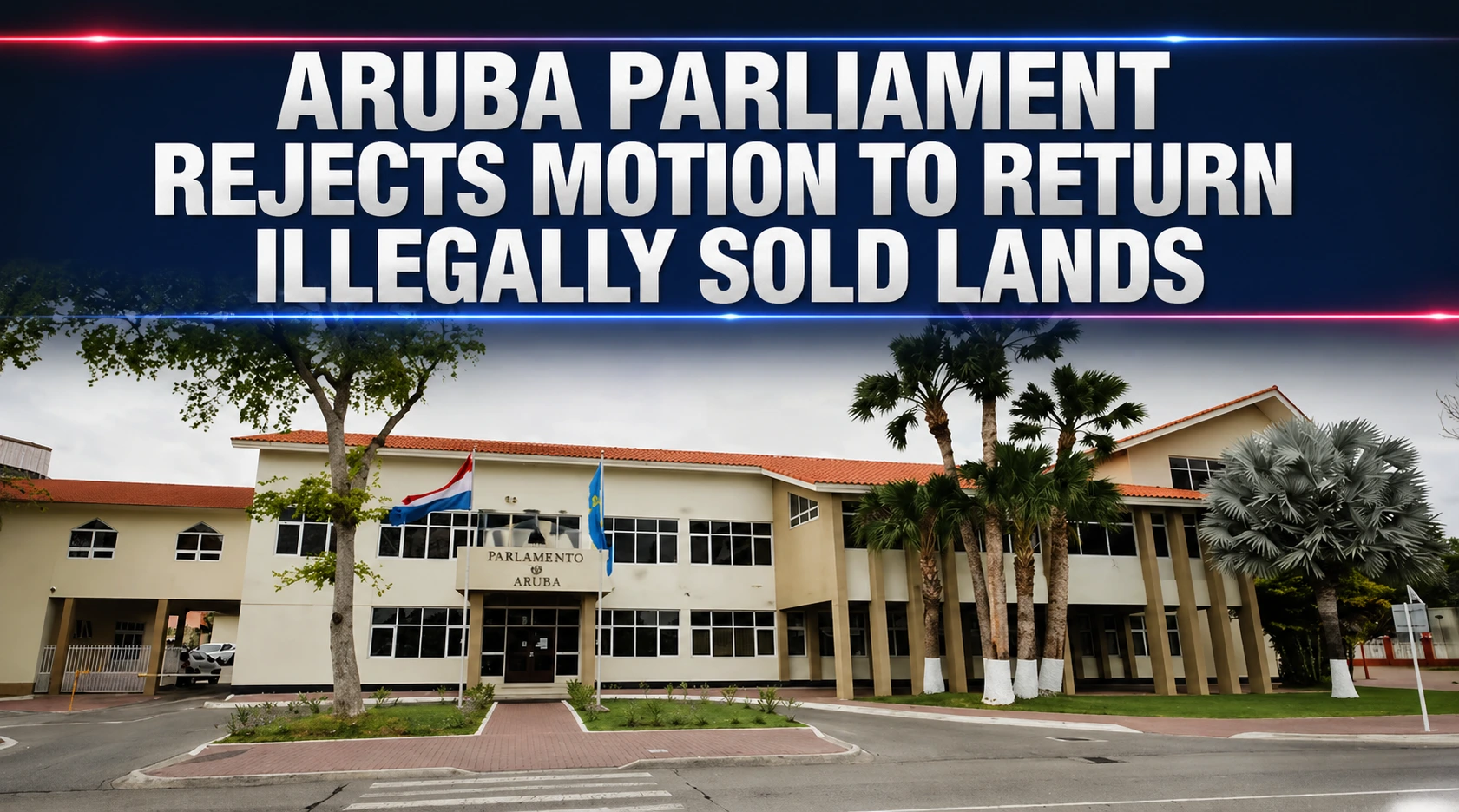
In a significant decision on Friday, Aruba Parliament Rejects Motion Illegally Sold Lands, which called for ex-minister Benny Sevinger to return land sold illegally during his tenure.
The motion, proposed by the opposition party MEP, demanded that the government require Sevinger to return the illegally sold lands to the country. However, the motion faced opposition from the AVP (Aruba’s People’s Party) and Futuro, a coalition party, and was ultimately rejected by 11 parliamentarians.
During the public parliamentary meeting, two motions were presented. The first, a motion from Futuro, was approved. It tasked the Minister with exploring relief measures to help alleviate the rising cost of living, which has been impacted by the current global economic situation. This motion was met with approval across the political spectrum.

However, the second motion, which focused on the actions of Benny Sevinger, did not receive support from the governing parties, leading to its rejection. MEP had argued that Sevinger, who was convicted in connection with the illegal sale of lands, should be required to return the properties to the government. Despite this, the proposal was not supported by the majority of the parliament.
The Aruba Parliament Rejects Motion Illegally Sold Lands has sparked debate within the political community. Opposition members believe that the failure to require Sevinger to return the lands sends a negative message about accountability in the government. However, the governing parties argue that there are legal and procedural hurdles that must be addressed before any such action can be taken.
This decision highlights the ongoing political tension between the government and opposition parties in Aruba, with issues of governance, accountability, and land ownership remaining contentious topics in local politics.
The rejection of the motion also draws attention to the broader conversation about land rights and governance in Aruba. Critics argue that more needs to be done to ensure that illegal activities, such as the unauthorized sale of public land, are fully addressed and rectified by the government.
As this issue continues to unfold, both government and opposition parties will likely engage in further discussions on the matter, and it remains to be seen how this will affect future political dynamics in Aruba.