
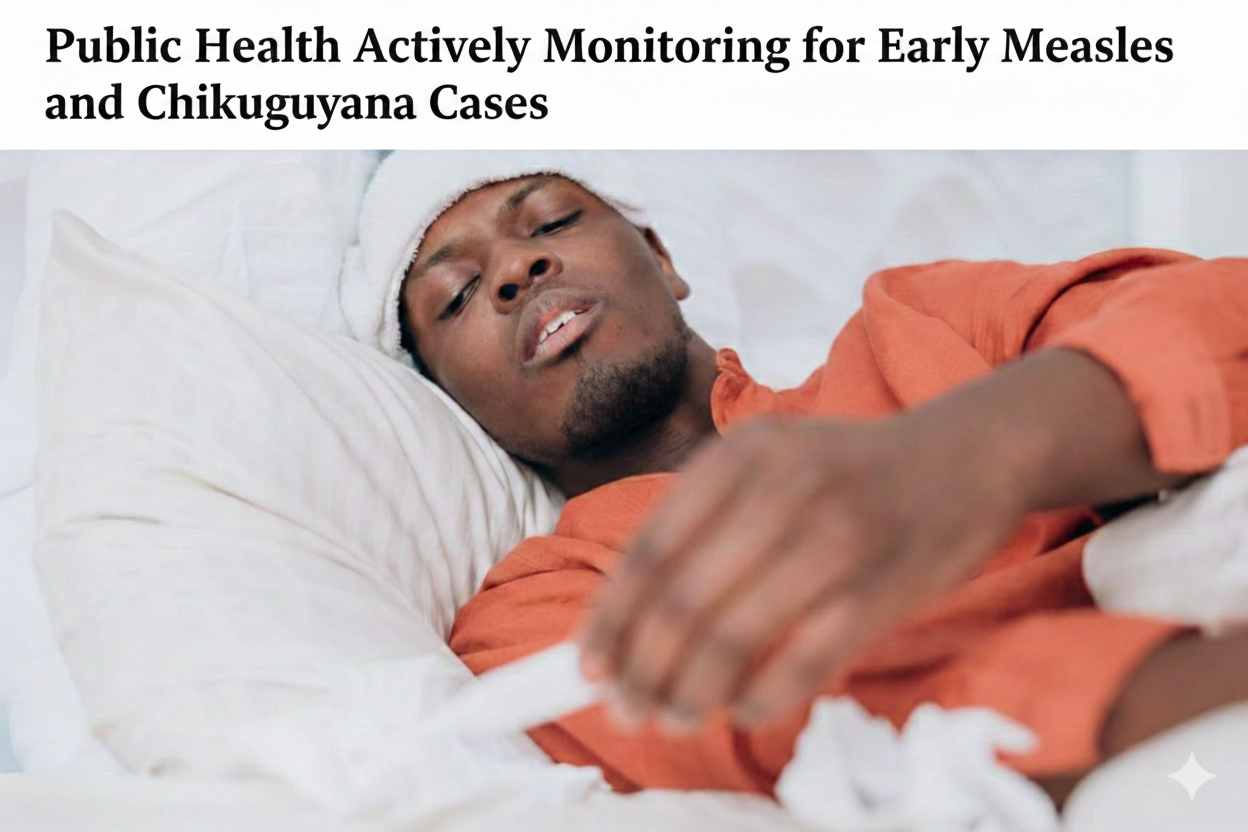
Public Health Monitors Cases of measles and chikungunya early, the Department of Public Health (DVG) announced on Friday.
According to DVG, the agency continuously monitors infectious disease trends regionally because these illnesses can affect the health of Aruba’s population. Due to growing cases in the region, DVG is actively watching for early signs of measles and chikungunya to ensure timely detection and response.
Regional Disease Data
Latest data from the Pan American Health Organization (PAHO) shows a total of 1,031 measles cases in the Americas, with most cases reported in Mexico and the United States.

For chikungunya, Aruba has recorded two imported cases this year from countries experiencing outbreaks. Regional figures from PAHO show 2,351 confirmed chikungunya cases in the Americas and one chikungunya‑related death.
Importance of Early Detection
DVG officials stressed that preventing local measles or chikungunya spread requires not only coordinated health surveillance but also an informed community. People should know what symptoms to watch for and when to seek medical advice if they suspect exposure.
Measles Symptoms
Measles is highly contagious and spreads through respiratory droplets when an infected person coughs or sneezes. Symptoms typically appear 7–14 days after exposure and may include:
-
High fever
-
Runny nose
-
Dry cough
-
Red, watery eyes
-
Sore throat
-
Extreme fatigue
-
Red skin rash that begins on the face and spreads over the body
Anyone with these symptoms should contact their doctor immediately, follow medical guidance, and avoid close contact with others.
Chikungunya Symptoms
Chikungunya is a viral disease transmitted by the same mosquitoes that spread dengue. Common symptoms usually appear 2–12 days after a bite and can include:
-
Sudden high fever
-
Severe joint pain (especially in wrists, ankles, fingers, elbows)
-
Headache
-
Muscle pain
-
Fatigue
-
Skin rash (in some cases)
Those who develop symptoms — especially travelers returning from areas with chikungunya outbreaks — should call their doctor, follow instructions, and take steps to avoid further mosquito bites. This includes eliminating standing water where mosquitoes breed, wearing long sleeves and pants, using mosquito repellent, and avoiding shaded areas where mosquitoes tend to rest.
Ongoing Public Health Information
“Because your health is our priority, DVG continues to keep the community well informed,” officials said.
For more information and updates, visit the DVG Aruba Facebook page or follow @directie_volksgezondheid_aruba on Instagram. You can also subscribe to the DVG WhatsApp Channel, visit www.dvg.aw, call 522‑4200, or email servicio@dvg.aw.