


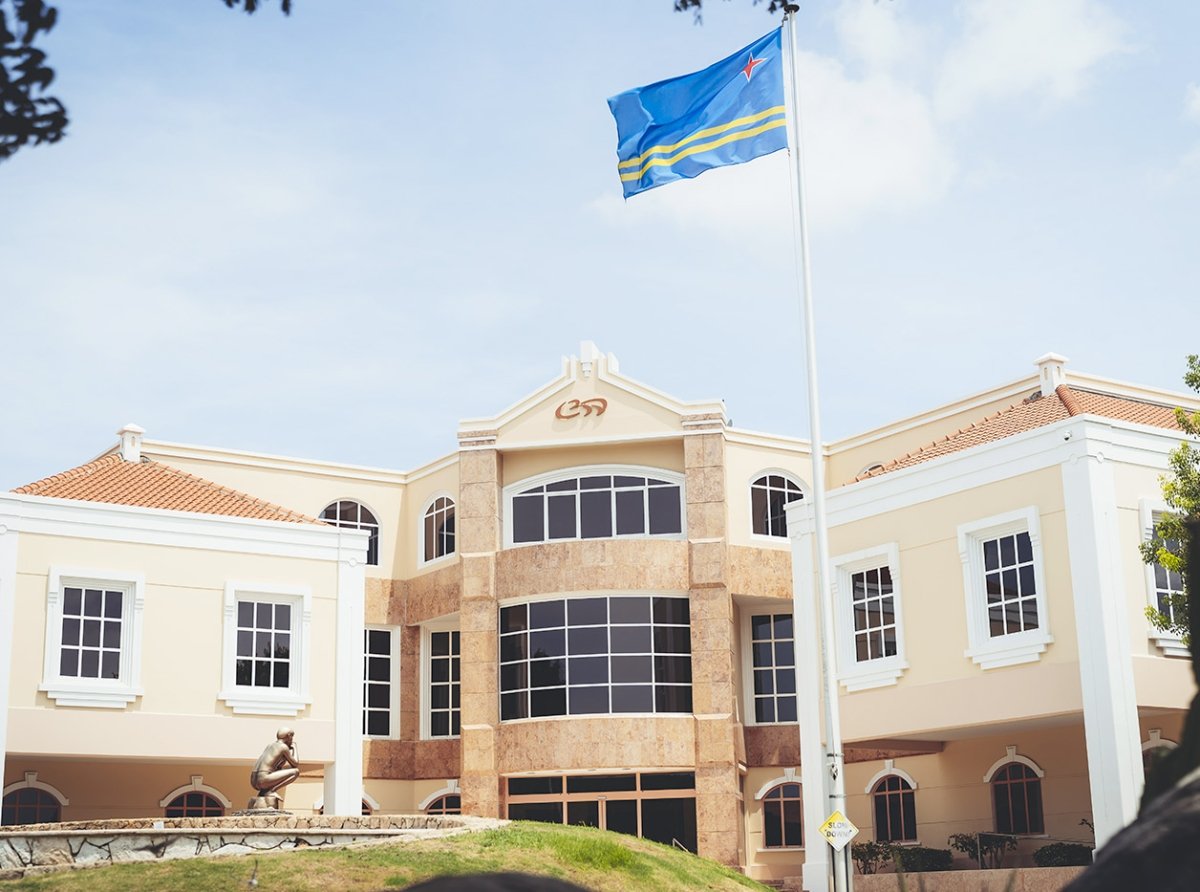
The Central Bank of Aruba (BCA) has released its State of the Economy for the first quarter of 2025, providing an overview of both domestic and international economic developments.
Economic Performance
Aruba’s economy continued to grow in the first months of 2025, although at a slower pace than the previous year. During Q1 2025, the island’s real Gross Domestic Product (GDP) increased by 4.2% compared to the same quarter in 2024. This follows a strong growth rate of 9.7% in Q1 2024.
Real GDP per capita grew by 3.2%, indicating that although economic progress was made, individual growth lagged behind total economic expansion.
Tourism Still Leading Growth
Tourism remained the largest contributor to economic expansion. Stay-over arrivals increased by 2.5% compared to Q1 2024. However, tourists stayed for shorter periods, with the average length of stay declining to 7.2 days, continuing a trend from recent years.
Despite this, the hotel sector reported strong results:

- Average room rates increased by 10.3%
- Revenue per available room grew by 7.0%
- Occupancy rates declined slightly, partly due to a 12.3% expansion in the hotel room supply
Domestic Consumption Indicators Improve
Most indicators related to domestic consumption showed positive movement:
- Employment registrations at SVB rose by 3.4%, signaling higher household income
- Collections from BBO, BAVP, and import taxes increased
Inflation pressures remained weak. The 12-month average inflation rate dropped from 1.7% in December 2024 to 1.4% in March 2025, driven mainly by lower energy prices and a decline in food inflation. Month-to-month inflation stood at just 0.1%.
Investment Shows Mixed Signals
Investment-related indicators presented a varied picture:
- The value of commercial mortgages rose significantly
- The number of new commercial mortgages grew more slowly
- Building permits increased in both volume and value
- The Business Perception Survey (BPS) index fell by 4.8 points to 102.0, showing decreased optimism among local businesses
External Sector and Reserves
The current account recorded a surplus of Afl. 508.7 million in Q1 2025, driven mainly by strong tourism receipts.
The financial account showed increased net lending, supported by a positive reserve development of +Afl. 115.8 million at BCA.
As a result, Aruba’s official reserves reached 133.0% of the IMF’s ARA metric, covering 8.1 months of imports, far above the recommended minimum of three months.
Banking Sector Remains Stable
Aruba’s banking sector remained strong and stable.
- Private sector credit grew, especially business loans (+Afl. 48 million) and new home mortgages (+Afl. 12 million)
- Consumer credit declined slightly compared to December 2024
- Non-performing loan rates remained low
- Capital and liquidity buffers strengthened
Public Finances Improve
Public finances continued moving in a positive direction.
During Q1 2025, the Government of Aruba reported a fiscal surplus of Afl. 42.6 million, despite higher expenditures.
By the end of March 2025, the debt-to-GDP ratio fell to 67.2%, down from 75.9% the previous year, continuing its downward trajectory since the peak of the pandemic.
The full publication is available on the Central Bank of Aruba’s website