


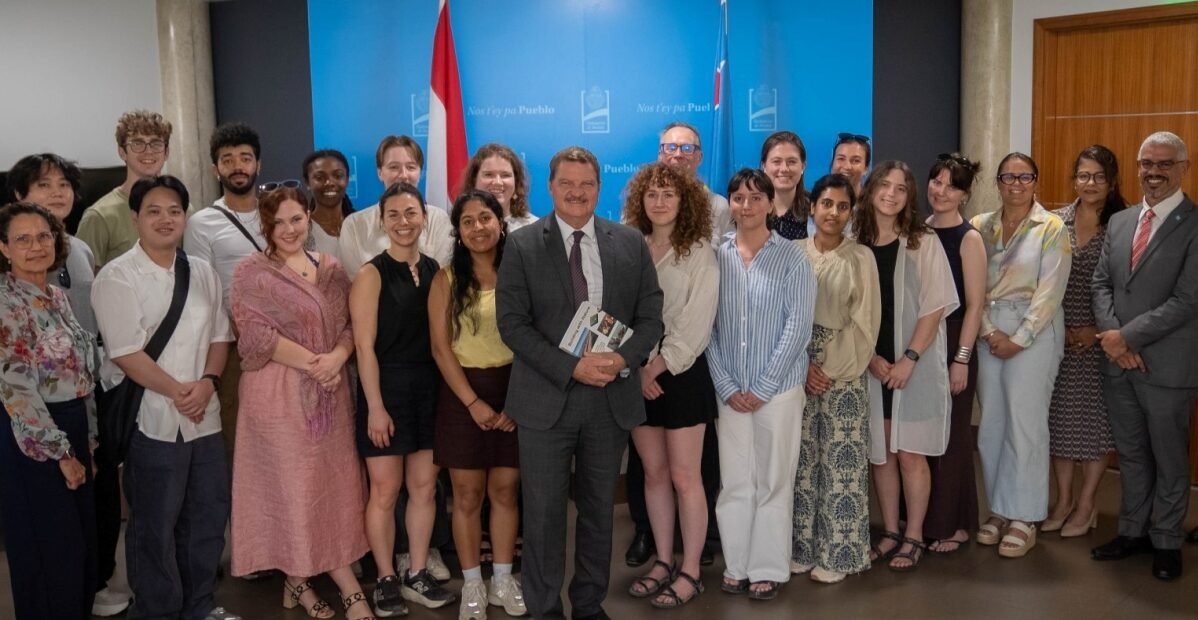
A delegation from the University of Pennsylvania recently visited Aruba to share University of Pennsylvania Aruba environmental ideas aimed at helping the island prepare for future environmental challenges.
The visit took place as part of Aruba’s National Reforestation and Urban Greening Program. The academic delegation came from the Weitzman School of Design and was led by Professor Mathijs Bouw, a professor of landscape architecture and architecture.
The group consisted of 16 master’s students specializing in fields such as architecture, landscape architecture, historic preservation, and city planning. They visited Aruba from March 9 to March 12 to collaborate on innovative ideas for sustainable urban development.

The visit was facilitated through the Aruba Minister Plenipotentiary in Washington and focused on how urban greening and nature-based solutions can be used as design tools to address modern urban challenges. These challenges include urban heat, flooding, and the creation of public spaces that strengthen social cohesion.
During a meeting with Prime Minister Mike Eman, the delegation presented University of Pennsylvania Aruba environmental ideas on how Aruba’s cities can better prepare for future environmental pressures.
Prime Minister Eman explained that the collaboration aligns with Aruba’s vision of integrating urban development with nature.
“When we develop Aruba, we want to do it in harmony with nature,” Eman stated. “Building with Nature means developing while respecting and protecting the environment, while integrating more green areas, shade, and smarter water management in our cities and neighborhoods.”
Professor Bouw explained that the students’ work in Aruba is part of a university course titled “Design with Risk.” The course focuses on how cities can prepare for environmental risks such as climate change and increasing urban heat.
According to Bouw, small island states like Aruba are particularly vulnerable to environmental stress, but they also have great potential to develop innovative and creative solutions.
He also emphasized that sustainable urban development is increasingly important for modern tourism, as visitors now seek authentic experiences in cities with attractive public spaces and a strong connection to nature.
Students participating in the project also shared their perspectives. Caroline Griffith, a master’s student in historic preservation, expressed excitement about contributing to Aruba’s environmental vision.
“We were very impressed by Prime Minister Eman’s vision regarding reforestation and urban greening,” Griffith said. “It is a privilege to be in Aruba and explore how designers can help strengthen the island’s resilience to climate challenges.”
Another student, Shawn Rambach, who is studying Master of City Planning, highlighted the importance of combining nature, community, and urban development to prepare Aruba for future environmental challenges.
“The Prime Minister’s vision shows deep concern for the people of Aruba and for how communities can prepare for complex climate challenges,” Rambach said. “Aruba has the opportunity to become an example for other Caribbean islands facing similar challenges.”
During their stay, the students worked on reflections and recommendations for innovative green urban policies, along with practical proposals for urban projects that combine climate resilience, quality public spaces, and social use of city areas.
As a final outcome of the project, the delegation will prepare a digital report containing spatial ideas, urban design concepts, and policy recommendations specifically tailored for Aruba.
The document will be shared with government ministries and relevant institutions to support the development of greener, more resilient, and sustainable cities in Aruba, reflecting the collaboration behind the University of Pennsylvania Aruba environmental ideas initiative.












Discussion about this post