


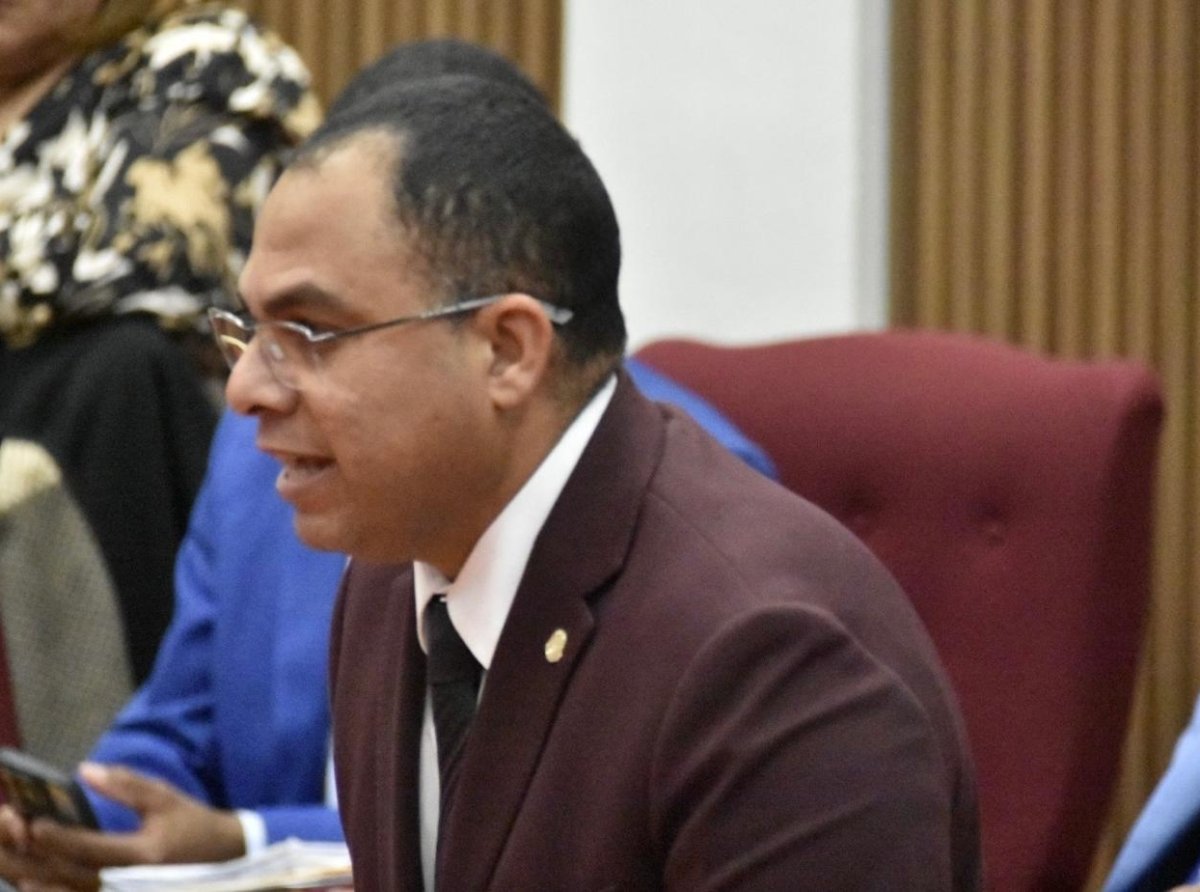
During the second round of parliamentary debates, PPA Member of Parliament Eduard Pieters voiced strong concerns about what he described as ongoing power struggles within the AVP–Futuro coalition government.
According to Pieters, the public is increasingly witnessing internal conflict within the governing coalition, marked by distrust, contradictions, and a lack of clear direction. He stated that Aruba is facing a critical moment in its history, one that requires serious and unified leadership rather than internal disputes.
Pieters pointed to a recent motion submitted by the AVP faction—without the support of coalition partner Futuro—calling on the government to appoint a minister plenipotentiary. He described this move as revealing and problematic, especially given the regional and Kingdom-level developments currently affecting Aruba.

He criticized the situation as incomprehensible and unacceptable, noting that while some ministers publicly argue the position is too costly, Prime Minister Mike Eman has stated that the appointment is necessary. Pieters emphasized that this contradiction exposes a lack of internal coordination and mutual respect within the government. He further noted that Futuro faction leaders publicly questioning the Prime Minister, rather than resolving matters internally, highlights the deepening rift within the coalition.
According to Pieters, the continued push by AVP for the motion—despite claims of internal agreements—confirms a breakdown of trust between AVP and Futuro. He argued that the motion has effectively become a form of political oversight rather than a tool for governance, stating that this reflects political survival rather than responsible leadership.
Pieters also addressed a proposed amendment focused on equality within the Kingdom of the Netherlands. He stressed that equality is a principle every country within the Kingdom must actively defend. The amendment, based on Article 39 of the Kingdom Charter, seeks to correct what he described as a serious legal imbalance affecting ministers and parliamentarians in Aruba, Curaçao, and St. Maarten compared to those in the Netherlands.
He clarified that the amendment does not create immunity, but instead establishes a clear, independent, and neutral procedure through the Attorney General of the Dutch Supreme Court, in line with international treaties such as the ICCPR and the European Convention on Human Rights. The aim, he said, is to prevent politically motivated prosecution and protect institutional integrity in small communities where reputations can easily be damaged.
Concluding his remarks, Pieters stated that Aruba cannot afford political power games at a time of global geopolitical tension. He called for clarity, unity, and respect for democratic principles, emphasizing that the people of Aruba do not seek power struggles, but rather a stable and clearly defined direction for the country.
Photo Credits : https://diario.aw/categories/noticia/politica/un-gobierno-sin-rumbo-den-momento-cu-aruba-mester-liderazgo














Discussion about this post