


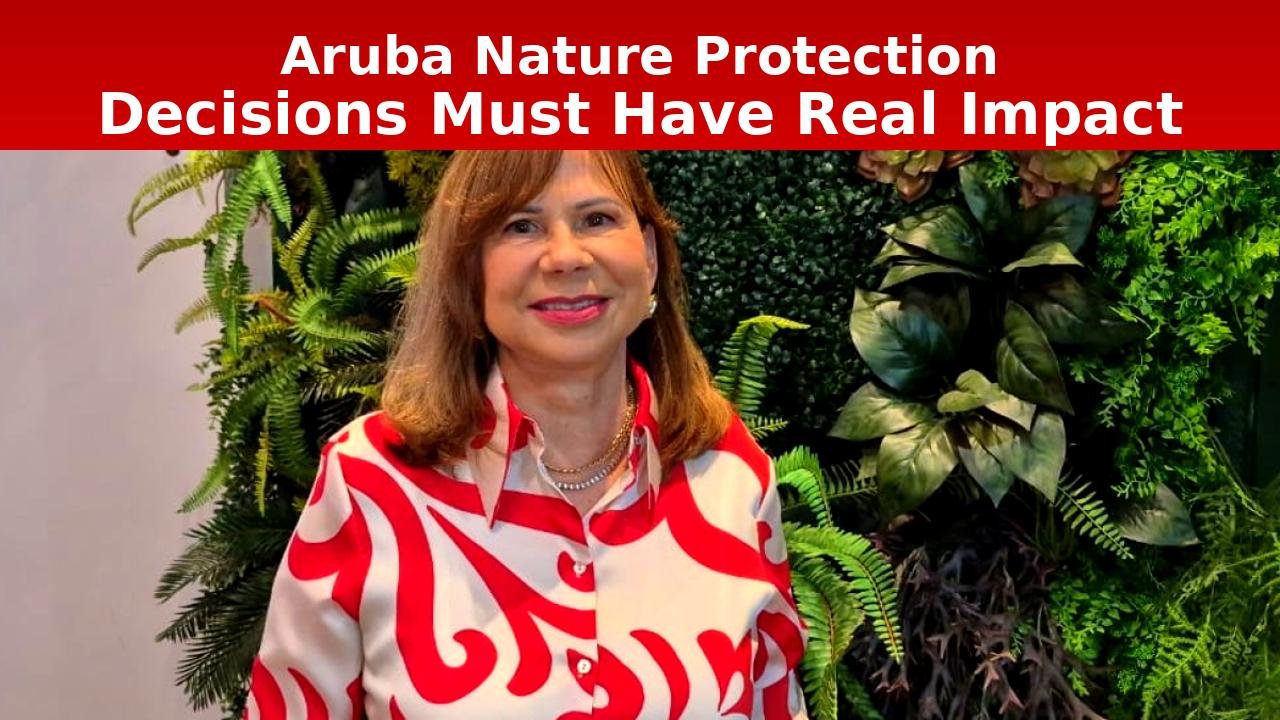
Strong and meaningful Aruba nature protection decisions are needed to truly preserve the island’s environment, according to Tisa LaSorte, CEO of the Aruba Hotel and Tourism Association (AHATA).
In a recent interview, LaSorte emphasized that Aruba’s natural environment—including its beaches, landscapes, flora, and fauna—is not only part of the island’s identity but also a key pillar of its tourism-driven economy.
She stated that while protecting nature is a shared responsibility, actions taken must create real and lasting impact rather than symbolic gestures.

LaSorte criticized proposals such as closing beaches or the sea one day per month, explaining that such measures would not significantly benefit marine life but would negatively affect many people financially.
“Closing the sea for one day a month may seem symbolic, but it does not make a real difference for nature,” she said. “What we need is to reduce environmental pressure on a daily basis.”
Instead, she called for more effective Aruba nature protection decisions that address ongoing environmental challenges. One of the key concerns she highlighted is the urgent need to resolve wastewater issues at Bubali Plas, which pose a risk of marine pollution, as noted in reports by Carmabi.
LaSorte also pointed to the long-standing issue of UTV (off-road vehicle) use, which can damage natural areas. She stressed the importance of enforcing clear regulations on where these vehicles are allowed, as well as considering limits on their importation.
She noted that closing beaches while cruise ships continue to arrive and tourists remain active does not solve the core environmental issues.
According to LaSorte, Aruba must also engage in deeper discussions about the type of tourism it wants to promote and how to balance visitor numbers with environmental sustainability.
Suggestions include limiting the number of cruise ships per day and reducing the overall number of tourists to decrease environmental pressure.
She acknowledged that any major policy decision will have economic consequences for certain groups, such as UTV operators, fishermen, or tourism-related businesses.
However, she stressed that if financial impact is unavoidable, it should at least result in clear environmental benefits.
“If a decision affects people financially, it should at least have a positive effect on nature,” LaSorte concluded. “Symbolic actions that harm people without helping the environment are not the solution.”
The discussion highlights the need for practical and impactful Aruba nature protection decisions that balance economic interests with long-term environmental sustainability.

















Discussion about this post