


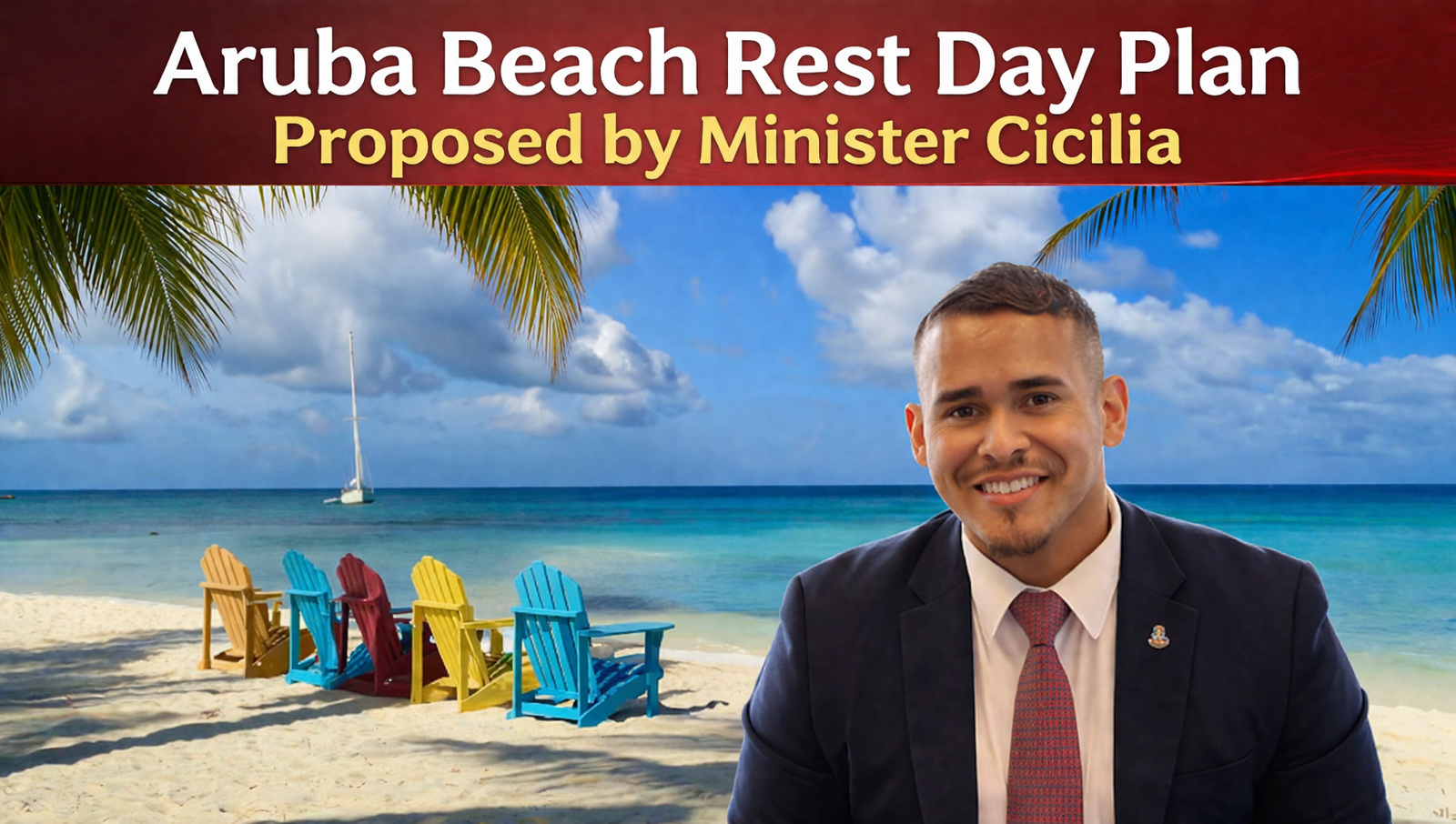
The Aruba beach rest day plan has been reaffirmed by Minister of Tourism Wendrick Cicilia as part of a broader effort to promote regenerative tourism on the island.
According to the minister, regenerative tourism should not remain just a concept in policy documents but must be translated into real, actionable measures that benefit both the environment and local communities. The plan focuses on protecting marine ecosystems while also supporting the well-being of Aruba’s residents.
A central feature of the Aruba beach rest day plan is the introduction of one “rest day” per month for beaches and marine areas. This would amount to 12 days per year, or roughly 3% of the calendar, allowing nature time to recover from the ongoing pressures of tourism.

Minister Cicilia highlighted the COVID-19 pandemic as an example, noting how quickly beaches and marine ecosystems showed signs of recovery when human activity was reduced.
To ensure smooth implementation, the proposal includes a two-year preparation period. During this time, the government plans to engage with stakeholders and give water-based businesses sufficient time to adjust operations, bookings, and planning.
Importantly, Cicilia emphasized that the Aruba beach rest day plan should not be viewed as an economic setback. Instead, he envisions transforming these rest days into national cultural days, encouraging visitors to explore Aruba’s neighborhoods, local cuisine, and community experiences rather than water-based activities.
This approach could provide new opportunities for local businesses while diversifying the island’s tourism offerings.
“If we are serious about conserving and protecting our natural resources, we must take action that has immediate effect,” the minister stated.
The Aruba beach rest day plan reflects a growing commitment to balancing tourism growth with environmental sustainability, ensuring Aruba’s natural beauty is preserved for future generations.












Discussion about this post