


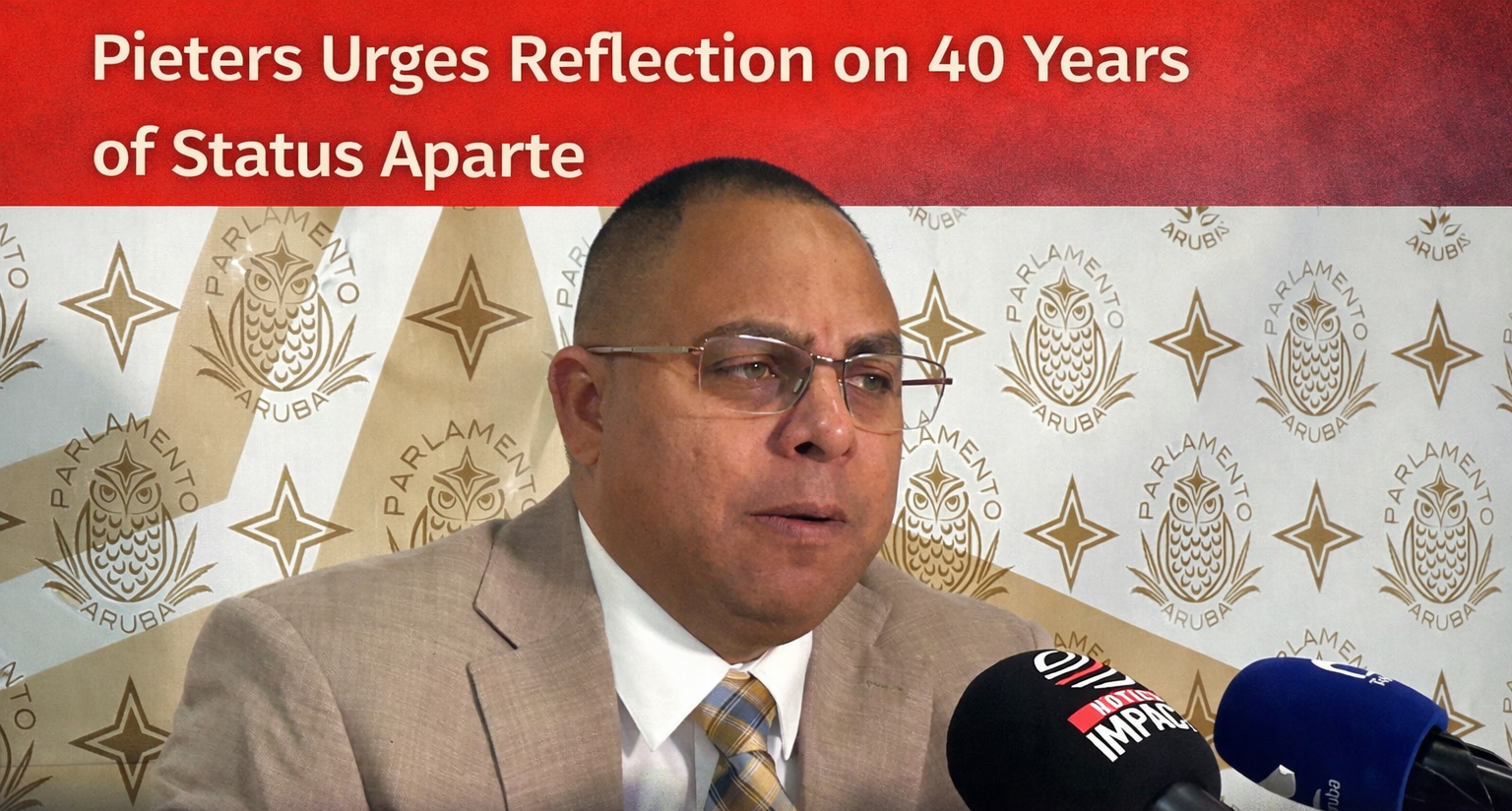
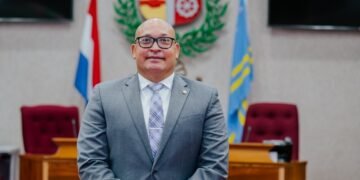
During his press conference on Thursday, Parliamentarian Eduard Pieters from the PPA faction delivered a strong and critical message about the 40th anniversary of Status Aparte. According to Pieters, Aruba cannot allow such a historic achievement, which came at great sacrifice, to be reduced to a beautiful ceremony, eloquent speeches, and shallow symbolism, while current decisions are putting the island’s Aruba autonomy at risk.
Words vs. Real Action:
During the recent celebrations, from Plaza Betico Croes to the University of Aruba, several speeches emphasized the importance of maintaining Status Aparte. Minister Gerlien Croes, for instance, stated that “the struggles of the past define our decisions today and in the future” and that “we must be proud of what we have as Arubians.”
However, Pieters questioned the consistency between words and actions. “How can one speak of maintaining Status Aparte,” he asked, “while simultaneously supporting legal initiatives that undermine our autonomy?” For the PPA, the danger lies in the contradiction: celebrating political independence in words but accepting structures that limit Aruba’s authority in practice, especially regarding the Parliament’s budget rights.

A Struggle of More Than 70 Years:
Pieters reminded the public that the struggle for Status Aparte did not begin in 1986 but more than 70 years ago. He recalled the Van Poelie report and the Interimregeling, where the late Juancho Irausquin warned against losing Aruba’s equal standing within the Antilles. After the political majority in Curaçao and the late Henny Eman opted for the Interimregeling, Irausquin raised alarms that this path would weaken the equality among the islands. From that moment, Irausquin led PPA, and the fight for separation and self-determination became inevitable.
Thus, Status Aparte is not a historical gift, but the result of sacrifice, political vision, and determination from past generations. Ignoring this historical weight, Pieters argued, is disrespectful to the legacy of the political pioneers.
Rijkswet and the Risk to Autonomy:
The central concern of the PPA is the firm support for the Rijkswet, which, according to Pieters, could undermine the foundation of Aruba’s autonomy. He made it clear that Aruba cannot celebrate 40 years of Status Aparte in a “superficial and cosmetic” way while strategic decisions continue to limit local decision-making.
“We cannot fool the people,” Pieters declared, pointing out that Ministers Croes and Wever are advocating for the direction of the Rijkswet and the financial supervision of Aruba, without fully understanding its implications. “The years of struggle are far older than the ages of Ministers Croes and Wever,” he emphasized. “It’s crucial for them to understand what this struggle means for Aruba. Autonomy is not an issue for a minority; it’s a collective right we earned through years of struggle.”
A Call for Serious Reflection:
Finally, Pieters called for serious reflection on the matter. However, for this to happen, Ministers Croes and Wever must understand the significance of the struggle and what Status Aparte truly represents for Aruba. He stressed that the government must take responsible action. Parliament must remain firm, factions must unite with unions, and a clear national front must be presented: Aruba is open to cooperation within the Kingdom, but not under conditions that undermine its autonomy.
Aruba has demonstrated the ability to manage its finances with discipline and even generate a surplus. The country is capable of directing its own future. The celebration of Status Aparte must go beyond ceremonies; it must be reflected in leadership, protection of our constitutional rights, and a real commitment to the sacred struggle that shaped our nation.











Discussion about this post