


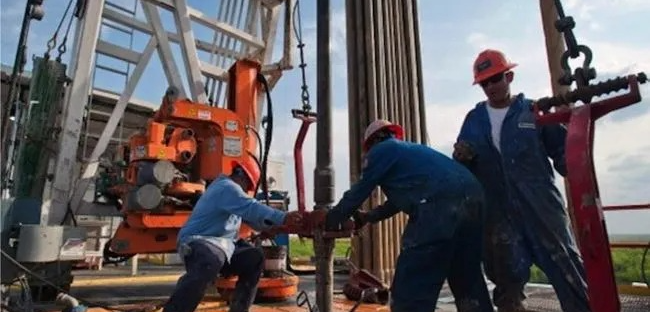
This week, the Government of Aruba, represented by Minister of Energy Arthur Dowers and Minister of Economic Affairs Geoffrey Wever, officially launched the process to dismantle the San Nicolas refinery. The project will involve environmental and industrial specialists who will assess the site’s condition, including the long-term impact of more than 100 years of crude oil refining, much of it originating from Venezuela.
The start of the dismantling marks a significant turning point for Aruba. For decades, the refinery played a central role in shaping the island’s economy, beginning with its early operations under Exxon Oil, formerly known as ESSO. Government officials have described this project as the opening of a new chapter, noting that the dismantling itself will be a major operation expected to create employment opportunities for both local and international companies.
At the same time, renewed attention has been drawn to Aruba’s offshore energy potential following a statement made two months ago by the American company Armstrong Oil & Gas. In early October 2025, the company shared information with U.S. and international media about possible petroleum exploration and development near Aruba, potentially beginning in 2026 or 2027.

The October 5 press release highlighted that Bill Armstrong, a prominent oil entrepreneur known for recently discovering major oil reserves in Alaska, has shifted his focus toward the Caribbean region. Last year, Armstrong Oil & Gas signed a production and exploration agreement with the Aruban Petroleum Company (CAP).
Speaking at the EnerCom Conference in Denver, Armstrong described Aruba’s offshore prospects as “the biggest undrilled field I have ever seen,” according to U.S. energy publication Hartenergy.com. He explained that the geological structure covers approximately 200,000 hectares and reaches depths of around 600 meters. Armstrong compared the formation to Norway’s Ekofisk field, which has produced roughly four billion barrels of oil, suggesting that the structure near Aruba could be up to 15 times larger.
Aruba’s surrounding waters have long been considered promising for oil exploration. Repsol drilled a test well eight years ago, but the results were not sufficient for commercial development at that time. According to Armstrong, oil indicators were present, but drilling occurred outside the main basin.
Interest from major international energy companies has increased in recent months. Firms such as ExxonMobil, TotalEnergies, BP, Eni, Repsol, and Occidental Petroleum have reportedly contacted Armstrong regarding potential collaboration. This surge in interest comes as large-scale oil discoveries become increasingly rare worldwide, pushing companies to seek new opportunities.
Since the refinery closed in 2012, Aruba has relied entirely on imported fuel. A successful offshore petroleum discovery could significantly influence the island’s economic future. However, it also raises important discussions about environmental protection, sustainability, and long-term energy dependence.
With the refinery dismantling now underway and Armstrong Oil & Gas’s statements still fresh, many residents are awaiting greater clarity from both the company and the government about what this potential energy development could mean for Aruba in the years ahead.
Photo Credits : https://english.24ora.com/?penci_spp_count=1&penci_spp_post_id=