

ORANJESTAD – At Etnia Nativa, Aruba reconnects with its true roots, celebrating its native heritage, traditions, and identity that have long been overshadowed by colonial history. Through storytelling and exploration of the island’s landscapes, Etnia Nativa offers a unique cultural journey that reveals Aruba’s ancient legacy carved in stone.
A Journey Through Aruba’s Geological Landscape
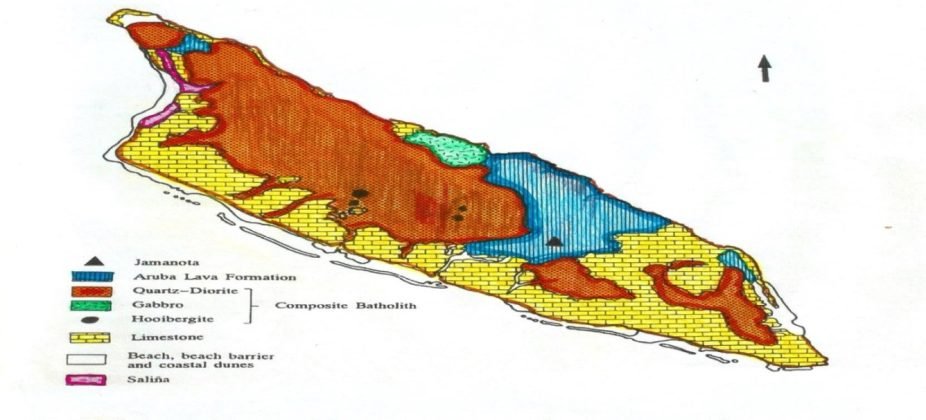
Aruba’s Quartzdiorite (QD) landscape is one of the island’s most significant geological features. Spanning areas like Santa Cruz, Tanki Flip, Noord, Alto Vista, and Savaneta, this rugged terrain showcases deep dry riverbeds and guts (dry riverbeds locally known as rooi) that have been formed by water erosion over thousands of years.
The bedrock, composed mainly of QD, is largely impermeable, which allows natural reservoirs to form within the overlying sediments, making it ideal for vegetation growth. These fertile areas became a haven for the Amerindian ancestors who recognized the potential for agriculture and settled in these locations for the reliable water sources and rich soil.
The Importance of Iconic Landmarks
One of Aruba’s most iconic landmarks, Hooiberg, stands tall at 166 meters, right in the heart of this QD landscape. Composed of hooibergite, a unique rock only found in Aruba, Hooiberg and other hills on the north coast (made of gabbro) contribute to the island’s striking topography. These geological features all stem from the Aruban batholith, but the landscape varies due to differences in rock resistance to weathering.
Ancient Settlements and Cultural Significance
Aruba’s early inhabitants thrived in these areas due to the fertile soils and abundant water. Sites such as Santa Cruz, Tanki Flip, and Savaneta became thriving settlements during the Ceramic period, thanks to the natural advantages of the QD landscape.
The importance of the QD landscape extends beyond its practicality—it also played a profound role in the spiritual life of Aruba’s early inhabitants. Pictographs and petroglyphs carved into the QD rocks are often found, providing a glimpse into the symbolic and ceremonial significance of the landscape. Twelve of the island’s seventeen rock art sites are located within the QD landscape, underscoring its central role in Aruba’s ancient culture.
Visit Etnia Nativa
To fully immerse yourself in Aruba’s living history, visit Etnia Nativa, the only living museum of its kind in the Caribbean. Founded in 1994, Etnia Nativa offers an unparalleled cultural experience where geology, heritage, and ancient stories reveal the island’s deep-rooted connection to its first inhabitants.
For more information and to book your tour:
📱 WhatsApp: +297 592 2702
📧 Email: etnianativa03@gmail.com
Experience the soul of Aruba—don’t miss out on this extraordinary journey into the heart of the island!
Photo credits : https://www.arubatoday.com/episode-cccxiii-313-the-untold-story-of-arubas-indigenous-landscape/